Standard Curved Tooth Coupling
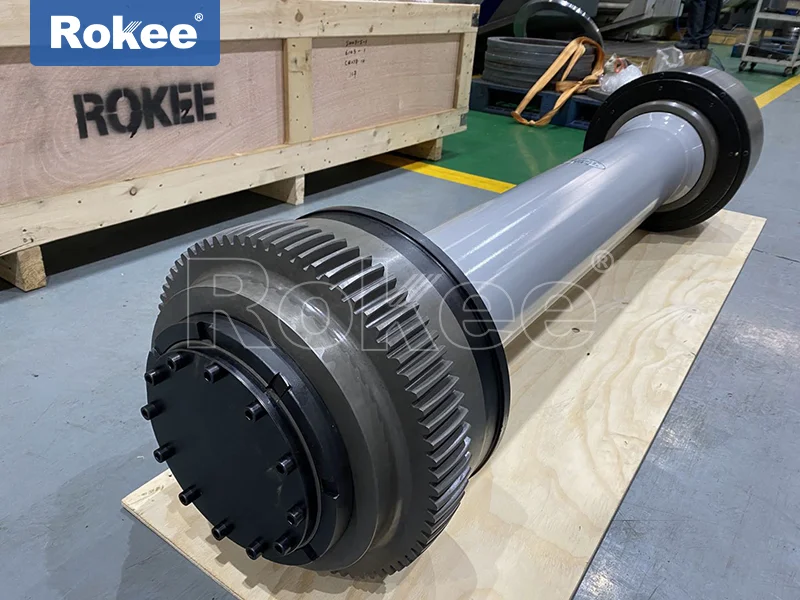
In the landscape of industrial power transmission, the standard curved tooth coupling stands as a critical mechanical component, engineered to address the core challenges of connecting rotating shafts while accommodating inevitable misalignments, transmitting high torque, and ensuring long-term reliability under demanding operational conditions. Unlike traditional spur gear couplings, which have long been used for basic shaft connection, the curved tooth design represents a refined evolution that optimizes load distribution, reduces stress concentration, and expands the operational envelope of gear couplings across a wide spectrum of industrial applications.
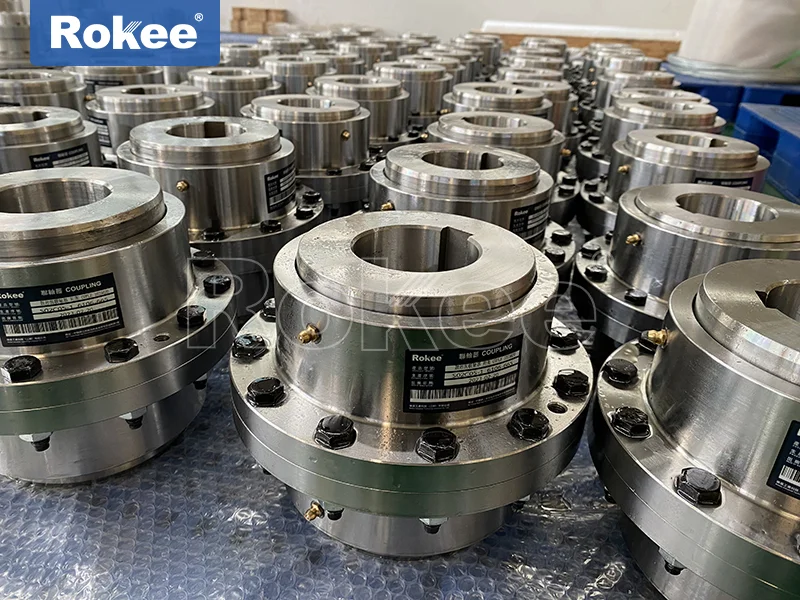
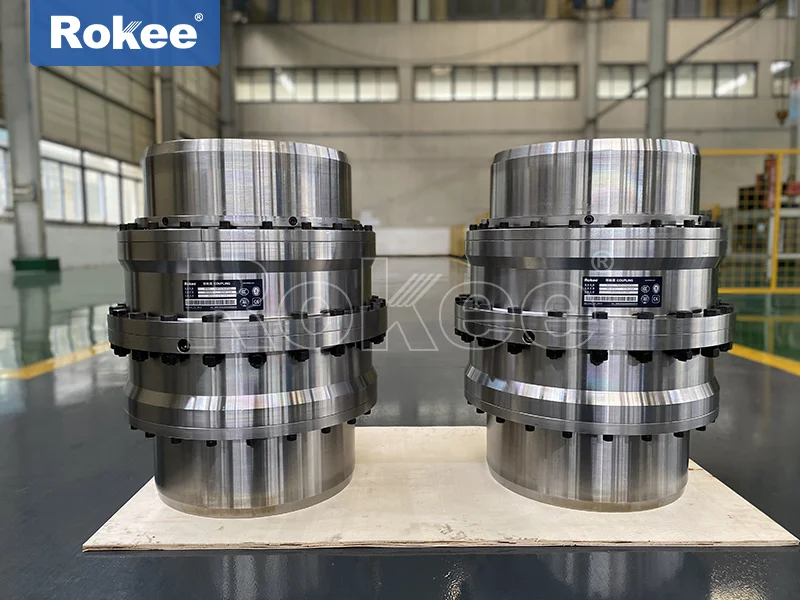
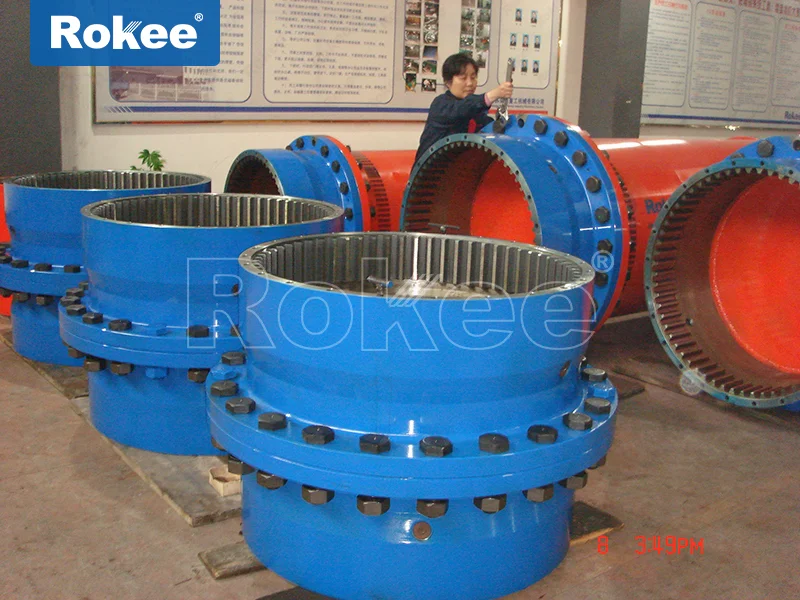
At its core, the standard curved tooth coupling operates on the fundamental principle of positive engagement between two sets of gears with identical tooth counts, creating a rigid-flexible connection that balances torque transmission efficiency with misalignment compensation. The basic structure consists of two primary mating components: an external gear sleeve (or hub) and an internal gear ring, along with auxiliary components such as sealing assemblies, lubrication systems, and in some configurations, intermediate connecting elements or braking attachments. The defining feature that sets curved tooth couplings apart from their spur tooth counterparts lies in the geometry of the external gear teeth. The external teeth are precision-machined into a drum-shaped or spherical arc profile, with the center of the spherical surface aligned precisely on the rotational axis of the gear sleeve. This spherical design deviates significantly from the straight, involute profile of spur teeth, and it is this geometric modification that underpins the coupling’s superior performance characteristics.
The external gear sleeve is typically mounted directly onto the shaft of the driving or driven component, with a bore designed to fit standard shaft diameters and keyways for torque transfer. The material selection for the external sleeve prioritizes high tensile strength, fatigue resistance, and wear durability, with alloy steels being the most common choice due to their ability to withstand heavy loads and repeated cyclic stresses. The internal gear ring, which meshes with the external sleeve, features an involute tooth profile on its inner circumference, machined to precise tolerances to ensure smooth engagement with the curved external teeth. The internal ring is often fabricated from high-strength alloy steel as well, with surface hardening treatments applied to enhance tooth surface hardness and resistance to abrasive wear, a critical consideration in high-torque applications where tooth contact pressures are substantial. The tooth clearance between the external and internal gears in a curved tooth coupling is slightly larger than that of spur gear couplings, a deliberate design choice that facilitates misalignment compensation and reduces the risk of tooth jamming during operation.
Sealing and lubrication systems are integral to the structural integrity and performance longevity of standard curved tooth couplings, especially in all-steel lubricated configurations. A sealed end cap or housing encloses the gear mesh interface, creating a contained environment that retains lubricant and prevents the ingress of contaminants such as dust, dirt, metal shavings, or moisture—factors that can accelerate tooth wear and compromise coupling performance in industrial settings. Lubricants, typically high-performance greases or oils formulated for extreme pressure and temperature resistance, form a protective film between the meshing teeth, reducing friction and minimizing metal-to-metal contact. In contrast, a distinct subset of curved tooth couplings utilizes a non-metallic intermediate sleeve, typically made of polyamide or nylon, which acts as the mating element between two steel external gear hubs. This design eliminates the need for continuous lubrication, as the non-metallic sleeve exhibits inherent low-friction properties, making these couplings a popular choice for applications where maintenance access is limited or dry operation is preferred.
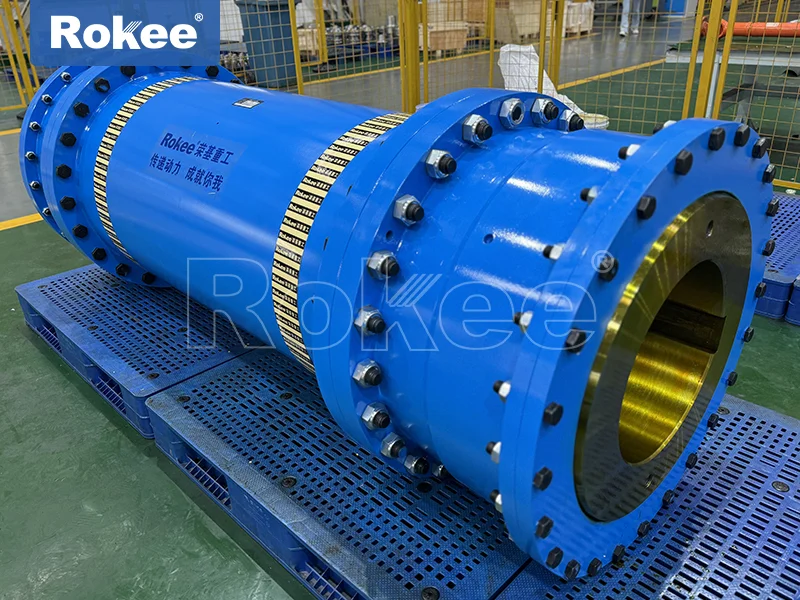
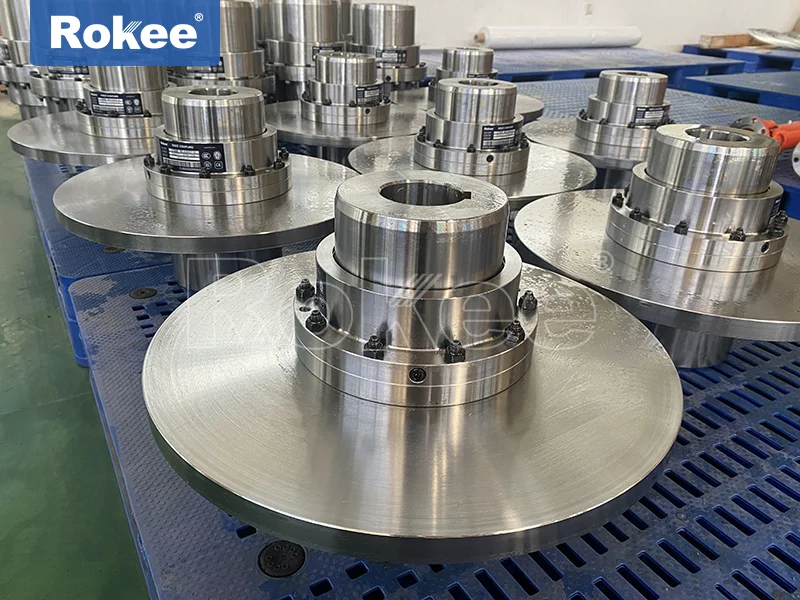
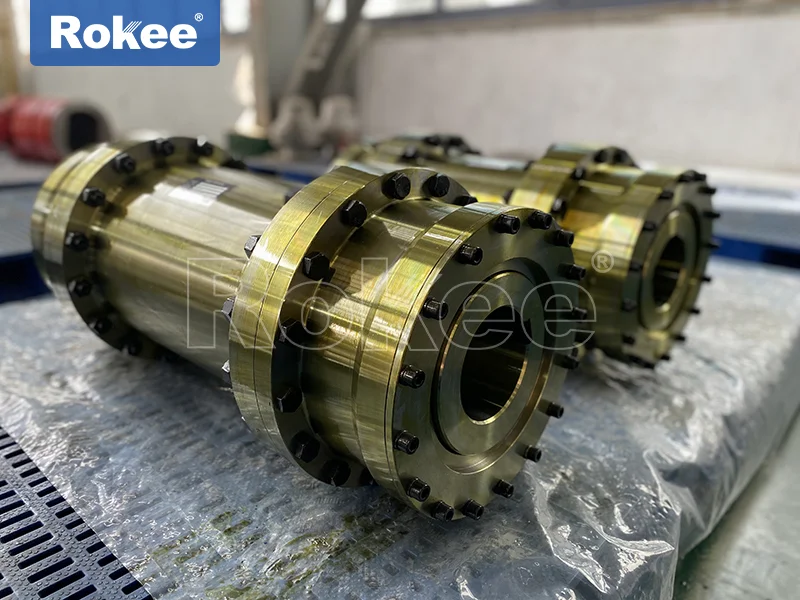
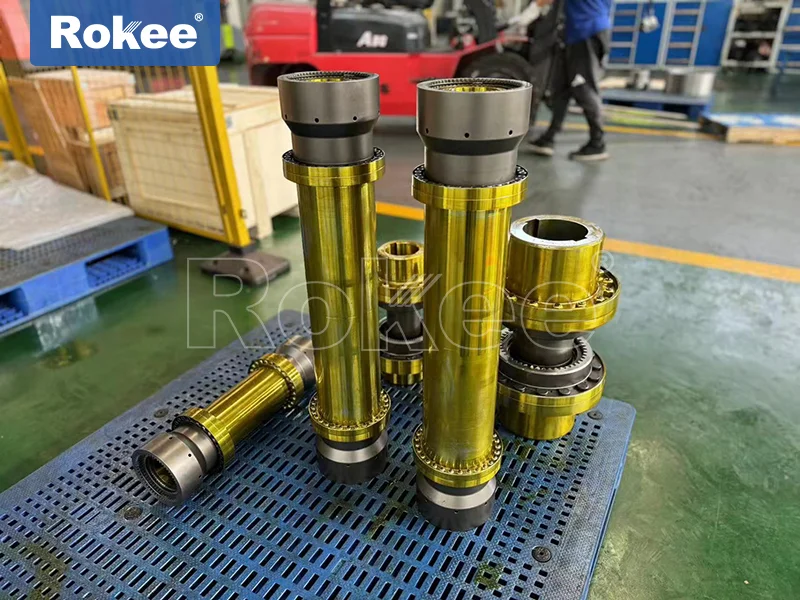
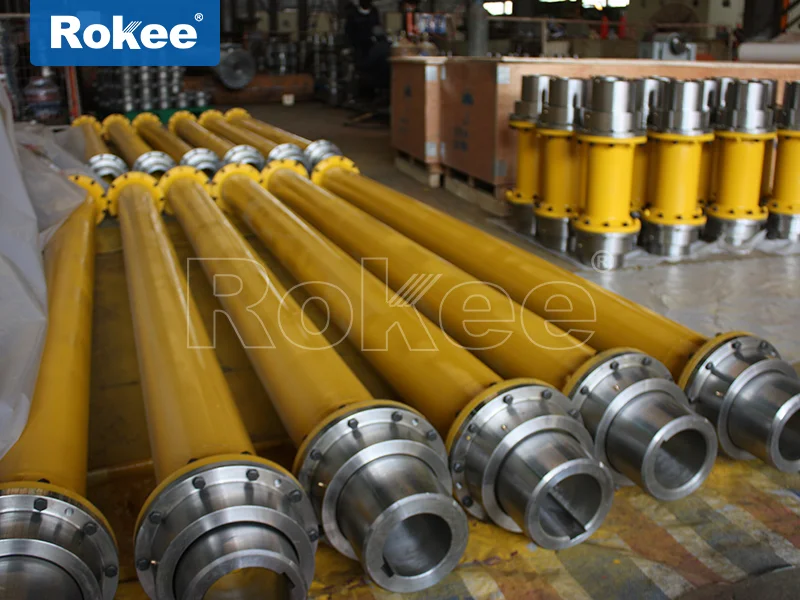
Auxiliary structural components extend the functionality of standard curved tooth couplings to meet specific application requirements. Intermediate shafts or connecting pipes are incorporated into long-span transmission systems, where the distance between the driving and driven shafts exceeds the capacity of a basic two-piece coupling. These intermediate elements create a floating shaft configuration, effectively bridging the gap while maintaining the coupling’s ability to compensate for misalignments across the entire assembly. Braking components, such as brake discs or brake wheels, are attached to the coupling hub or internal ring in applications that require rapid stopping or torque limiting, such as material handling equipment or heavy machinery. These structural variations do not alter the core curved tooth engagement principle but rather adapt the coupling to the unique mechanical demands of different industrial systems.
The performance characteristics of standard curved tooth couplings are a direct result of their innovative structural design, and they outperform traditional spur gear couplings in several key metrics that are critical for industrial reliability. One of the most significant performance advantages is their enhanced load-bearing capacity. When compared to spur gear couplings of the same external diameter and inner gear ring size, curved tooth couplings typically offer a 15 to 20 percent increase in torque transmission capability. This improvement stems from the spherical tooth profile, which distributes the transmitted torque evenly across the entire tooth contact surface, rather than concentrating stress at the tooth ends—a common flaw in spur tooth designs, especially under misaligned conditions. The even load distribution not only boosts torque capacity but also reduces the risk of tooth fatigue, pitting, and premature failure, extending the service life of the coupling.
Misalignment compensation is another defining performance feature of standard curved tooth couplings, as they are engineered to accommodate three primary types of shaft misalignment: angular, radial, and axial. Angular misalignment, which occurs when the axes of the driving and driven shafts intersect at an angle, is the most effectively compensated for by the curved tooth design. Spur gear couplings typically have a maximum allowable angular misalignment of 1 degree, while curved tooth couplings can accommodate up to 1.5 degrees under nominal load conditions—a 50 percent increase that makes them far more versatile in applications where shaft alignment is difficult to maintain, such as in mobile machinery or vibrating equipment. The spherical tooth profile allows the external gear to pivot within the internal ring without creating excessive edge pressure on the tooth surfaces, a phenomenon that plagues spur gear couplings and leads to accelerated wear.
Radial misalignment, or parallel offset between the two shafts, is compensated for by the radial clearance between the meshing teeth and the flexibility of the coupling assembly. While the radial compensation capacity is generally more limited than angular compensation, it is sufficient to address minor installation tolerances and dynamic shaft movements that occur during operation. Axial misalignment, which involves the axial movement of one shaft relative to the other, is accommodated by the sliding engagement between the external and internal teeth. Curved tooth couplings can handle significant axial displacements in both directions, making them suitable for applications where thermal expansion of shafts or components creates axial movement, such as in high-temperature processing equipment or power generation systems. The combination of these three misalignment compensation capabilities ensures that the coupling protects connected equipment—such as motors, pumps, gearboxes, and generators—from excessive stress, vibration, and premature wear, thereby reducing overall system downtime.
Transmission efficiency is a critical performance metric for any power transmission component, and standard curved tooth couplings excel in this regard. All-steel lubricated configurations achieve a transmission efficiency of up to 99.7 percent, meaning that nearly all of the input torque from the driving shaft is transferred to the driven shaft with minimal energy loss. This high efficiency is attributed to the smooth meshing of the curved teeth and the protective lubrication film, which minimizes friction and power dissipation. Non-metallic sleeve curved tooth couplings also offer high efficiency, with the low-friction polyamide or nylon sleeve reducing energy loss through friction while eliminating the need for lubrication-related maintenance. In industrial applications where energy efficiency is a priority—such as in wind turbines or large-scale manufacturing facilities—this performance characteristic translates to tangible operational savings over the life of the equipment.
Durability and low maintenance requirements are additional performance strengths that make standard curved tooth couplings a preferred choice for heavy-duty industrial applications. The even load distribution and reduced stress concentration inherent in the curved tooth design significantly slow the rate of tooth wear, extending the service life of the coupling beyond that of spur gear couplings operating under the same conditions. All-steel lubricated couplings require periodic maintenance, primarily in the form of lubricant replacement and seal inspection, but these intervals are typically long, reducing the need for frequent downtime. Non-metallic sleeve couplings are often considered maintenance-free, as the polyamide or nylon sleeve does not require lubrication and exhibits excellent wear resistance in typical operating environments. This durability is further enhanced by the use of high-quality materials and precision machining, which ensure that the coupling can withstand the rigors of continuous operation, extreme temperatures, and harsh environmental conditions—from the high heat of steel mills to the corrosive atmospheres of chemical plants.
Vibration damping and noise reduction are often overlooked but important performance characteristics of standard curved tooth couplings. The smooth meshing of the curved teeth reduces the impact and vibration that occur during gear engagement, especially at high rotational speeds. This results in quieter operation compared to spur gear couplings, which can produce significant noise due to tooth impact and edge pressure under misaligned conditions. Reduced vibration not only improves the working environment but also protects sensitive components in the transmission system, such as bearings and seals, from vibration-induced damage. In applications where noise and vibration control are critical—such as in precision manufacturing equipment or marine propulsion systems—this performance feature adds significant value.
Standard curved tooth couplings are classified into several primary types based on their structural configuration, material composition, and functional purpose, each tailored to meet the specific needs of different industrial applications. The most fundamental classification is between all-steel lubricated curved tooth couplings and non-metallic sleeve curved tooth couplings, which differ significantly in their design, maintenance requirements, and operational characteristics.
All-steel lubricated curved tooth couplings are the traditional and most robust type, designed for heavy-duty, high-torque applications where maximum load capacity and durability are required. Within this category, there are several common sub-types based on structural variations. Basic (or standard) all-steel couplings consist of two external gear sleeves and two internal gear rings, forming a two-piece assembly that is suitable for most general industrial applications where the distance between shafts is short and misalignment requirements are moderate. Wide-tooth and narrow-tooth variants are designed to optimize specific performance metrics: wide-tooth couplings have an increased tooth width, which further enhances torque capacity and load distribution, making them ideal for extreme heavy-duty applications such as steel rolling mills or mining crushers. Narrow-tooth couplings, on the other hand, feature a compact design with a smaller tooth width, resulting in a lower moment of inertia and more compact footprint—attributes that are valuable in applications where space is limited, such as in aerospace equipment or small-scale industrial machinery.
Long-span all-steel curved tooth couplings incorporate an intermediate shaft or connecting pipe, which allows them to bridge significantly larger distances between driving and driven shafts than basic couplings. These couplings are commonly used in applications such as conveyor systems in mining operations or paper mills, where the driving motor and driven equipment are separated by extended distances. Braked all-steel couplings are equipped with brake discs or brake wheels, which integrate directly with the coupling assembly to provide rapid stopping capability or torque limiting. These are essential in material handling equipment, such as cranes and hoists, where precise control over shaft rotation and emergency stopping are critical for safety and operational efficiency. Vertical installation variants are designed with modified sealing and lubrication systems to prevent lubricant leakage in vertical shaft applications, such as in vertical pumps or turbines, where gravity poses a challenge to maintaining lubrication integrity.
Non-metallic sleeve curved tooth couplings, also known as composite or dry-running curved tooth couplings, represent a more modern variant that prioritizes low maintenance and ease of installation. These couplings consist of two steel external gear hubs that mesh with a single polyamide or nylon intermediate sleeve, which replaces the internal gear ring and lubrication system found in all-steel designs. The non-metallic sleeve is precision-machined with curved internal teeth that engage with the external teeth of the steel hubs, creating a positive torque connection while eliminating the need for lubrication. The polyamide or nylon sleeve offers several key advantages, including low friction, excellent wear resistance, electrical insulation properties, and resistance to a wide range of chemicals. These couplings are available in basic two-piece configurations, as well as double-section variants that feature two non-metallic sleeves and three steel hubs, providing enhanced misalignment compensation capabilities—particularly for angular and radial misalignments—through a double cardanic action. Double-section non-metallic couplings are ideal for applications where shaft misalignment is significant, such as in mobile agricultural machinery or construction equipment, where the suspension system creates dynamic misalignments during operation.
Another important classification of standard curved tooth couplings is based on their alignment with general industry size and performance standards, which define parameters such as tooth size, bore diameter range, torque rating, and dimensional tolerances. These standardized variants ensure interchangeability and compatibility with a wide range of industrial equipment, simplifying selection and replacement processes for maintenance teams. Standardized all-steel couplings cover a broad range of torque ratings, from low-torque applications in light manufacturing to extreme high-torque applications in heavy industry, with bore diameters ranging from small sizes suitable for fractional-horsepower motors to large diameters for industrial turbines and generators. Standardized non-metallic sleeve couplings are typically designed for medium to low torque applications, with a focus on ease of installation and maintenance, and they are available in a range of sizes to fit standard motor and equipment shafts.
The versatility of standard curved tooth couplings is reflected in their extensive range of applications across virtually every sector of heavy industry and mechanical engineering, where their combination of high torque capacity, misalignment compensation, durability, and efficiency makes them an indispensable component of power transmission systems. In the metallurgical and steel industry, which is characterized by extreme heavy loads, high temperatures, and continuous operation, all-steel lubricated curved tooth couplings are used extensively in critical equipment such as rolling mills, blast furnace blowers, steel converters, and continuous casting machines. The wide-tooth variant of all-steel couplings is particularly well-suited for rolling mills, where it must transmit massive torques while accommodating the misalignments caused by the heavy loads and thermal expansion of the mill rolls. The durability and high load capacity of these couplings ensure that they can withstand the harsh conditions of steel production, minimizing downtime and supporting continuous manufacturing processes.
The mining and material handling industry relies heavily on standard curved tooth couplings to power the rugged equipment used in extraction, processing, and transportation of minerals and raw materials. In mining operations, these couplings are installed in crushers, ball mills, conveyor belt drives, and heavy-duty pumps, where they must transmit high torques while accommodating the misalignments caused by the vibration and movement of mobile equipment and the uneven terrain of mining sites. Long-span all-steel couplings are commonly used in conveyor systems, which span hundreds of meters in some mining operations, to connect the driving motors to the conveyor rollers across extended distances. Braked curved tooth couplings are essential in hoists and cranes used in mining and construction, providing the necessary stopping power to lift and lower heavy loads safely. In material processing plants, such as cement factories and ore processing facilities, curved tooth couplings are used in grinding mills, kiln drives, and classification equipment, where their ability to handle misalignment and heavy loads ensures reliable operation of these critical processes.
The oil and gas, chemical, and petrochemical industries utilize standard curved tooth couplings in a wide range of applications, from upstream exploration and production to downstream refining and processing. In these industries, the couplings must operate in harsh environmental conditions, including corrosive atmospheres, extreme temperatures, and high pressure. All-steel lubricated curved tooth couplings are used in large-scale pumps, compressors, and turbines that power oil and gas pipelines, refinery processes, and chemical reactors. The sealed lubrication system of these couplings is critical in preventing contamination of the process fluids and protecting the gear teeth from the corrosive effects of chemicals and saltwater—common in offshore oil and gas applications. Non-metallic sleeve curved tooth couplings are also used in these industries, particularly in chemical processing equipment where resistance to chemical corrosion and electrical insulation are important, such as in pumps handling corrosive chemicals or in systems where electrical grounding must be isolated.
Power generation is another key sector where standard curved tooth couplings play a vital role in ensuring reliable energy production. In thermal power plants, coal-fired, gas, and steam turbines are connected to generators using large all-steel lubricated curved tooth couplings, which must transmit enormous torques with high efficiency to maximize power output. The high transmission efficiency of these couplings is critical in power generation, as even small losses can translate to significant reductions in energy production over time. In renewable energy, wind turbines utilize non-metallic sleeve or lightweight all-steel curved tooth couplings to connect the rotor hub to the gearbox, accommodating the dynamic misalignments caused by wind loads and the rotation of the rotor. The low maintenance requirements of non-metallic sleeve couplings are particularly advantageous in wind turbines, which are often installed in remote locations with limited access for maintenance. Hydropower plants also use curved tooth couplings in turbine and generator systems, where their ability to handle axial and angular misalignments ensures reliable operation in both low-head and high-head hydroelectric facilities.
The marine and aerospace industries demand high levels of reliability and performance from mechanical components, and standard curved tooth couplings are selected for their ability to meet these stringent requirements. In marine applications, all-steel lubricated curved tooth couplings are used in ship propulsion systems, connecting the main engines to the propeller shafts. These couplings must withstand the dynamic misalignments caused by the movement of the vessel in water, as well as the corrosive effects of saltwater, making the sealed lubrication system and corrosion-resistant materials critical to their performance. They are also used in auxiliary marine equipment, such as pumps, generators, and winches, where their durability and misalignment compensation capabilities ensure reliable operation at sea. In aerospace applications, lightweight narrow-tooth all-steel curved tooth couplings are used in aircraft engines, landing gear systems, and auxiliary power units, where their compact design and low moment of inertia are essential for weight reduction—a key priority in aerospace engineering. The high precision and reliability of these couplings are critical in ensuring the safety and performance of aircraft systems.
Manufacturing and general industrial machinery represent the broadest range of applications for standard curved tooth couplings, with variants selected to match the specific needs of different machines and processes. In automotive manufacturing, these couplings are used in assembly line equipment, robotic arms, and machining centers, where they provide precise torque transmission and misalignment compensation to ensure the accuracy of manufacturing processes. Non-metallic sleeve curved tooth couplings are popular in robotic systems due to their low maintenance requirements and ability to dampen vibration, which is critical for precision movements. In food and beverage processing, pharmaceutical manufacturing, and packaging industries, non-metallic sleeve couplings are preferred for their clean operation—they do not require lubrication, which eliminates the risk of lubricant contamination in food or pharmaceutical products—and their resistance to cleaning chemicals. These couplings are used in conveyors, mixers, pumps, and packaging machinery, where hygiene and reliability are top priorities.
Construction and agricultural machinery, which operate in dynamic and often harsh conditions, rely on standard curved tooth couplings to power their drivetrains and auxiliary systems. In construction equipment such as excavators, bulldozers, and cranes, double-section non-metallic sleeve couplings are used to connect the engine to the transmission and hydraulic pumps, accommodating the significant misalignments caused by the movement of the machine’s suspension and articulation joints. The maintenance-free design of these couplings is advantageous in construction, where equipment is often used in remote locations with limited access to maintenance facilities. In agricultural machinery such as tractors, harvesters, and irrigation systems, curved tooth couplings are used in gearboxes, PTO (power take-off) systems, and pump drives, where they must withstand heavy loads and misalignments caused by the uneven terrain of farmland. The durability and low maintenance of these couplings ensure that agricultural equipment remains operational during critical planting and harvesting seasons.
In conclusion, the standard curved tooth coupling is a highly versatile and reliable mechanical component that has become the backbone of power transmission systems across a diverse range of industrial sectors. Its unique spherical tooth geometry, combined with robust material selection and precision engineering, delivers a superior combination of high torque capacity, exceptional misalignment compensation, high transmission efficiency, and long-term durability—attributes that address the most pressing challenges of industrial shaft connection. The various types of curved tooth couplings, from heavy-duty all-steel lubricated variants to low-maintenance non-metallic sleeve designs, are tailored to meet the specific operational requirements of applications ranging from extreme heavy industry such as steel and mining to precision sectors like aerospace and pharmaceutical manufacturing. As industrial technology continues to advance, with demands for higher efficiency, lower maintenance, and greater reliability, the standard curved tooth coupling will undoubtedly remain a critical component, evolving alongside industrial needs to support the next generation of mechanical systems. Its ability to balance performance and practicality ensures that it will continue to be the preferred choice for engineers and maintenance professionals seeking a robust solution for power transmission in even the most demanding operational environments.