Adaptation Of PU Sandwich Panel Line And Gear Coupling To Improve Production Capacity
In the modern construction and industrial manufacturing landscape, the demand for high-performance, efficient, and durable building materials has been continuously rising, driving the continuous innovation and optimization of production equipment and processes. Polyurethane (PU) sandwich panels, with their excellent thermal insulation, structural stability, lightweight properties, and soundproofing effects, have become indispensable core materials in various fields such as industrial warehouses, commercial complexes, residential buildings, and cold storage facilities. The production efficiency and stability of PU sandwich panel lines directly determine the supply capacity and product quality of manufacturers, while gear couplings, as key transmission components in the production line, play a crucial role in ensuring the stable operation of mechanical equipment and the efficient transmission of power. With the increasing market demand for PU sandwich panels, many manufacturers are facing the challenge of insufficient production capacity, which requires targeted adaptation and transformation of PU sandwich panel lines and their supporting gear couplings to break through production bottlenecks, improve production efficiency, and enhance market competitiveness.
Before delving into the adaptation measures, it is necessary to have a clear understanding of the basic working principle of the PU sandwich panel line and the role of gear couplings in the system. A complete PU sandwich panel line is a complex integrated system that integrates multiple functional links, including uncoiling of facing materials, surface pretreatment, forming, PU foam mixing and pouring, lamination and pressing, curing, cutting, and stacking. Each link is closely connected, and the coordination and stability of the operation directly affect the overall production efficiency and product quality. The facing materials of PU sandwich panels are usually metal sheets such as galvanized steel, aluminum, or fiber-reinforced materials, which need to go through uncoiling, leveling, and pretreatment processes to ensure surface flatness and bonding performance with the PU core. The PU core is formed by the chemical reaction of isocyanate, polyol, foaming agent, and other additives. These raw materials need to be accurately metered, uniformly mixed, and continuously poured between the two facing materials, and then cured under specific temperature and pressure conditions to form a stable sandwich structure. The entire production process requires precise control of parameters such as temperature, pressure, material ratio, and transmission speed, and any link with errors or failures will lead to production interruptions or product defects.
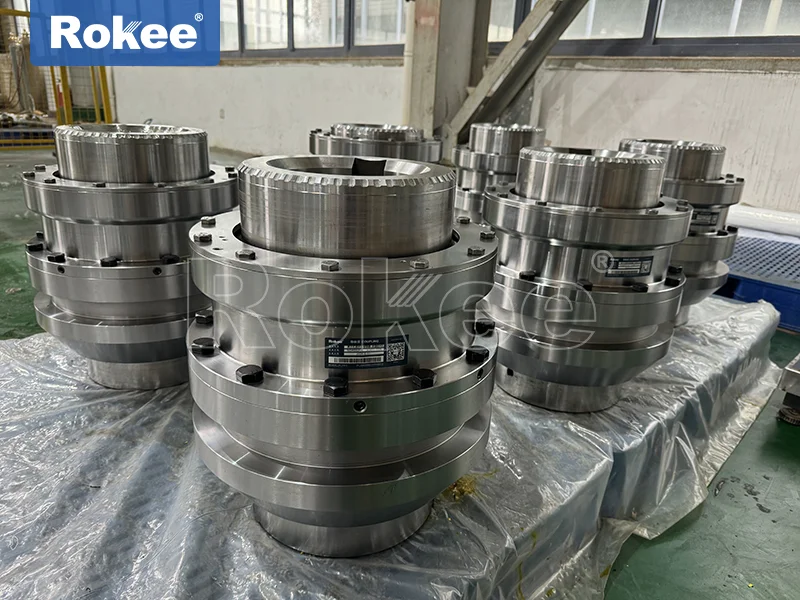
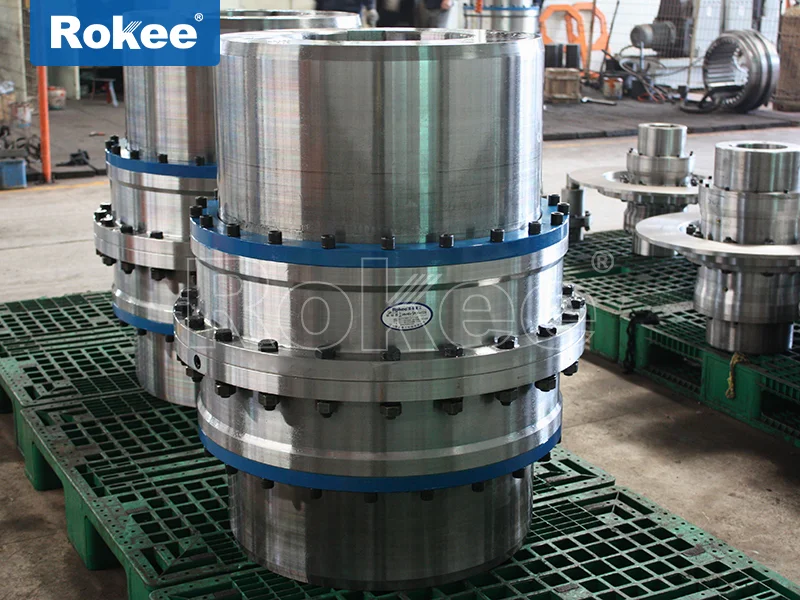
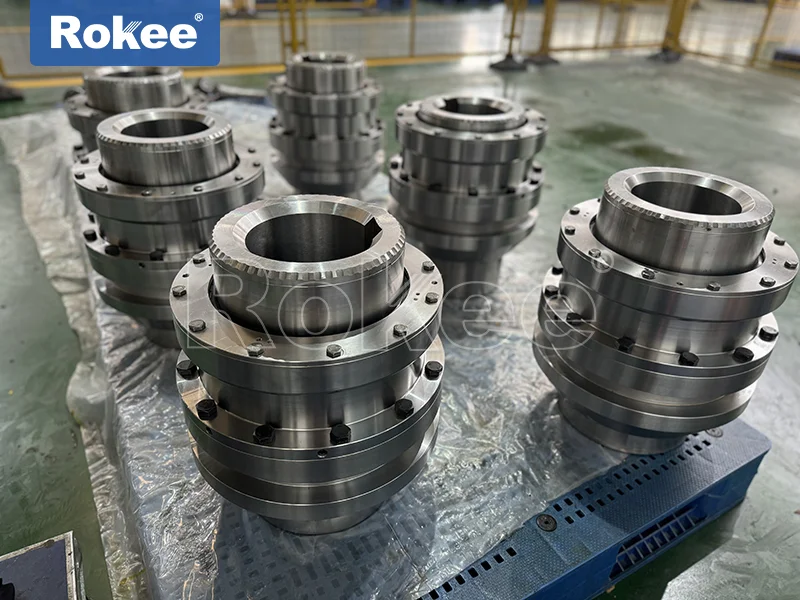
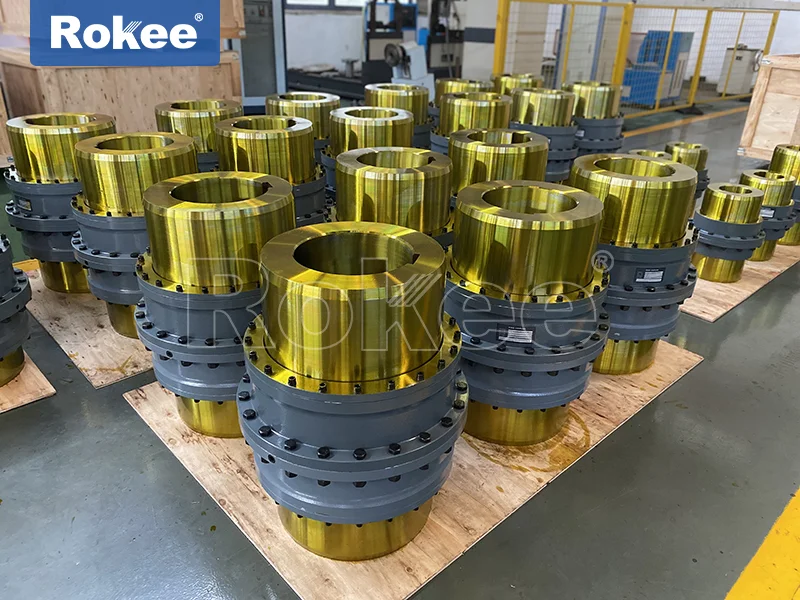
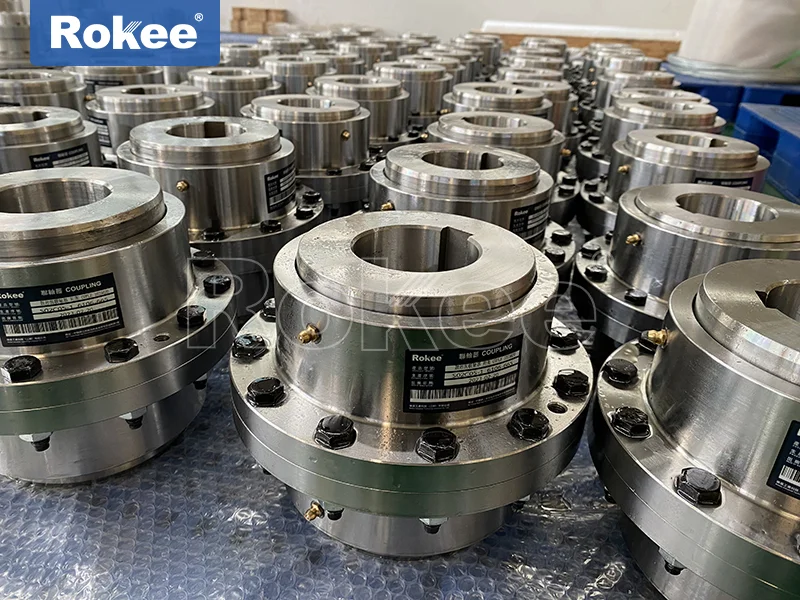
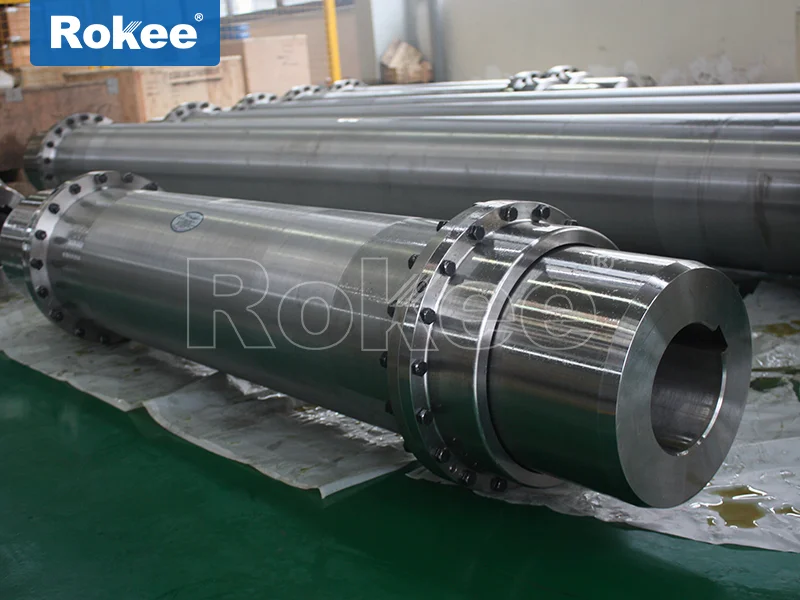
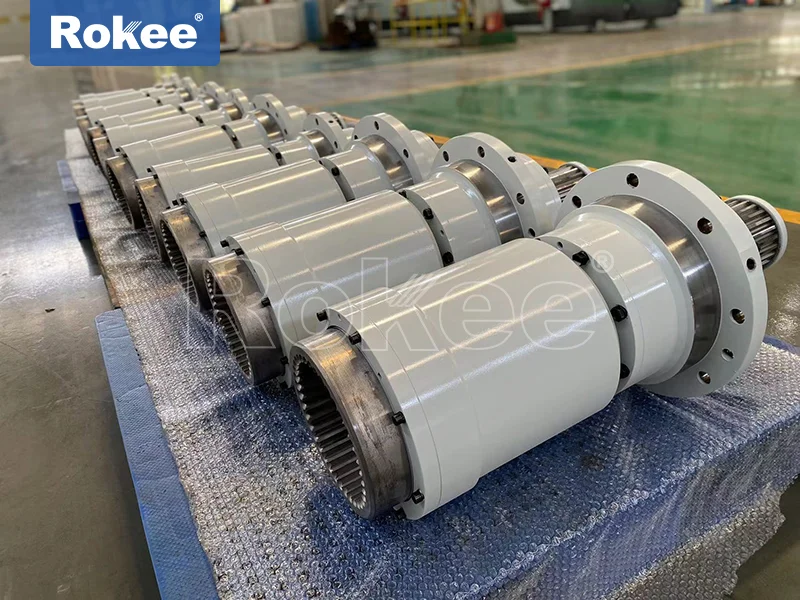
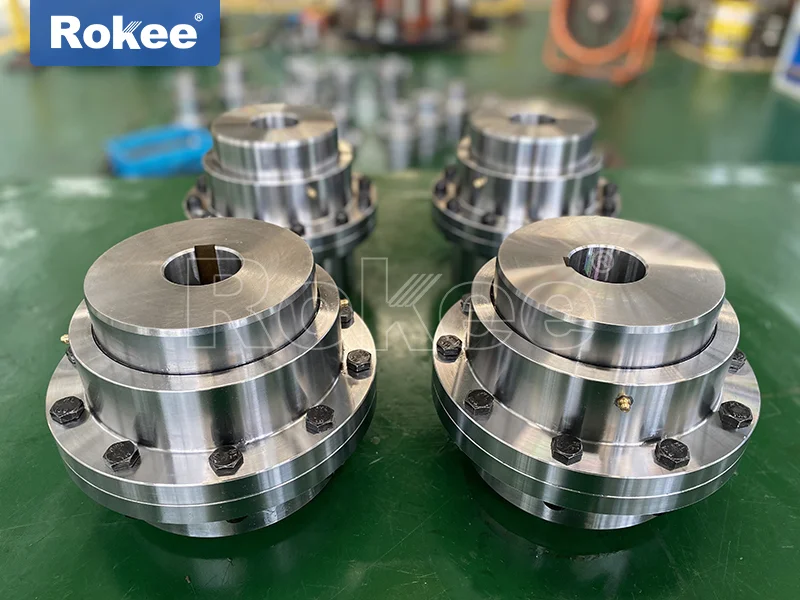
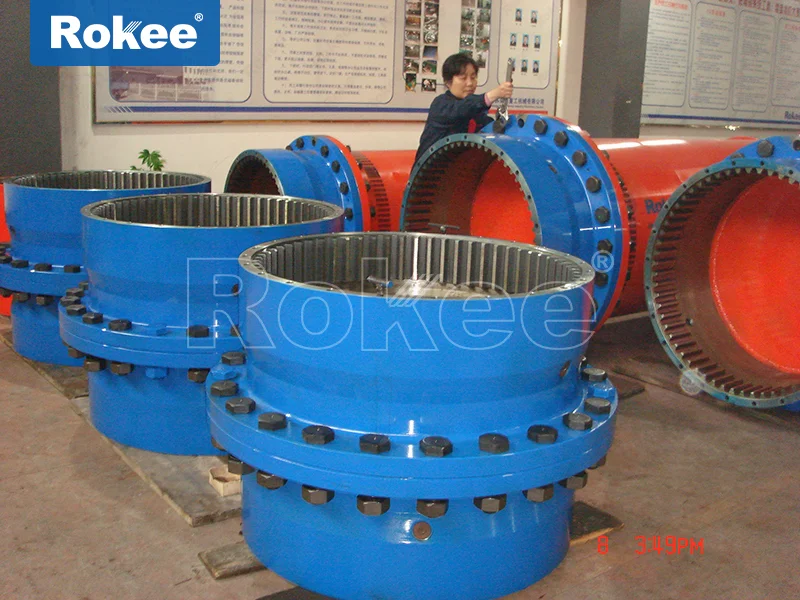
Gear couplings are important transmission components in the PU sandwich panel line, which are widely used in the connection of key equipment such as uncoiling machines, forming rollers, conveyor belts, and cutting machines. Their main function is to transmit torque between the motor and the working equipment, compensate for the relative displacement between the shafts caused by installation errors, equipment operation deformation, or load changes, and ensure the stable and efficient operation of the equipment. The working principle of gear couplings is to realize torque transmission through the meshing of internal and external gears. The two half-couplings with external gears are respectively connected to the driving shaft and the driven shaft, and the sleeve with internal gears is meshed with the two half-couplings to form a closed transmission structure. This design not only has strong torque transmission capacity but also can adapt to a certain degree of angular, radial, and axial misalignment, which is particularly suitable for the harsh working environment of PU sandwich panel lines, where equipment is subject to continuous load and vibration. However, in the long-term operation process, due to factors such as wear, lubrication insufficiency, and improper matching with the production line, gear couplings often have problems such as gear wear, oil leakage, vibration increase, and even failure, which directly affect the normal operation of the production line, reduce production efficiency, and become a bottleneck restricting the improvement of production capacity.
Against this background, the adaptation and transformation of PU sandwich panel lines and gear couplings have become an urgent task for manufacturers to improve production capacity. The adaptation work should follow the principles of pertinence, feasibility, and economy, focus on solving the key problems existing in the production line and gear couplings, and realize the organic combination of the production line and transmission components to maximize production efficiency. The specific adaptation measures can be carried out from two aspects: the adaptation and optimization of the PU sandwich panel line, and the matching and improvement of gear couplings.
In terms of the adaptation and optimization of the PU sandwich panel line, the key is to improve the continuity, automation, and parameter control accuracy of the production line, reduce production interruptions and manual intervention, and realize efficient and stable mass production. First of all, the modular transformation of the production line should be carried out to enhance the flexibility and adaptability of the production line. Traditional PU sandwich panel lines often have poor adaptability, and it is difficult to quickly switch between different specifications and types of panels, resulting in a lot of downtime and low production efficiency. Through modular design, the functional links of the production line are divided into independent modules, such as uncoiling module, forming module, foaming module, curing module, and cutting module. Each module can be independently adjusted and replaced, which can quickly adapt to the production needs of different thicknesses, widths, and facing materials of PU sandwich panels. For example, the forming module can be equipped with a quick mold change device, which can complete the switching of different panel shapes within a short time, avoiding the long downtime caused by traditional mold replacement, and improving the utilization rate of the production line. At the same time, the modular design also facilitates the maintenance and maintenance of the production line, reduces the difficulty of equipment maintenance, and shortens the maintenance time.
Secondly, the automation level of the production line should be improved to reduce manual intervention and human errors. In the traditional production process, many links such as material feeding, parameter adjustment, and product stacking rely on manual operation, which not only has high labor intensity but also is prone to errors, affecting production efficiency and product quality. Through the introduction of advanced automatic control systems, such as PLC control system, touch screen operation interface, and online monitoring system, the full-process automation control of the production line can be realized. The automatic control system can accurately control the parameters of each link, such as the speed of the uncoiling machine, the temperature and pressure of the forming process, the mixing ratio and pouring speed of the PU foam, and the cutting length of the panel, ensuring the stability and consistency of the production process. At the same time, the online monitoring system can real-time monitor the operation status of each equipment and the quality of the product, and timely alarm when abnormalities occur, such as material shortage, parameter deviation, or equipment failure, so that the staff can handle it in time, avoid production interruptions, and improve the stability of the production line. For example, the online thickness gauge can real-time monitor the thickness of the panel, and automatically adjust the relevant parameters when the thickness deviates from the standard, ensuring that the product quality meets the requirements while improving production efficiency.
Thirdly, the optimization of key processes should be carried out to improve production efficiency and product quality. The foaming and curing processes are the core links of PU sandwich panel production, which directly affect the production cycle and product performance. In the foaming process, the traditional mixing and pouring equipment often has problems such as uneven mixing of raw materials and unstable pouring speed, which lead to uneven density of the PU core, poor bonding with the facing materials, and even product waste. Through the adaptation and transformation of the foaming system, such as replacing the high-pressure foaming machine with high-precision metering and mixing functions, the accurate control of the raw material ratio and mixing uniformity can be realized. The high-pressure foaming machine can make the raw materials fully mixed under high pressure, and the mixing efficiency can reach more than 98%, ensuring the uniform density of the PU core. At the same time, the automatic pouring device can adjust the pouring speed according to the production speed of the production line, ensuring the continuous and stable pouring of the PU foam, avoiding the problems of insufficient pouring or excessive pouring. In the curing process, the traditional curing method often has the problems of uneven temperature distribution and long curing time, which affect the production efficiency. By optimizing the curing system, such as adopting multi-zone temperature control technology, the temperature of each section of the curing zone can be accurately controlled, ensuring the uniform curing of the panel, shortening the curing time, and improving the production rhythm. For example, the curing zone can be divided into 6-8 temperature zones, and the temperature control accuracy can reach ±1℃, which can make the PU foam fully cured in a shorter time, and the curing efficiency can be improved by 20% to 30%.
In addition, the improvement of the material pretreatment process is also an important part of the adaptation of the production line. The surface quality of the facing materials directly affects the bonding effect with the PU core. If the surface of the facing material has oil stains, rust, or wrinkles, it will lead to poor bonding between the facing material and the PU core, and even the phenomenon of delamination of the panel, affecting the product quality. Through the addition of a high-efficiency pretreatment device, such as a multi-stage chemical cleaning, high-pressure water washing, and hot air drying system, the surface of the facing material can be thoroughly cleaned and dried, removing oil stains, rust, and other impurities, and enhancing the bonding strength between the facing material and the PU core. At the same time, the leveling device can eliminate the wrinkles and deformations of the facing material caused during storage and transportation, ensuring the flatness of the panel surface. These improvements can not only reduce the product defect rate but also avoid the rework and waste caused by poor bonding, indirectly improving production efficiency.
While optimizing the PU sandwich panel line, the matching and improvement of gear couplings are also crucial. Gear couplings, as the key transmission components of the production line, their performance and matching degree directly affect the stability and efficiency of the production line. The adaptation of gear couplings should focus on solving the problems of poor matching with the production line, easy wear, and insufficient torque transmission, so as to ensure the efficient transmission of power and the stable operation of equipment. First of all, it is necessary to select the appropriate type and specification of gear couplings according to the actual working conditions of the production line. Different equipment in the production line has different requirements for torque, speed, and misalignment compensation. For example, the uncoiling machine and forming roller need gear couplings with strong torque transmission capacity and good misalignment compensation performance, while the cutting machine needs gear couplings with high transmission accuracy and stable operation. Therefore, when selecting gear couplings, it is necessary to comprehensively consider the working parameters of the equipment, such as rated torque, speed, and installation space, and select the gear couplings that match the equipment to avoid the problems of insufficient torque or excessive size, which affect the transmission efficiency and equipment operation.
Secondly, the structural optimization of gear couplings should be carried out to improve their wear resistance and service life. The traditional gear couplings often have the problem of serious gear wear after long-term operation, which is mainly due to the unreasonable gear tooth design, insufficient lubrication, and poor material performance. Through the optimization of the gear tooth structure, such as adopting the drum-shaped tooth design, the contact area between the gear teeth can be increased, the stress distribution can be improved, and the wear of the gear teeth can be reduced. The drum-shaped tooth design can also improve the misalignment compensation capacity of the gear coupling, making it more suitable for the working environment of the production line with frequent load changes and vibration. At the same time, the selection of high-performance materials for gear couplings, such as high-quality alloy steel, and the adoption of advanced heat treatment processes, such as quenching and tempering, can improve the hardness, toughness, and wear resistance of the gear teeth, extending the service life of the gear coupling. For example, the gear teeth after heat treatment can have a hardness of HRC 45-55, which can significantly improve the wear resistance and fatigue strength of the gear coupling, reducing the frequency of replacement and maintenance.
Thirdly, the lubrication system of gear couplings should be improved to ensure the stable operation of the couplings. Lubrication is an important factor affecting the service life and transmission efficiency of gear couplings. Insufficient lubrication or poor lubrication quality will lead to increased friction between gear teeth, serious wear, and even gear jamming, affecting the normal operation of the production line. Through the improvement of the lubrication system, such as adopting automatic lubrication devices, the regular and quantitative lubrication of the gear coupling can be realized, ensuring that the gear teeth are always in a good lubrication state, reducing friction and wear. At the same time, selecting high-quality lubricating oil with good viscosity and wear resistance can improve the lubrication effect, prevent the oxidation and deterioration of the lubricating oil, and extend the service life of the gear coupling. In addition, the sealing performance of the gear coupling should be improved to prevent the leakage of lubricating oil and the entry of dust and impurities, which affect the lubrication effect and the service life of the coupling. For example, adopting a double-layer sealing structure can effectively prevent lubricating oil leakage and dust entry, ensuring the stable operation of the gear coupling.
In addition, the regular maintenance and inspection system of gear couplings should be established to find and solve problems in time. In the long-term operation process, gear couplings will inevitably have wear, looseness, and other problems. If they are not handled in time, they will gradually deteriorate, leading to equipment failure and production interruption. Therefore, it is necessary to formulate a scientific maintenance and inspection plan, regularly inspect the gear coupling, including checking the wear of the gear teeth, the tightness of the connection bolts, the leakage of lubricating oil, and the operation vibration, and record the inspection results. For the problems found, such as gear tooth wear, loose bolts, or oil leakage, timely maintenance and treatment should be carried out, such as replacing worn gear teeth, tightening bolts, or adding lubricating oil. At the same time, the maintenance personnel should be trained to improve their professional quality and maintenance skills, ensuring that the maintenance work is carried out standardizedly and effectively. Through regular maintenance and inspection, the service life of the gear coupling can be extended, the frequency of equipment failure can be reduced, and the stable operation of the production line can be ensured.
The adaptation of PU sandwich panel lines and gear couplings is a systematic project that requires the close coordination of various links to achieve the goal of improving production capacity. In the actual adaptation process, manufacturers should combine their own production conditions, existing equipment status, and market demand, formulate targeted adaptation plans, and avoid blind transformation. At the same time, attention should be paid to the coordination between the production line and the gear coupling, ensuring that the optimized production line can give full play to its efficiency under the support of the improved gear coupling, and the gear coupling can adapt to the working rhythm of the optimized production line, forming a virtuous cycle.
The practical effect of the adaptation of PU sandwich panel lines and gear couplings on improving production capacity is very significant. Taking a manufacturer engaged in PU sandwich panel production as an example, before the adaptation, the production line had problems such as low automation level, long downtime for mold replacement, unstable operation of gear couplings, and high product defect rate, with a daily output of only 4,800 square meters. After carrying out the adaptation measures such as modular transformation of the production line, improvement of automation level, optimization of foaming and curing processes, selection of suitable gear couplings, structural optimization, and improvement of lubrication system, the production efficiency of the production line has been significantly improved. The downtime for mold replacement has been shortened from 45 minutes to 15 minutes, the curing time has been shortened by 25%, the product defect rate has been reduced from 5% to 1.2%, and the daily output has increased to 8,200 square meters, an increase of 70% compared with before the adaptation. At the same time, the stability of the production line has been significantly improved, the frequency of equipment failure has been reduced by 60%, the maintenance cost of the equipment has been reduced by 30%, and the economic benefits of the manufacturer have been significantly improved. This case fully shows that the scientific and reasonable adaptation of PU sandwich panel lines and gear couplings can effectively break through production bottlenecks, improve production capacity and product quality, and enhance the market competitiveness of manufacturers.
In conclusion, with the continuous growth of market demand for PU sandwich panels, the adaptation and transformation of PU sandwich panel lines and gear couplings have become an important way for manufacturers to improve production capacity and enhance competitiveness. The adaptation of the PU sandwich panel line should focus on modular transformation, automation improvement, and process optimization, improving the continuity, stability, and efficiency of the production line. The adaptation of gear couplings should focus on type selection, structural optimization, lubrication improvement, and regular maintenance, ensuring the efficient transmission of power and the stable operation of equipment. Through the organic combination of the two, the production capacity of the PU sandwich panel line can be significantly improved, the product quality can be guaranteed, and the economic benefits of the manufacturer can be enhanced. In the future, with the continuous development of science and technology, new technologies and new equipment will continue to be applied to the production of PU sandwich panels. Manufacturers should keep pace with the times, continuously carry out technological innovation and equipment transformation, further optimize the adaptation effect of the production line and gear couplings, and promote the high-quality development of the PU sandwich panel industry.