Flexible Barrel Gear Coupling
In the complex operational system of modern industrial mechanical transmission, the stability, flexibility and durability of shaft connection components directly determine the overall operating efficiency and service life of complete equipment. As a core power transmission component widely used in heavy-duty, high-speed and continuous operating mechanical scenarios, the flexible barrel gear coupling has become an indispensable key part of industrial transmission systems by virtue of its unique curved tooth structure, excellent misalignment compensation capability and stable torque transmission performance. Different from traditional rigid couplings and ordinary straight gear couplings, this type of coupling perfectly balances high-rigidity power output and flexible adaptive adjustment, effectively solving various connection problems caused by equipment installation deviations, operational deformation and environmental changes, and providing reliable basic guarantee for the long-term stable operation of mechanical equipment.
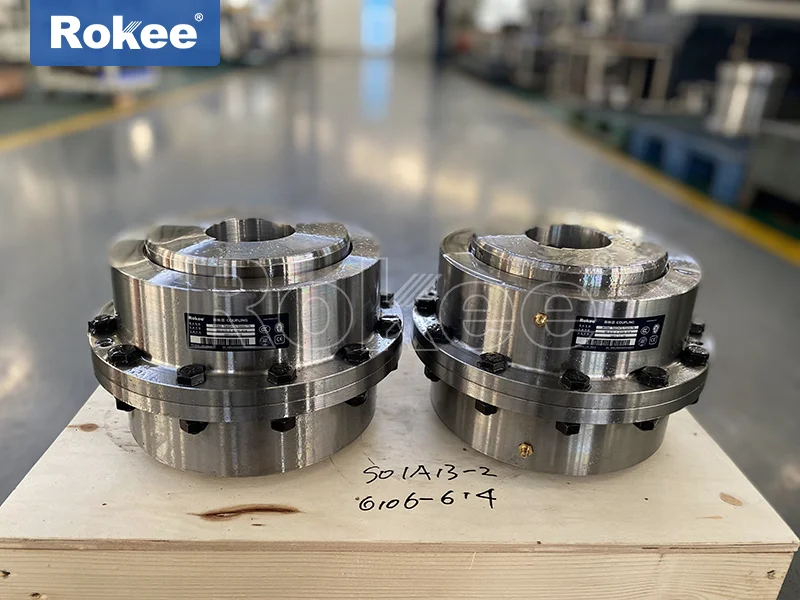
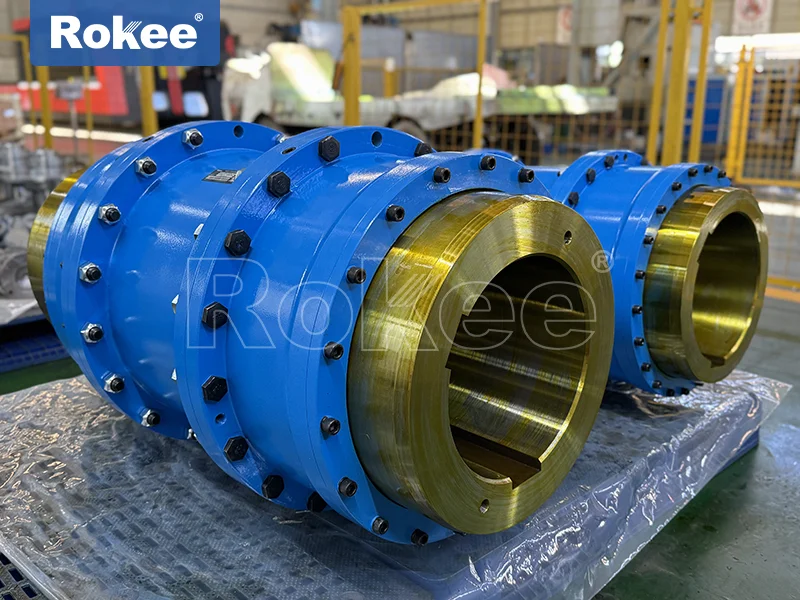
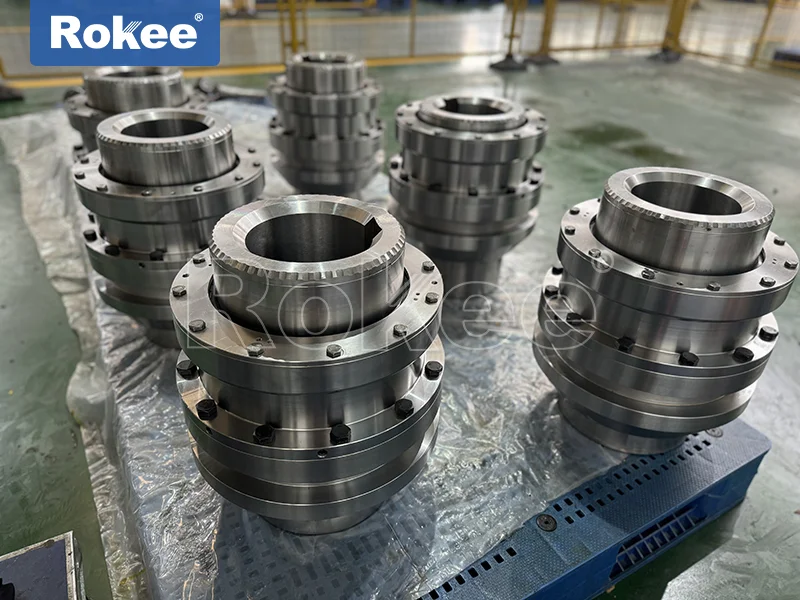
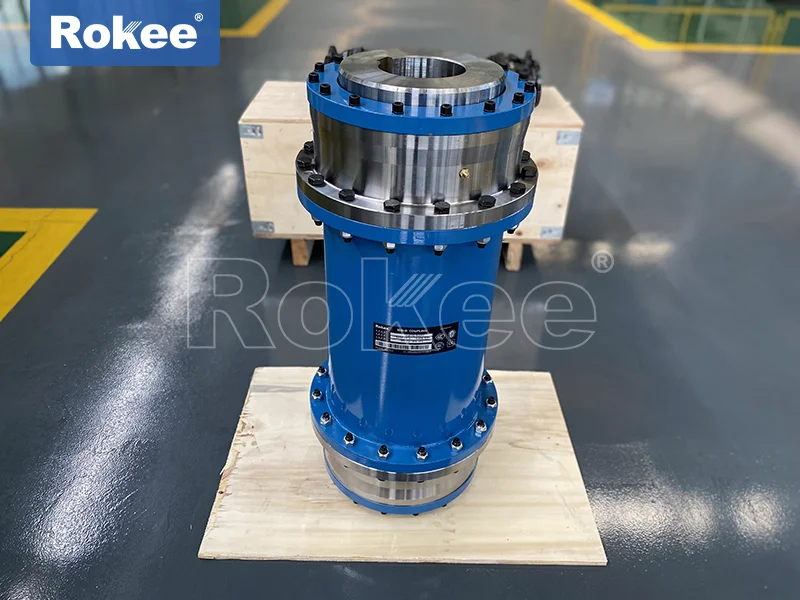
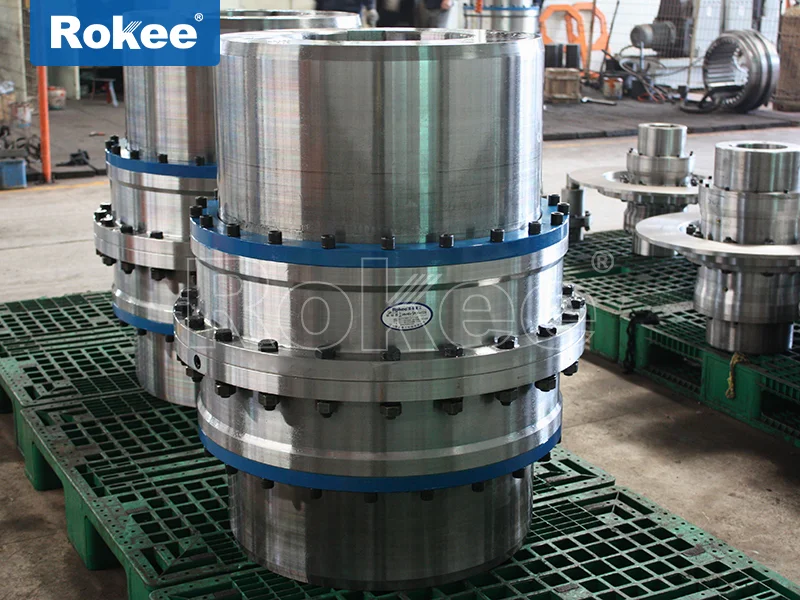
The overall structural design of the flexible barrel gear coupling follows the integrated mechanical optimization concept, with a compact and reasonable component layout that eliminates redundant transmission links while ensuring structural rigidity. The core structure is mainly composed of two gear hubs with precision-machined barrel-shaped external teeth and an outer sleeve matched with internal gear teeth, supplemented by professional sealing assemblies and lubrication protection structures. The most distinctive feature that distinguishes it from ordinary gear couplings is the special curved profile of the external gear teeth. The optimized barrel-shaped tooth surface enables the gear pair to form a multi-point uniform meshing state during operation, rather than the linear contact of traditional straight gear structures. This innovative structural design fundamentally improves the stress distribution state of the meshing tooth surface, avoids local stress concentration caused by unilateral contact, and greatly enhances the overall mechanical bearing capacity and wear resistance of the coupling. All structural components are processed with high-precision machining technology, ensuring the dimensional accuracy and meshing fit degree of each matching part, which lays a solid foundation for efficient and stable power transmission.
The working principle of the flexible barrel gear coupling is based on the mechanical meshing transmission of internal and external gear pairs and the flexible adaptive adjustment of the shaft system. In the actual operation of mechanical equipment, various unavoidable deviations always exist in the shaft connection system. Initial installation errors of equipment, subtle settlement of the equipment foundation after long-term operation, thermal expansion and contraction of metal components caused by operating temperature changes, and micro-vibration generated during equipment operation will all lead to different degrees of axial, radial and angular misalignment between the driving shaft and the driven shaft. These deviations will cause additional alternating stress and friction loss in traditional rigid connection structures, accelerate component wear, and even cause equipment vibration, noise and abnormal jamming in severe cases. The flexible barrel gear coupling can effectively cope with these operational problems through its unique tooth structure and meshing gap. When the equipment runs, the driving shaft drives one gear hub to rotate synchronously, and the barrel-shaped external teeth transmit torque and power to the internal teeth of the outer sleeve through smooth meshing motion, and then the outer sleeve drives the other gear hub and the connected driven shaft to operate synchronously. In this process, the curved tooth profile and reasonable meshing gap can produce flexible displacement compensation in multiple directions, automatically adapt to the misalignment deviation of the shaft system, offset the additional mechanical stress generated by shaft position deviation, and realize impact-free and loss-reducing power transmission.
The excellent comprehensive performance of flexible barrel gear couplings makes them far superior to ordinary coupling products in terms of service life and operational stability. The uniform stress distribution brought by the barrel-shaped tooth structure makes the wear of each tooth surface more balanced during long-term meshing operation, avoiding the rapid wear and tooth surface failure of individual gear teeth caused by concentrated load. Compared with traditional straight gear couplings, its effective service life can be significantly improved under the same operating conditions. In addition, the product is equipped with a fully closed sealing structure, which forms an independent and closed working space inside the coupling. This structure can effectively isolate external dust, moisture, corrosive particles and other harmful media, prevent external impurities from entering the meshing area to cause abrasive wear of gear teeth, and at the same time avoid the overflow of internal lubricating grease, ensuring that the gear meshing part is always in a good lubrication state. Good lubrication and sealing conditions not only reduce the friction coefficient of gear meshing, lower operational energy consumption and mechanical noise, but also effectively delay the oxidation and corrosion of metal components, further improving the continuous operation capacity and environmental adaptability of the coupling.
In terms of operational flexibility and fault tolerance, the flexible barrel gear coupling shows outstanding adaptive advantages, which can tolerate a certain range of comprehensive misalignment of the shaft system without affecting the normal power transmission effect. In the actual industrial production scenario, it is impossible to achieve absolute precise alignment of the two shafts during equipment installation, and the shaft position state will also change dynamically with the extension of operating time. Many traditional couplings are extremely sensitive to shaft misalignment, and slight deviation will lead to increased transmission resistance and accelerated component loss. The flexible barrel gear coupling relies on the flexible coordination of curved gear meshing, which can simultaneously compensate axial displacement, radial displacement and angular deflection of the shaft system, with high installation and operation fault tolerance. This feature not only reduces the precision requirements for equipment installation and debugging, saves the time and labor cost of equipment assembly and calibration, but also can adapt to the dynamic shaft position changes during long-term operation of equipment, avoiding frequent equipment shutdown maintenance caused by slight shaft deviation, and greatly improving the continuous operation efficiency of production equipment.
The vibration damping and impact resistance performance of the flexible barrel gear coupling is also one of its core competitive advantages in industrial applications. Most heavy-duty industrial equipment will generate instantaneous impact load and periodic vibration during start-up, shutdown and load switching. These dynamic loads will be directly transmitted along the shaft system, causing impact damage to key mechanical components and reducing the overall stability of the equipment. The special meshing structure of the barrel-shaped gear pair has a certain elastic buffer space. When subjected to instantaneous impact load, the tiny displacement and flexible fit between the gear teeth can absorb and attenuate part of the vibration and impact energy, weaken the transmission of dynamic load in the shaft system, and effectively reduce the rigid impact between mechanical components. This vibration damping characteristic can not only protect the coupling itself from impact damage, but also buffer the load impact on the driving and driven equipment, reduce the failure rate of bearings, motors and other matching components, and improve the overall operational stability and safety of the mechanical system.
In terms of daily operation and maintenance, the flexible barrel gear coupling has obvious advantages of low maintenance cost and simple operation. Benefiting from the efficient sealing system and stable lubrication environment, the loss of internal lubricating grease is extremely slow, and the lubrication cycle is greatly prolonged compared with ordinary couplings, avoiding the trouble of frequent grease replenishment. The overall structural design is modular and integrated, with fewer vulnerable parts and stable matching relationship between components. There is no need for frequent disassembly, inspection and adjustment in the daily operation process. During long-term service, the coupling can always maintain stable transmission performance without obvious performance attenuation, which greatly reduces the daily maintenance workload and later operation cost of the equipment. Even after long-term operation, when individual parts need to be maintained and replaced, the modular structure can realize quick disassembly and assembly, shorten the equipment shutdown time, and reduce the economic loss caused by production suspension.
This type of coupling has extremely wide application adaptability and can stably operate in various complex industrial working conditions. It can meet the power transmission requirements of low-speed heavy-load equipment and high-speed precision transmission equipment, and is suitable for continuous operating scenarios with large load changes and frequent start-stop operations. In heavy industrial fields such as metallurgy, mining, building materials and chemical industry, many equipment need to bear long-term heavy load and harsh environmental interference, and the flexible barrel gear coupling can rely on its high load-bearing capacity, wear resistance and corrosion resistance to maintain stable operation. In addition, in the transmission systems of general mechanical equipment, logistics conveying equipment and power machinery, it can also give full play to its advantages of high efficiency, low noise and high stability, and provide accurate and reliable power connection for various mechanical equipment.
From the perspective of industrial transmission system optimization, the application of flexible barrel gear couplings plays an important role in improving the overall operating quality of mechanical equipment. The efficient and lossless torque transmission capability ensures that the power output of the power source can be fully applied to the working components, avoiding power waste and improving the mechanical operation efficiency. The flexible compensation and vibration damping performance optimize the operating state of the shaft system, reduce the alternating load and fatigue loss of each component in the transmission system, and effectively extend the overall service life of the equipment. The reliable sealing and wear-resistant structure adapts to various harsh working environments, reduces equipment failures caused by environmental factors, and improves the operational reliability and continuity of industrial production. With the continuous upgrading of modern industrial equipment towards high efficiency, intelligence and long cycle operation, the requirements for the stability, durability and low maintenance performance of transmission components are constantly improving, and the technical advantages and application value of flexible barrel gear couplings will be further highlighted.
In conclusion, the flexible barrel gear coupling integrates the advantages of rigid transmission stability and flexible connection adaptability, and breaks through the performance limitations of traditional coupling products through innovative curved tooth structure design and optimized overall structure. Its excellent misalignment compensation ability, stable torque transmission performance, good vibration damping and impact resistance, as well as low maintenance and long-life characteristics, make it a high-performance core component in the field of mechanical transmission. In the increasingly complex modern industrial working conditions, this coupling can effectively solve various shaft connection and power transmission problems, provide strong support for the efficient, stable and long-term operation of mechanical equipment, and has irreplaceable application value and broad development prospects in the field of industrial manufacturing and mechanical engineering.