Gear Coupling With Brake Drum
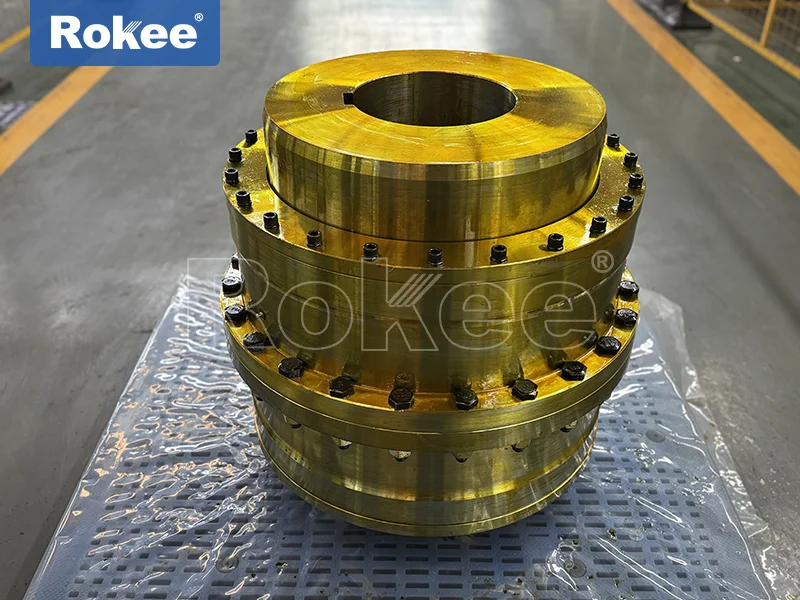
Gear coupling with brake drum is a multifunctional integrated mechanical component specially designed for heavy-duty industrial transmission systems, which perfectly combines flexible gear transmission and friction braking functions into a single compact assembly. Different from traditional mechanical configurations that separate transmission couplings and brake components, this integrated structure effectively optimizes the overall layout of mechanical equipment, saves installation space, and simplifies the assembly and debugging process of transmission and braking systems. It mainly relies on precision gear meshing to stably transmit rotational torque between driving and driven shafts, while the integrated brake drum provides a professional friction braking surface for matching brake devices. Featuring strong torque bearing capacity, excellent misalignment adaptability and reliable braking coordination, this coupling is widely applied in various heavy-load mechanical equipment that requires synchronous power transmission and rapid braking control. It solves the problems of bulky structure, low integration and poor coordination accuracy of traditional split transmission and braking structures, and greatly improves the overall operational stability and safety of industrial mechanical systems.
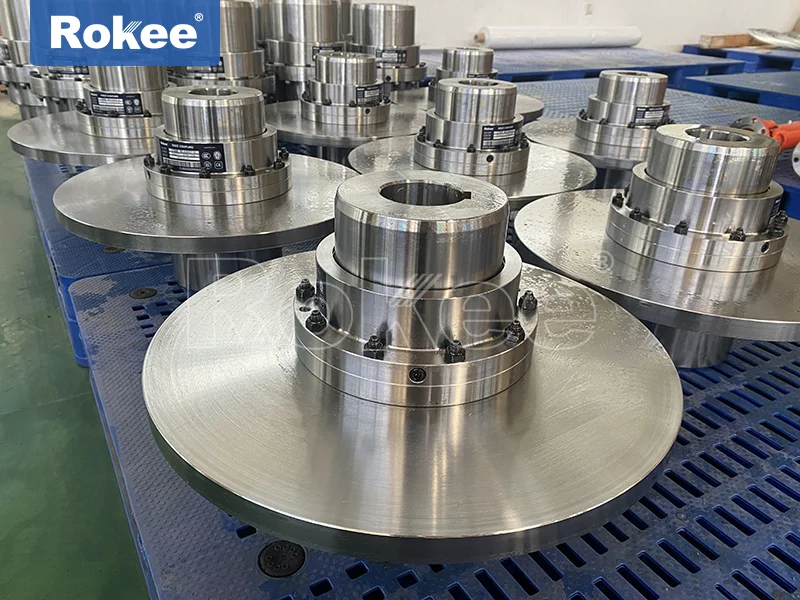
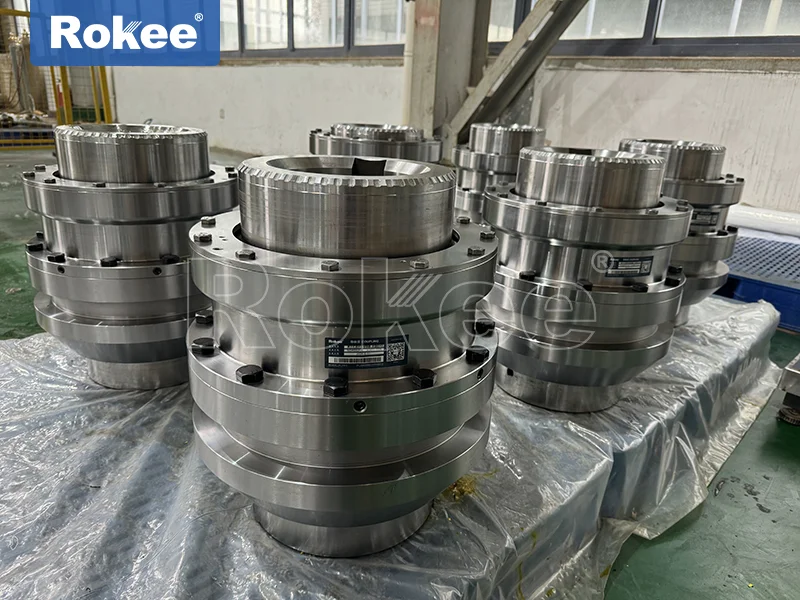
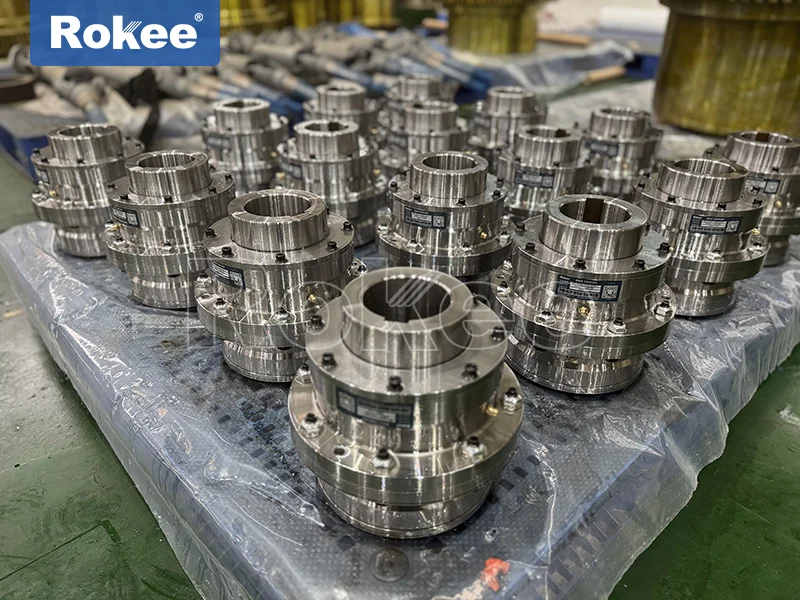
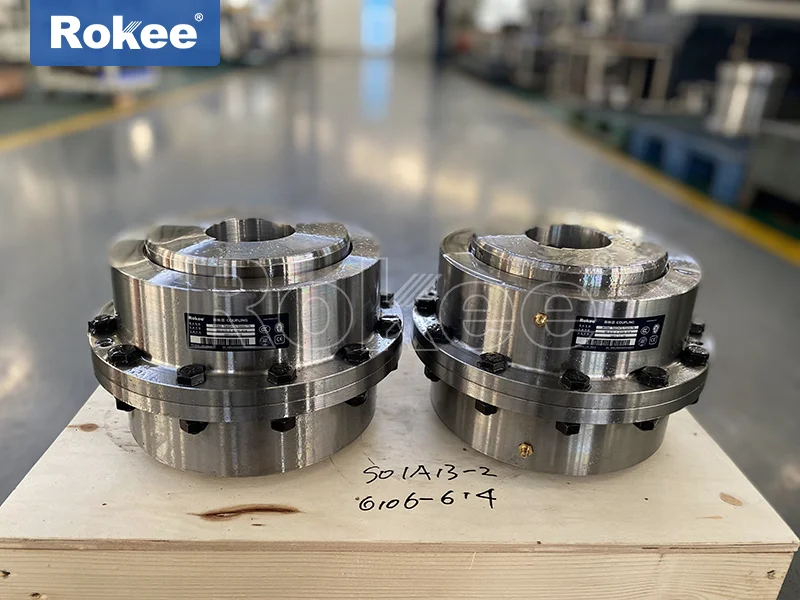
The overall structural design of tooth coupling with brake drum follows the integrated and lightweight mechanical design concept, consisting of three core functional parts: gear transmission assembly, connecting and positioning components, and integrated brake drum. The gear transmission part is composed of two symmetric gear hubs with external drum-shaped teeth and an outer sleeve with internal gear teeth. The unique drum-shaped tooth profile is polished and processed with high precision, which enables the gear pair to maintain stable meshing state under complex operating conditions. The two gear hubs are respectively fixed on the driving shaft and driven shaft through key connection or interference fit, realizing synchronous rotation and torque transmission. The brake drum is integrally cast or welded on the outer side of the gear sleeve, forming an integrated structure with the transmission part without additional connecting parts. Auxiliary components such as sealing rings and anti-loosening bolts are equipped at the assembly gaps, which can effectively prevent dust, moisture and lubricating oil leakage. This integrated structural design eliminates the cumulative installation error caused by separate installation of transmission and braking parts, ensures the coaxiality of the transmission shaft and the braking friction surface, and lays a solid foundation for stable operation and accurate braking of the equipment.
The working mechanism of gear coupling with brake drum can be divided into two independent and coordinated working states: normal power transmission and emergency or fixed-speed braking. In the conventional power transmission state without braking operation, the driving shaft drives the connected gear hub to rotate, and the drum-shaped external teeth mesh tightly with the internal gear sleeve to transmit torque to the driven gear hub, thereby driving the driven shaft and the load equipment to operate synchronously. The flexible meshing characteristics of drum-shaped teeth can effectively buffer the vibration and impact generated during equipment startup, operation and load switching, and adapt to tiny angular, axial and parallel misalignments between the two shafts caused by equipment operation and mechanical wear. When the system needs to slow down or stop running, the external brake device is activated, and the brake shoes or brake pads tightly press the inner friction surface of the integrated brake drum. The friction torque generated by the contact surface counteracts the rotational torque of the coupling and the transmission shaft, so as to realize smooth deceleration and rapid parking of the equipment. The two working states switch flexibly without mutual interference, realizing the organic unity of efficient power transmission and reliable braking control.
This type of integrated coupling has prominent performance advantages compared with traditional split transmission and braking components, making it more suitable for complex and harsh industrial working conditions. First of all, the highly integrated structure greatly reduces the overall volume and weight of the transmission and braking system, simplifies the equipment layout, and reduces the difficulty of daily installation and later disassembly and maintenance. Secondly, the drum-shaped gear meshing structure has larger contact area and more uniform stress distribution than ordinary straight tooth gears, which can bear higher heavy-load torque and maintain stable transmission efficiency under long-term continuous operation. In addition, the integrated brake drum has high structural rigidity and good friction surface uniformity, which can ensure stable braking force output, avoid braking deviation and slipping problems, and improve the safety of equipment operation. Moreover, the flexible connection characteristics of the gear coupling can effectively reduce mechanical vibration and noise during operation, buffer the impact load of the transmission system, and prolong the service life of the entire mechanical transmission mechanism and matching braking components.
Gear coupling with brake drum has excellent environmental adaptability and can maintain stable working performance in various harsh industrial operating environments. It can adapt to continuous heavy-load operation, intermittent start-stop operation and frequent braking working cycles, and is not easy to generate structural deformation and performance attenuation under long-term alternating load. The surface of the brake drum is treated with special wear-resistant and anti-corrosion process, which can resist the erosion of dust, moisture and weak corrosive gas in the industrial site, and maintain the flatness and friction stability of the braking surface for a long time. The internal gear transmission cavity is equipped with a reliable sealing structure, which can effectively isolate external impurities, prevent abrasive particles from entering the meshing gap of gears, and avoid gear wear, jamming and other failures caused by impurity invasion. Meanwhile, the structural design reserves a reasonable lubrication space, which is convenient for filling and replacing lubricating grease, ensuring that the gear meshing part maintains good lubrication state, reducing friction and wear, and adapting to long-term uninterrupted industrial production needs.
Daily maintenance and fault prevention of teeth coupling with brake drum is simple and standardized, which can effectively reduce equipment operation and maintenance costs and improve production continuity. The core of daily maintenance lies in regular inspection of gear meshing state, lubrication condition and brake drum friction surface. It is necessary to regularly check the tightness of connecting bolts and the fixation of shaft connection parts to prevent equipment failure caused by loose parts during high-speed operation and heavy-load transmission. Regularly supplement and replace special lubricating grease for gear transmission parts to avoid dry friction and excessive wear of gear teeth, and ensure the efficiency and stability of torque transmission. For the brake drum friction surface, regular cleaning is required to remove dust, oil stains and wear debris on the surface, so as to prevent the reduction of friction coefficient which affects the braking effect. In addition, it is necessary to regularly observe the operation vibration and noise of the coupling, timely judge and eliminate potential faults such as gear meshing deviation and local wear of the brake drum, avoid small faults evolving into large-scale equipment shutdown failures, and ensure the long-term stable and reliable operation of the equipment.
Gear coupling with brake drum is widely used in various heavy-duty mechanical equipment that requires simultaneous power transmission and braking control, covering multiple industrial production fields. In material handling machinery such as cranes and conveyors, it is used as a core transmission and braking component to realize stable start-stop and accurate positioning of equipment, ensuring the safety and efficiency of material handling operations. In mining and metallurgical equipment, it adapts to high-load, high-vibration and harsh dust working environments, providing stable torque transmission and reliable braking guarantee for large-scale mining machinery and metallurgical transmission equipment. In port machinery, cement processing equipment and thermal power transmission systems, this coupling also shows excellent working performance, meeting the continuous and high-intensity operation needs of industrial equipment. Its versatile performance and high integration make it an indispensable core component of modern heavy-duty industrial transmission systems, providing strong technical support for the stable and safe operation of industrial mechanical equipment.
With the continuous upgrading of modern industrial intelligent manufacturing and high-efficiency production requirements, the performance optimization and technical upgrading of gear coupling with brake drum are also advancing continuously. The current development trend focuses on improving structural durability, reducing operating energy consumption and enhancing adaptive intelligence. On the basis of maintaining the original integrated advantages, the optimized product adopts higher-strength wear-resistant materials and more precise processing technology, further improving the torque bearing capacity and friction surface durability of the coupling, and extending the overall service life. At the same time, the structural optimization reduces the running friction resistance and mechanical energy loss, improving the energy utilization efficiency of the transmission system. In addition, combined with modern mechanical monitoring technology, the new generation of coupling can realize real-time monitoring of operating state, gear wear and braking performance, helping enterprises realize predictive maintenance of equipment. This continuous technical innovation makes the gear coupling with brake drum more adaptable to the high-efficiency, intelligent and low-consumption development direction of modern industry.