Gear Coupling For Mixer
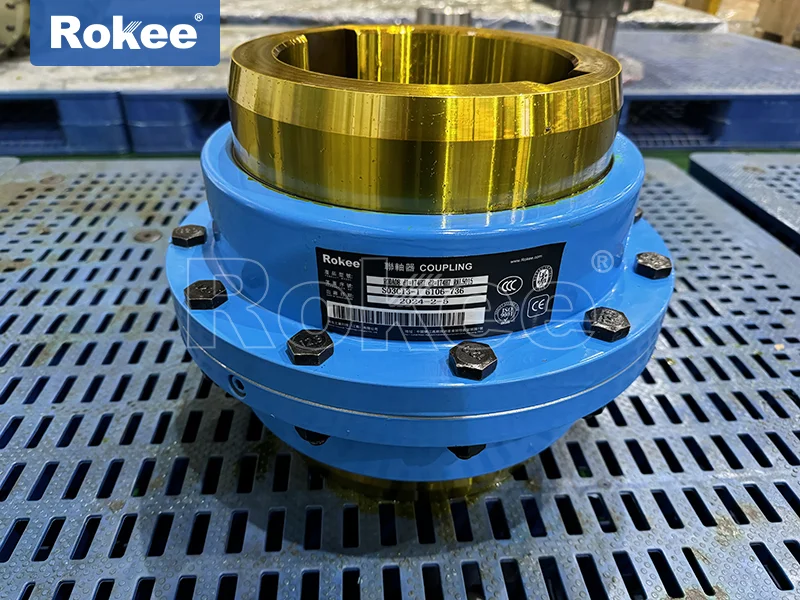
Gear couplings serve as indispensable power transmission components for industrial mixers, acting as a critical connecting bridge between mixer drive motors and stirring shafts to ensure stable and efficient mechanical operation. Unlike ordinary flexible couplings, this specialized coupling is uniquely optimized for the harsh working conditions of mixing equipment, featuring high torque resistance, strong misalignment compensation, and excellent anti-vibration performance. Mixers typically operate with continuous rotational motion, frequent load fluctuations, and subtle shaft displacement caused by material stirring and equipment vibration, which puts forward strict requirements on the stability and durability of transmission parts. Gear couplings address these operational pain points effectively through the precise meshing of internal and external gear structures, realizing synchronous rotation of dual shafts while buffering instantaneous impact loads generated during mixing. Widely applied in various industrial mixing scenarios, from low-viscosity liquid blending to high-density solid-liquid material stirring, it maintains reliable power output, reduces transmission failure rates, and extends the overall service life of mixer equipment, becoming a core guarantee for the long-term stable operation of mixing systems.
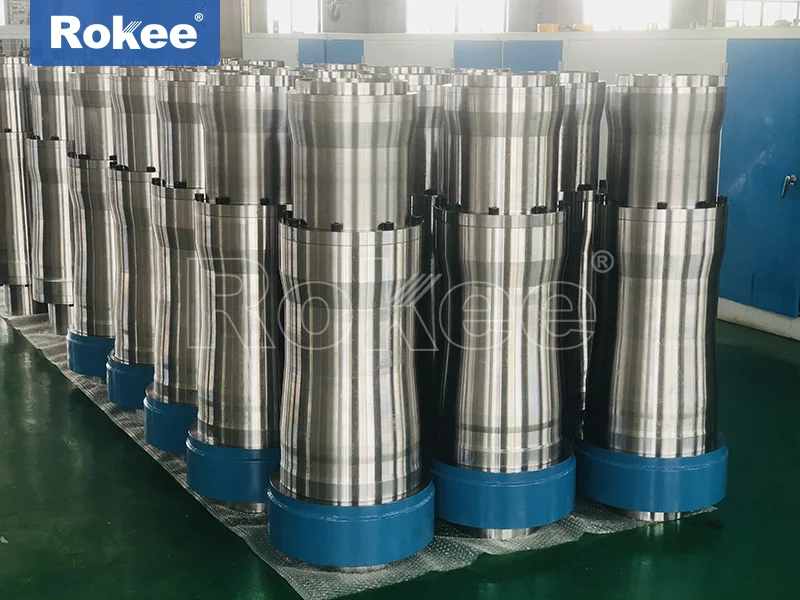
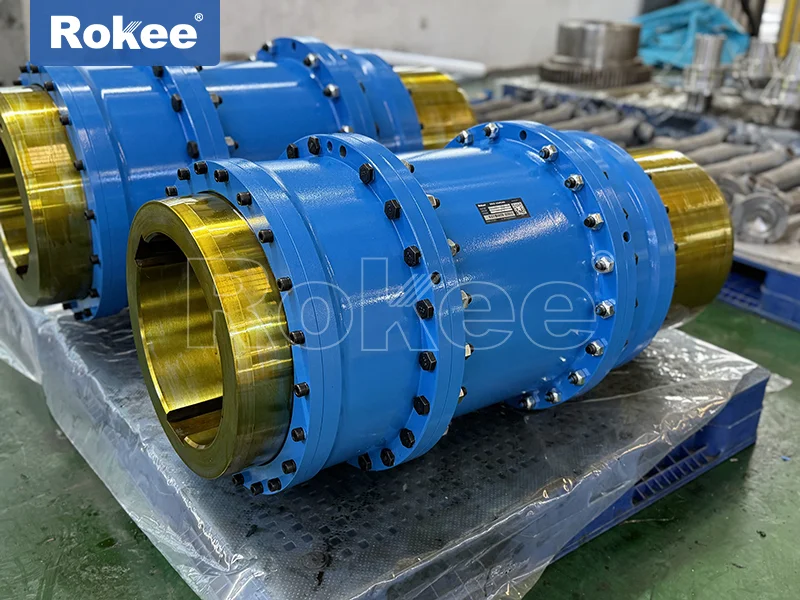
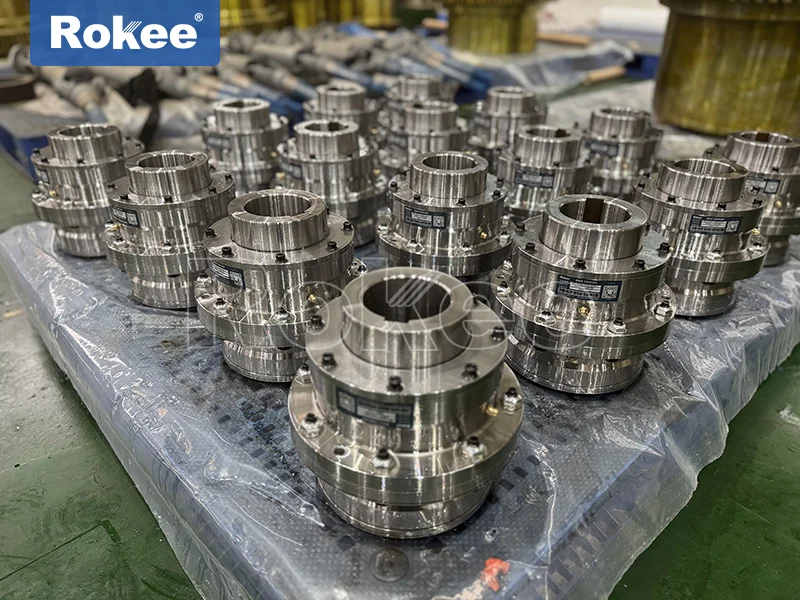
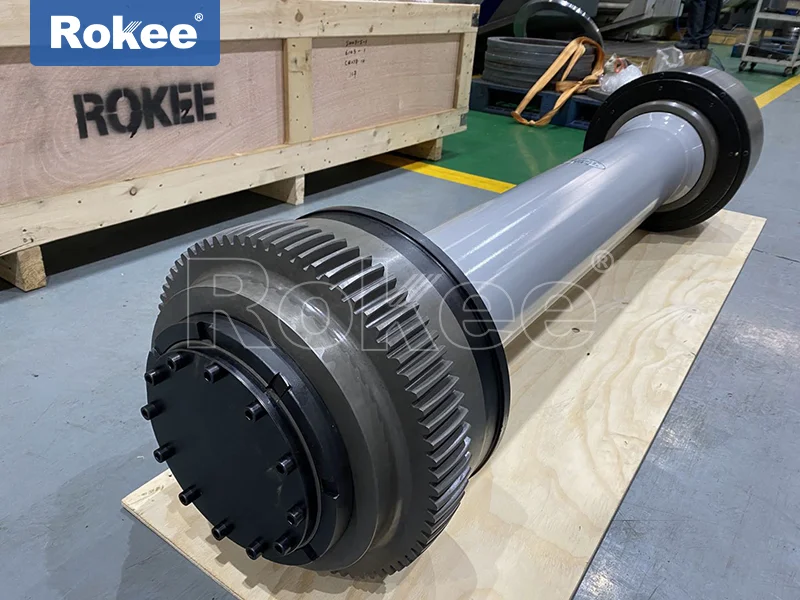
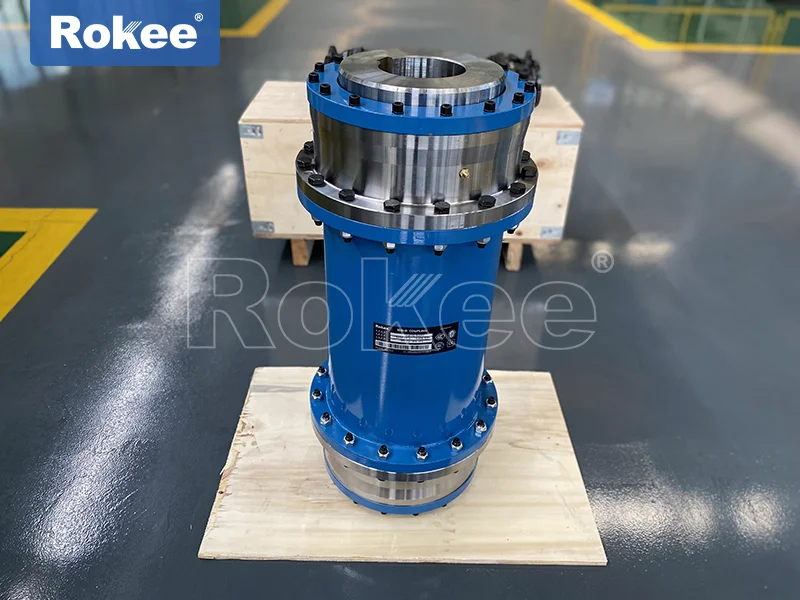
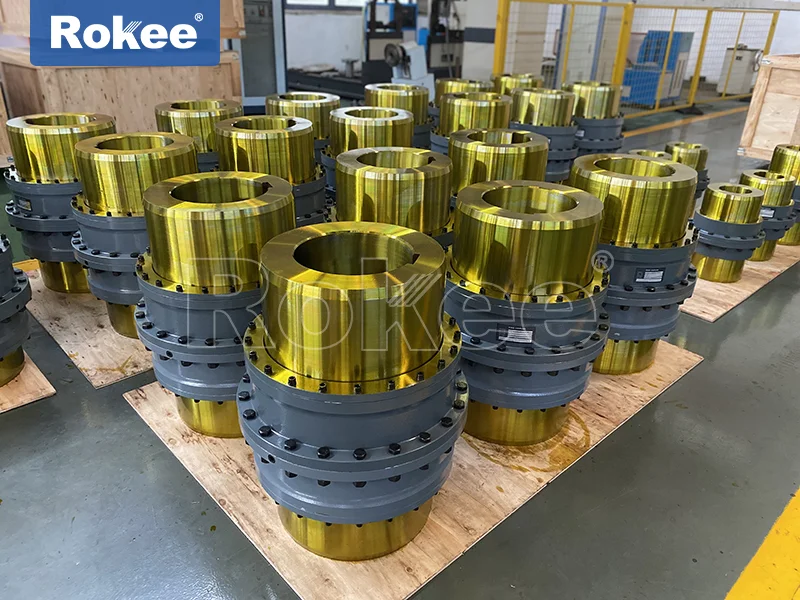
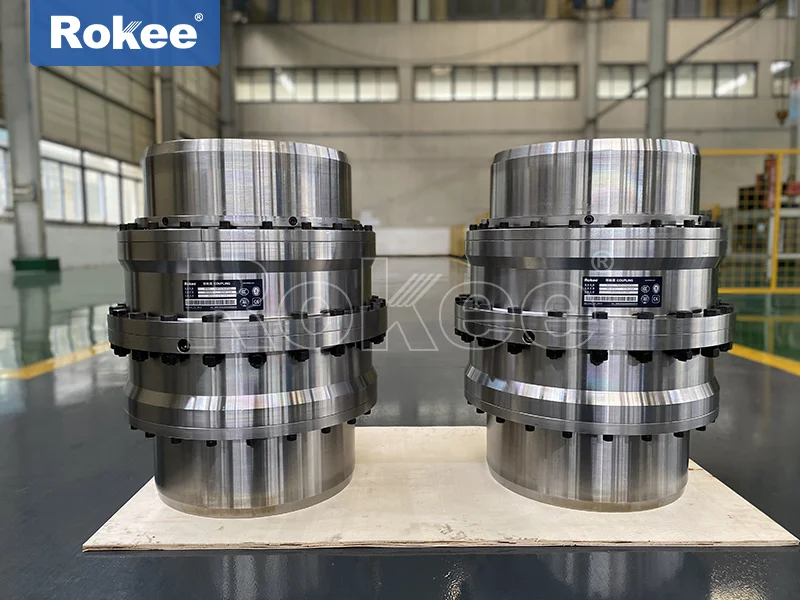
The basic structural composition of mixer gear couplings is professionally designed to adapt to the dynamic operating characteristics of mixing equipment, consisting mainly of two toothed hubs and a paired internal gear sleeve, forming a double-engagement transmission structure with high structural stability. The outer teeth of the hubs adopt a crowned tooth profile, a key structural improvement that distinguishes mixer-specific gear couplings from ordinary industrial gear couplings. This special tooth shape eliminates the stress concentration problem of straight-tooth structures during frequent load changes, allowing the gear teeth to bear uniform pressure when the mixer stirs high-viscosity materials. The two hubs are fixedly installed on the motor output shaft and the mixer stirring shaft respectively, while the internal gear sleeve tightly engages with the outer teeth of the hubs to transmit rotational torque and power. All core components are forged from high-strength alloy materials and undergo strict heat treatment processes to enhance surface hardness and overall toughness. This robust structural design enables the coupling to withstand the long-term alternating loads generated by mixer operation, avoiding structural deformation or tooth wear under continuous stirring conditions, and laying a solid foundation for stable power transmission in complex mixing working environments.
One of the most prominent advantages of gear couplings for mixers is their powerful multi-dimensional misalignment compensation capability, which solves the common operational problems of mixing equipment in actual production. During the installation and long-term operation of mixers, various shaft misalignments are inevitable, including parallel radial offset caused by installation errors, angular deflection generated by equipment vibration, and axial displacement resulting from thermal expansion and contraction of mechanical components during continuous operation. Ordinary rigid couplings cannot adapt to these deviations, which will cause severe shaft abrasion, increased transmission noise, and even equipment jamming. In contrast, the reasonable tooth backlash and flexible meshing design of gear couplings can automatically compensate for the above three types of misalignments in real time. When the mixer stirs uneven materials and produces irregular vibration, the gear meshing gap can buffer tiny shaft position changes, ensuring that the power transmission process remains smooth and unobstructed. This compensation performance greatly reduces the assembly precision requirements of mixer equipment and effectively avoids mechanical failure and efficiency attenuation caused by shaft misalignment.
High torque transmission capacity makes gear couplings the preferred transmission component for heavy-duty industrial mixers, which often need to overcome large material resistance during operation. Industrial mixing scenarios such as chemical slurry blending, building material mortar stirring, and food raw material homogenization involve high-viscosity and high-density materials, requiring the mixer to output stable and strong torque for a long time. The multi-tooth simultaneous meshing structure of gear couplings forms a large contact stress area, enabling continuous and efficient transmission of high torque without torsional deformation or power loss. Compared with elastic couplings that rely on rubber or polymer buffer parts, gear couplings have no elastic fatigue problem under long-term high-load operation, maintaining stable transmission efficiency even during frequent start-stop and load fluctuation of mixers. In the working state of low speed and high torque unique to heavy mixers, the coupling can fully release transmission performance, avoid slipping and power attenuation, and ensure that the stirring shaft maintains consistent rotational speed and stirring force, thus guaranteeing the uniform mixing effect of industrial materials.
Vibration damping and impact resistance performance further optimize the operational stability of mixers, making gear couplings adaptable to complex and changeable mixing working conditions. Mixers often face instantaneous load impacts in actual work, such as sudden resistance increase when stirring solid-liquid mixed materials, and instantaneous current impact during equipment startup and shutdown. These sudden impacts will directly act on the power transmission system, easily causing damage to motor bearings and stirring shaft components. The special gear meshing structure of gear couplings can effectively absorb and buffer these instantaneous impact forces through tiny elastic deformation of tooth profiles and reasonable internal gaps. Different from rigid transmission structures that directly transfer impact loads, gear couplings decompose and weaken vibration and impact in the torque transmission process, reducing the vibration amplitude of the entire mixer transmission system. This excellent buffering performance not only improves the running smoothness of the equipment and reduces operating noise, but also protects the motor, reducer and other core equipment of the mixer, greatly reducing the probability of parts damage caused by impact vibration.
The durable material properties and stable structural design endow mixer gear couplings with ultra-long service life and low maintenance characteristics, meeting the continuous production needs of industrial mixing equipment. The core gear components are made of high-strength wear-resistant alloy steel, and after precision machining and surface hardening treatment, they have extremely strong wear resistance, corrosion resistance and fatigue resistance. Long-term continuous rotation and friction in conventional mixing environments will not cause rapid tooth wear or failure, and the structural integrity can be maintained for a long time. In terms of daily maintenance, gear couplings adopt a closed lubrication structure, which can store lubricating grease inside the sleeve for long-term lubrication of meshing parts. This design avoids frequent refueling maintenance, and the closed structure can also prevent dust, material residues and other impurities in the mixing workshop from entering the meshing gap, effectively reducing gear abrasion and failure risks. Compared with other types of couplings that require regular replacement of vulnerable parts, mixer gear couplings greatly reduce equipment maintenance frequency and production downtime, improving the overall production efficiency of mixing processes.
The wide application adaptability of gear couplings enables them to match various types and specifications of industrial mixers, covering diversified mixing production scenarios. Whether it is a small vertical mixer for fine chemical raw material blending, a large horizontal mixer for building aggregate stirring, or a professional industrial mixer for environmental protection sludge treatment, gear couplings can achieve precise matching and stable operation. By adjusting structural parameters such as gear modulus, hub size and sleeve specification, the coupling can adapt to mixers with different power levels, rotational speeds and load characteristics. For low-power and light-load mixing equipment, it ensures efficient and energy-saving transmission; for high-power and heavy-duty mixing equipment, it maintains super-high load-bearing capacity and operational stability. In addition, the compact structural design of gear couplings saves installation space for mixer equipment, is convenient for integrated assembly of mixing systems, and can adapt to various complex installation environments in industrial workshops, showing extremely high engineering practical value.
With the continuous upgrading of industrial mixing technology, the performance optimization of gear couplings for mixers is also advancing synchronously, becoming an important support for the intelligent and high-efficiency development of mixing equipment. Modern industrial production puts forward higher requirements for mixing efficiency, equipment stability and energy-saving performance, which drives the continuous innovation of gear coupling structure and technology. The optimized tooth profile design further improves torque transmission efficiency and reduces mechanical friction loss, realizing energy-saving operation of mixers; the upgraded sealing and lubrication structure adapts to more harsh working environments such as high humidity and corrosive gas in mixing workshops; the integrated forging process enhances the overall structural rigidity of the coupling and avoids local stress damage under extreme working conditions. As a key basic transmission component, gear couplings will continue to iterate and upgrade with industrial mixing technology, continuously solving new operational problems of mixing equipment, providing more stable, efficient and durable power transmission solutions for various industrial mixing scenarios, and promoting the steady improvement of industrial mixing production levels.