Flanged Curved Tooth Coupling
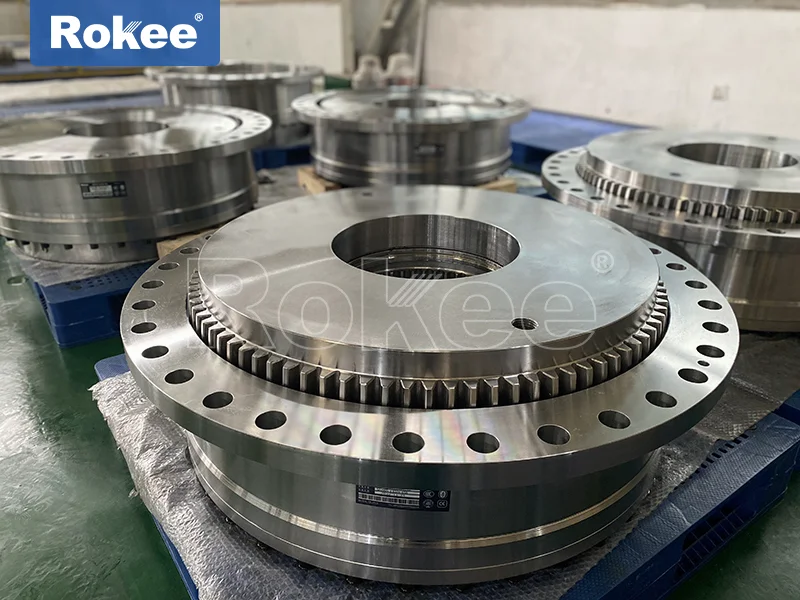
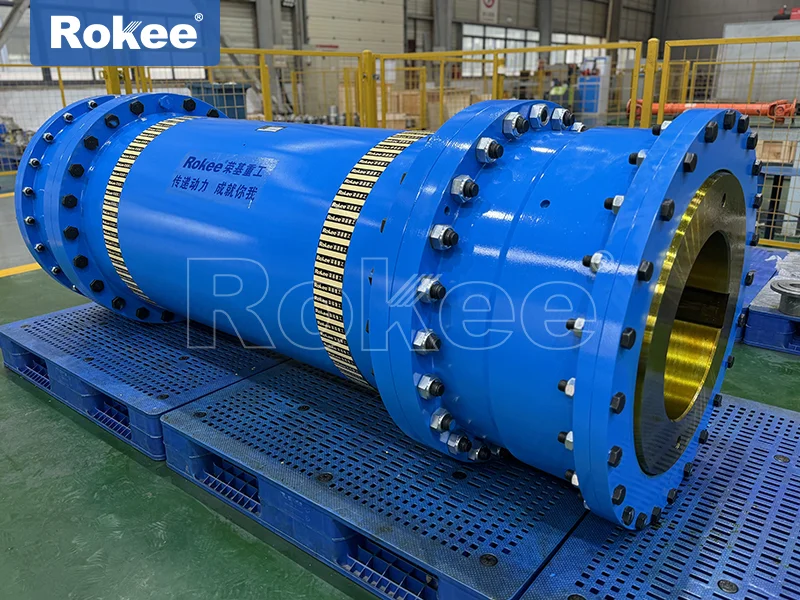
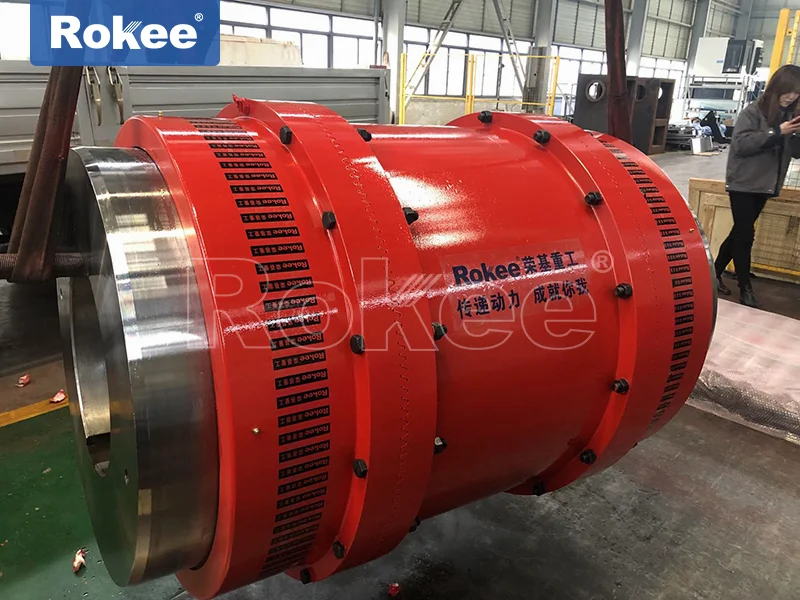
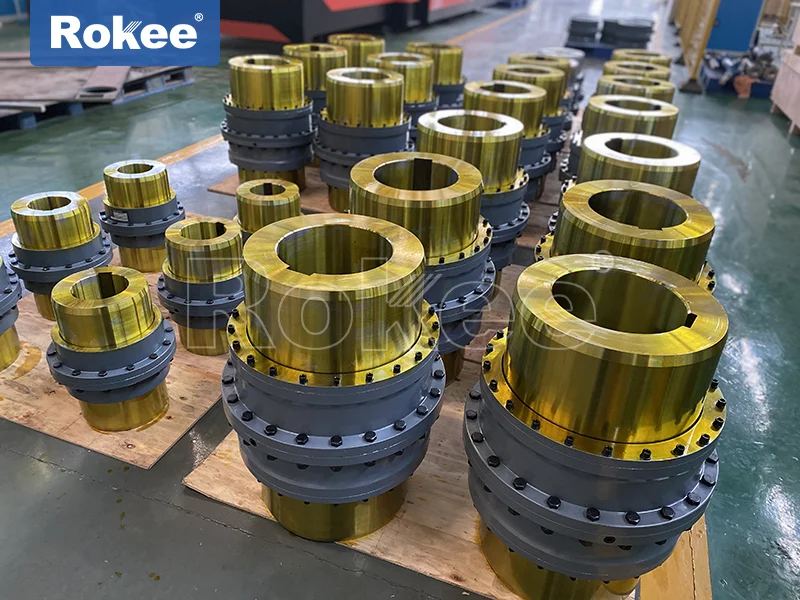
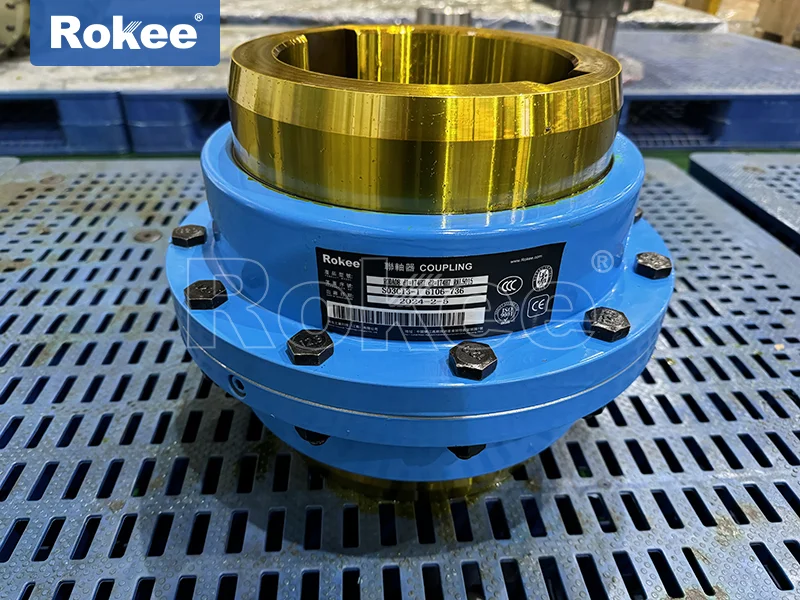
Flanged curved tooth coupling is a high-performance mechanical transmission component widely applied in industrial power connection systems, designed to solve the problems of rigid connection limitations and stress concentration in traditional transmission structures. Integrating flange connection structure and optimized curved tooth meshing technology, this coupling effectively transmits torque and rotational motion between two rotating shafts while accommodating multiple forms of shaft misalignment, including angular, radial and axial displacements. Different from conventional straight-tooth couplings, its externally curved tooth profile realizes full-surface uniform contact during operation, avoiding edge extrusion and local stress overload. The integrated flange design simplifies assembly and disassembly procedures, enhances overall structural stability, and adapts to high-speed, high-torque and continuous operating working conditions. With excellent vibration buffering, wear resistance and fault tolerance, it has become a core connecting part for heavy machinery, transmission equipment and industrial production lines, ensuring stable and efficient power transmission in complex industrial operating environments.
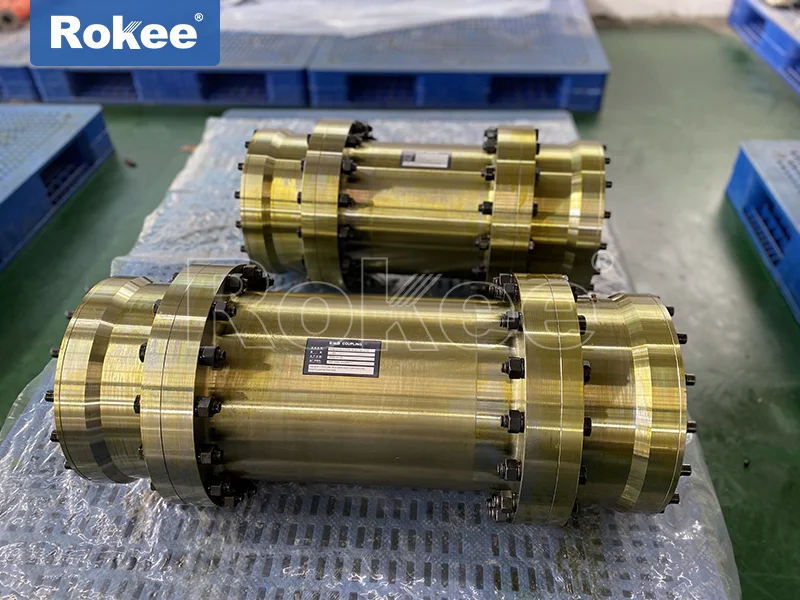
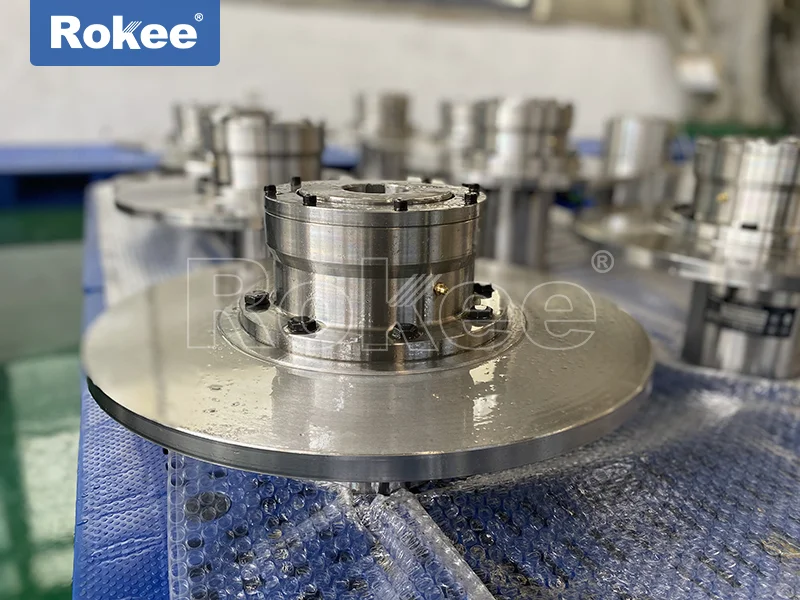
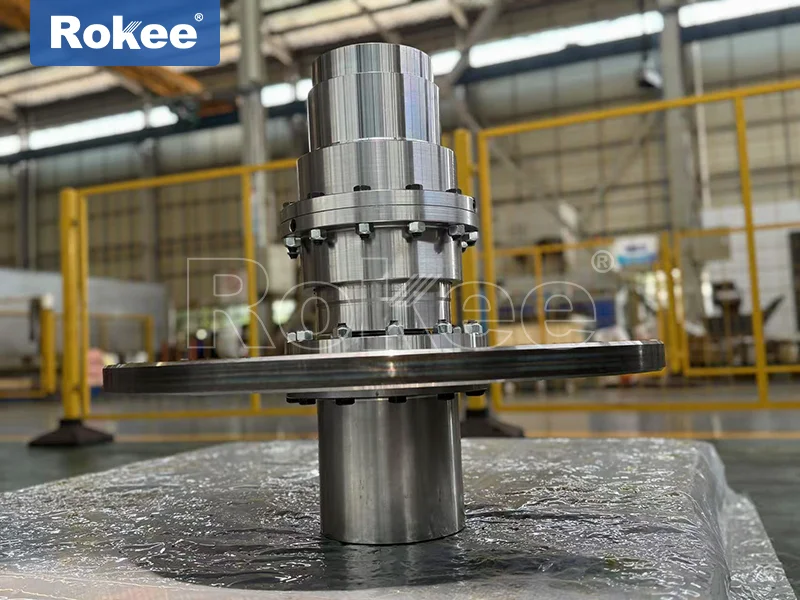
The structural composition of flanged curved tooth coupling features compact integration and reasonable mechanical layout, consisting of core components including curved tooth outer hubs, internal tooth sleeves, integral flange plates and matched fastening parts. The external teeth processed with special curved profiles are distributed on the outer circle of the driving and driven hubs, with the spherical curvature center of each tooth precisely aligned with the gear axis. This structural design fundamentally changes the contact mode between meshing teeth compared with straight-tooth structures. The internal tooth sleeves adopt a cylindrical integral structure with straight internal teeth, forming a precise meshing pair with the outer curved teeth. The flange plate is integrated with the tooth hub structure, eliminating the need for additional connecting transition parts and reducing assembly gaps and structural looseness. All components adopt integrated forging and precision machining processes, ensuring high structural rigidity and dimensional accuracy. The internal sealing structure is equipped with grease storage cavities and dust-proof components, which can effectively lock lubricating grease, prevent external dust, moisture and impurities from entering the meshing area, and maintain stable meshing conditions for a long time. The overall structure has no redundant auxiliary parts, realizing lightweight design while maintaining high load-bearing capacity, and adapting to various installation spaces of industrial equipment.
The unique working principle of flanged curved tooth coupling underpins its superior transmission performance and adaptive capacity. The entire power transmission process relies on the flexible meshing coordination between curved external teeth and internal straight teeth. When the driving shaft operates, it drives the curved tooth hub to rotate synchronously, and torque is evenly transmitted to the internal tooth sleeve through the full contact tooth surface, and then transferred to the driven shaft to realize synchronous rotation of the entire transmission system. Thanks to the spherical curved design of external teeth, the contact position between meshing teeth can automatically adjust in real time when the connected two shafts produce misalignment during operation. This real-time adjustment eliminates the rigid collision and edge contact that occur in straight-tooth couplings under offset conditions, dispersing the concentrated pressure on local tooth surfaces to the entire meshing area. During high-speed operation, the slight sliding friction between curved tooth surfaces can buffer mechanical vibration and rotational impact generated by equipment operation. The tooth gap reserved by the curved profile provides sufficient displacement compensation space, allowing the coupling to tolerate reasonable axial stretching, radial deflection and angular deviation of the shaft system. This flexible transmission mechanism ensures continuous and stable power output even when the equipment has minor installation errors or operational shaft displacement, avoiding transmission interruption and mechanical failure caused by shaft misalignment.
Flanged curved tooth coupling boasts outstanding mechanical performance advantages that make it stand out among various gear coupling products. First of all, it has ultra-high torque transmission efficiency, as the uniform tooth surface contact reduces friction loss and mechanical resistance during power transmission, realizing nearly lossless torque output. Compared with traditional couplings of the same volume, its effective load-bearing area is significantly increased, enabling it to bear higher instantaneous impact load and stable continuous load. Secondly, it has excellent misalignment compensation capability, which can adapt to multiple composite displacements of the shaft system, greatly reducing the additional mechanical stress generated by shaft offset on equipment bearings, shafts and other components. In terms of wear resistance, the curved tooth profile avoids local over-wear and tooth edge abrasion, and the uniform stress distribution slows down the fatigue aging speed of tooth surfaces, effectively extending the service life of the coupling. Additionally, the integral flange structure improves the overall connection rigidity and anti-loosening performance, avoiding connection looseness caused by long-term vibration. It also shows good adaptability to high-speed operating conditions, with stable rotational operation, low vibration and low noise, and will not produce abnormal friction and heating problems during long-term continuous operation. These comprehensive performance advantages make it suitable for harsh and high-load industrial working scenarios that require long-term stable operation.
The processing and manufacturing technology of flanged curved tooth coupling determines its final service performance and operational stability, requiring strict precision control in each production link. The core tooth profile processing adopts professional gear hobbing and tooth surface modification technology, which precisely carves the spherical curved structure of external teeth to ensure the consistency of tooth curvature and the uniformity of tooth surface smoothness. The blank of coupling components is made of high-strength alloy materials with good toughness and fatigue resistance, which undergoes integral forging treatment to optimize the internal metal fiber structure, eliminate internal pores and impurities, and improve the overall structural strength and impact resistance. After rough machining, all key surfaces including tooth surfaces, flange sealing surfaces and shaft matching surfaces are processed by finish turning and grinding to ensure high dimensional accuracy and surface flatness. Heat treatment processes such as quenching and tempering are applied to the finished components to improve the hardness and wear resistance of the tooth surface while maintaining the overall toughness of the parts and preventing tooth breakage and structural fracture under heavy load. In the final assembly stage, professional precision detection tools are used to check the meshing gap, coaxiality and flatness of the flange surface to ensure that all assembly parameters meet the design requirements. The standardized and refined manufacturing process ensures that each coupling has stable performance, high structural precision and reliable transmission capacity.
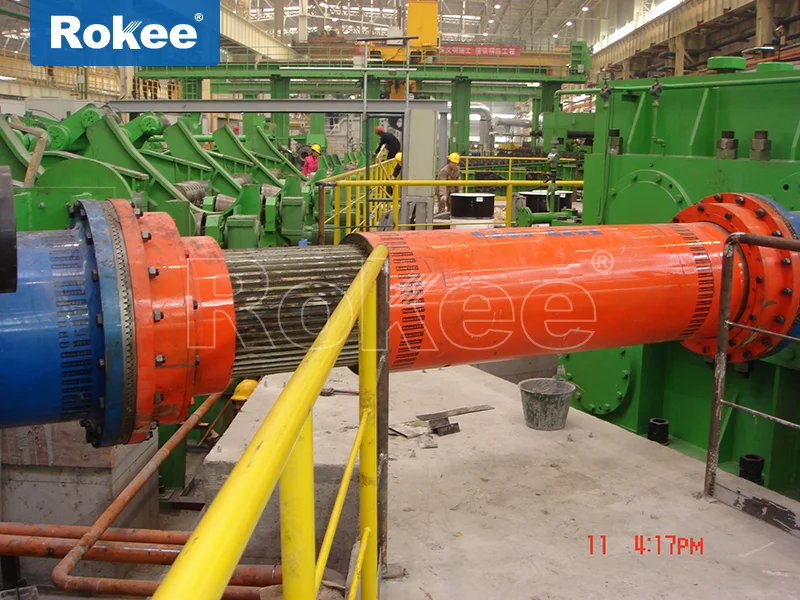
Flanged curved tooth coupling has a wide range of application scenarios in modern industrial fields, covering almost all mechanical equipment that requires high-stability power transmission. In heavy industrial equipment, it is widely used in large conveying machinery, crushing equipment and metallurgical transmission equipment, adapting to high-torque and high-impact operating characteristics to ensure stable power output of heavy-load equipment. In the field of mechanical transmission and automation production lines, it serves as a key connecting component for motor and reducer matching, precise transmission equipment and continuous operation production equipment, effectively solving the transmission instability problem caused by equipment vibration and shaft displacement. In engineering machinery and environmental protection equipment, it is applied to fan equipment, pump body transmission systems and mobile engineering machinery, with good vibration damping performance and environmental adaptability to cope with complex working conditions such as dust and variable load operation. In addition, it also plays an important role in petrochemical, building materials and power industries, providing reliable transmission support for various continuous operating industrial systems. Its strong scenario adaptability stems from its flexible compensation capability, high load resistance and long-term stable operational performance, making it a universal and high-reliability transmission component in industrial manufacturing.
Daily maintenance and fault prevention are crucial to prolonging the service life and maintaining the stable performance of flanged curved tooth coupling. Regular lubrication maintenance is the core of daily upkeep, as good lubrication can reduce tooth surface friction, slow down wear and avoid dry friction heating and tooth surface damage. It is necessary to select high-temperature and wear-resistant special lubricating grease, and replace and supplement the grease regularly according to the equipment operating cycle to ensure that the meshing tooth surface is fully covered by the lubricating medium. Regular visual and instrumental inspection is also essential, including checking whether the flange connecting fasteners are loose, whether there is abnormal vibration and noise during coupling operation, and whether the sealing structure is damaged or leaking grease. During equipment operation, abnormal overload and long-term extreme misalignment operation should be avoided, as excessive load and offset will cause accelerated wear of tooth surfaces and fatigue damage of structural parts. For equipment that operates continuously for a long time, regular disassembly and inspection should be carried out to clean internal dust and deteriorated lubricating grease, check the wear degree of curved tooth surfaces and internal teeth, and replace worn parts in a timely manner. Scientific and standardized maintenance can effectively avoid common faults such as transmission jitter, noise increase and torque attenuation, ensuring the long-term stable and efficient operation of the coupling.
With the continuous upgrading of modern industrial manufacturing technology and the increasingly stringent requirements for mechanical transmission stability and efficiency, the technical optimization and development space of flanged curved tooth coupling is constantly expanding. The future development direction focuses on structural lightweight optimization, high-precision tooth profile upgrading and intelligent adaptive performance improvement. Through finite element mechanical simulation analysis, the tooth profile structure and overall stress distribution will be further optimized to reduce structural weight while improving load-bearing efficiency and fatigue resistance. The application of new high-strength, wear-resistant and corrosion-resistant alloy materials will enhance the adaptability of the coupling to extreme working environments such as high temperature, high humidity and strong corrosion. In terms of processing technology, intelligent precision machining and digital detection technology will realize more accurate tooth profile modification and dimensional control, further improving transmission accuracy and misalignment compensation flexibility. In addition, combined with industrial intelligent monitoring technology, the coupling is expected to realize real-time monitoring of operating temperature, vibration amplitude and tooth surface wear state, realizing early warning of potential faults. These technical optimizations will further expand the application scope of flanged curved tooth coupling and meet the high-standard transmission requirements of intelligent and high-efficiency modern industrial equipment.