Adaptation Application Scheme Of Gear Coupling And Sandwich Panel Production Line
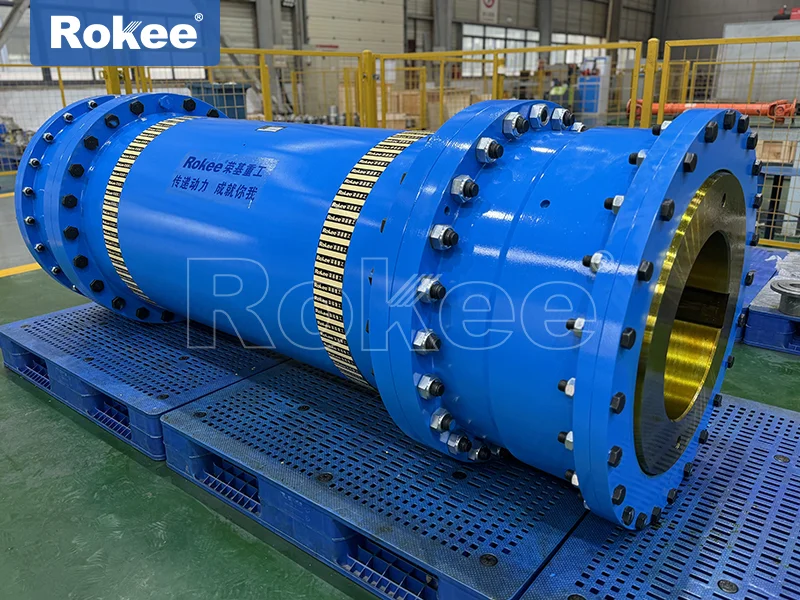
In the modern industrial production system, the sandwich panel production line has become an indispensable core equipment in the construction materials industry, relying on its efficient continuous production capacity to meet the growing market demand for sandwich panels with light weight, high strength, thermal insulation and sound insulation properties. As a key component in the power transmission system of the production line, the gear coupling undertakes the important task of connecting the driving end and the executing end, transmitting torque stably, compensating for installation deviations and buffering operational shocks. The rational adaptation and scientific application of gear couplings directly determine the operational efficiency, stability and service life of the sandwich panel production line, and also affect the quality consistency of the final products. Therefore, it is of great practical significance to study the adaptation application scheme of gear couplings and sandwich panel production lines, optimize the matching relationship between the two, and solve the potential problems in the application process to promote the high-quality and efficient operation of the production line.
Before carrying out the adaptation application of gear couplings and sandwich panel production lines, it is necessary to fully understand the structural characteristics, operational principles and working conditions of both, which is the premise and foundation to ensure the rationality and effectiveness of the adaptation scheme. The sandwich panel production line is a complex integrated system composed of multiple functional units, including unwinding, forming, gluing, compounding, curing, cutting and stacking. Each unit is closely connected and coordinated with each other to form a continuous and efficient production workflow. In the operation process of the production line, the driving devices such as motors and reducers need to transmit power to the executing components such as rollers, conveyors and cutting machines through the coupling, so as to drive each unit to complete the corresponding production tasks. Due to the different functional positioning of each unit, the requirements for torque transmission, speed regulation and running stability are also different. For example, the forming unit and compounding unit need stable and uniform torque transmission to ensure the flatness and bonding quality of the sandwich panel surface, while the cutting unit needs accurate torque control and quick response to realize the precise cutting of panels with different specifications.
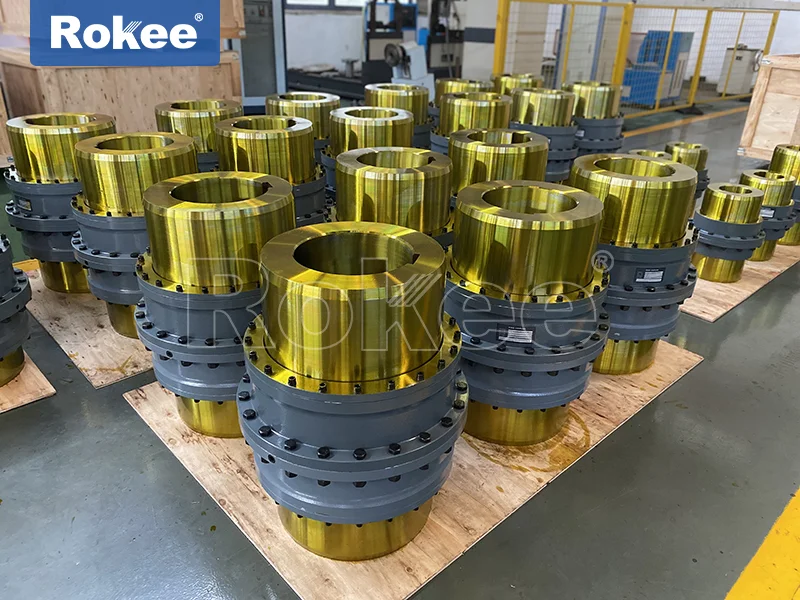
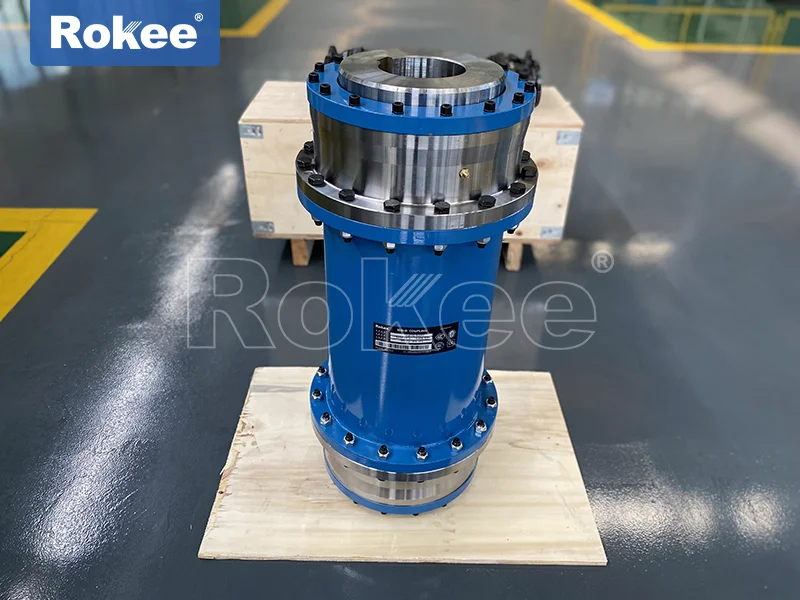
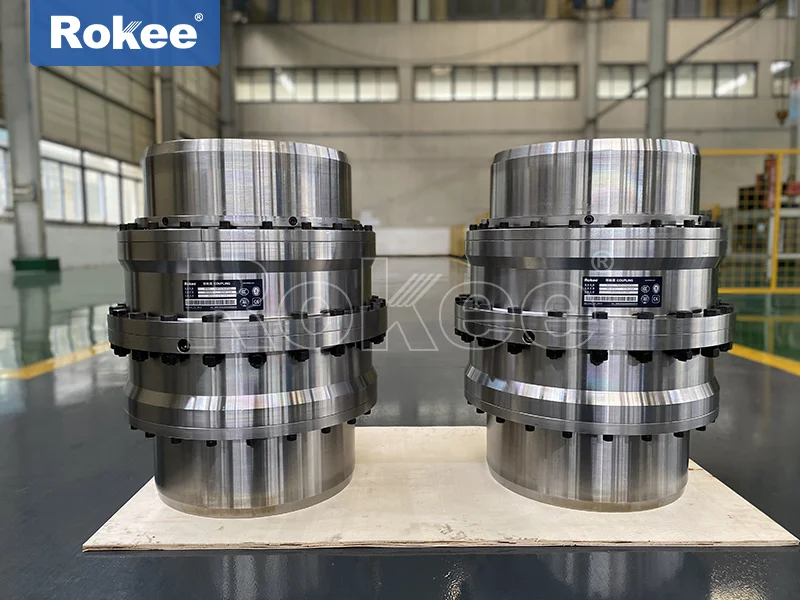
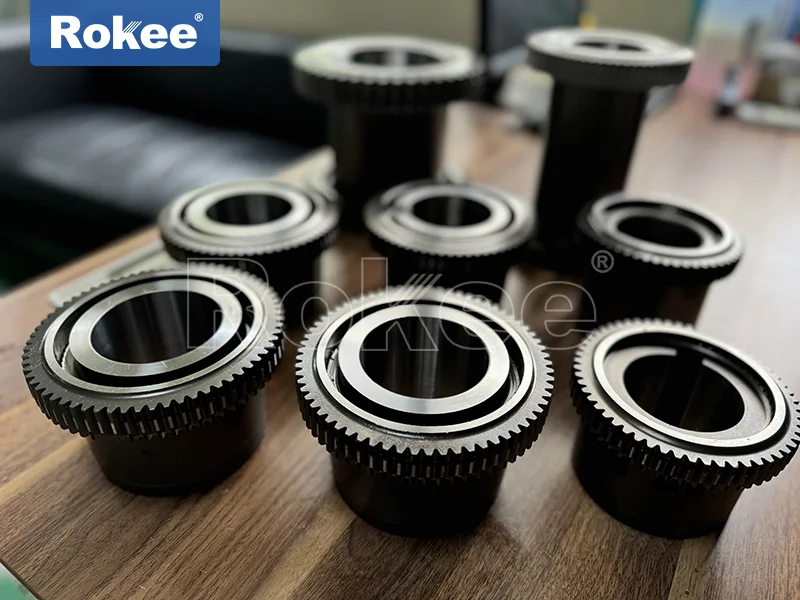
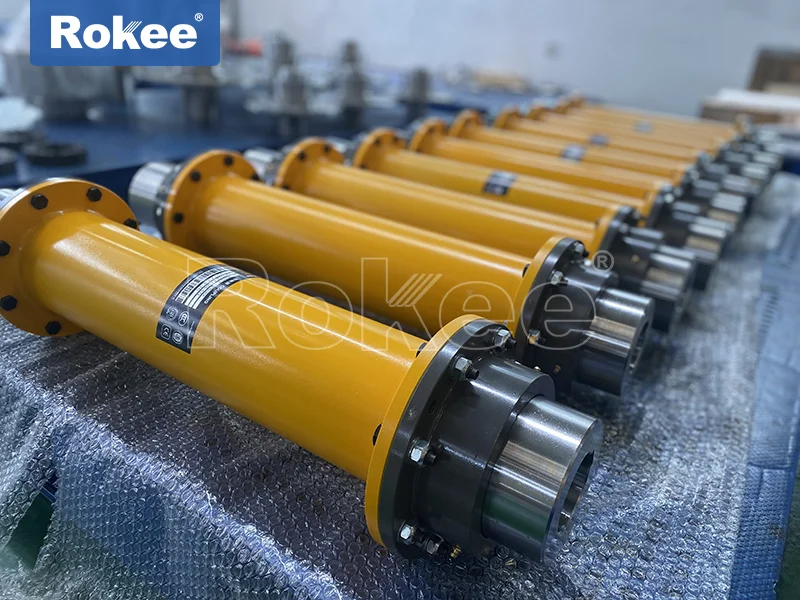
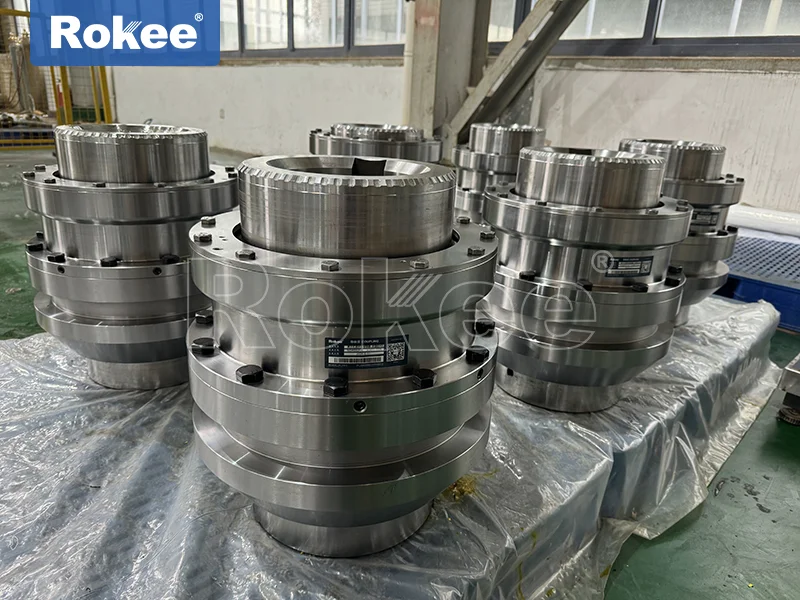
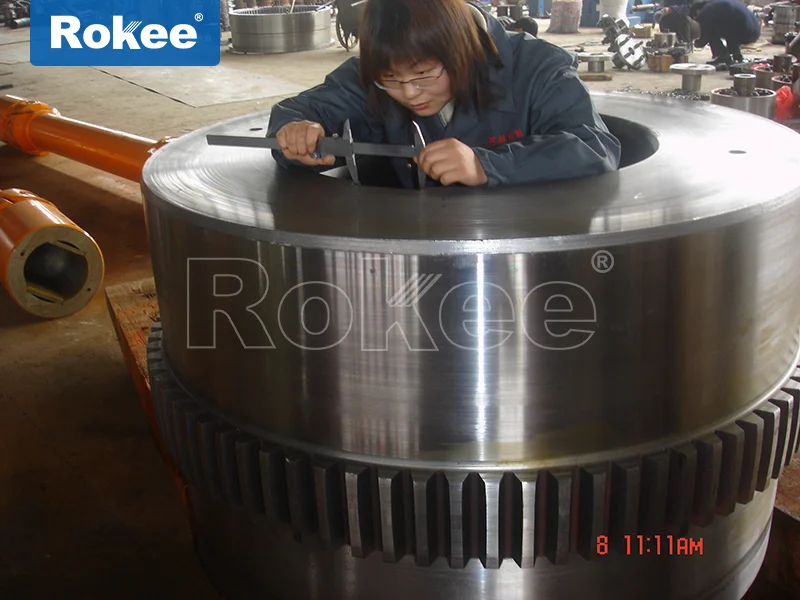
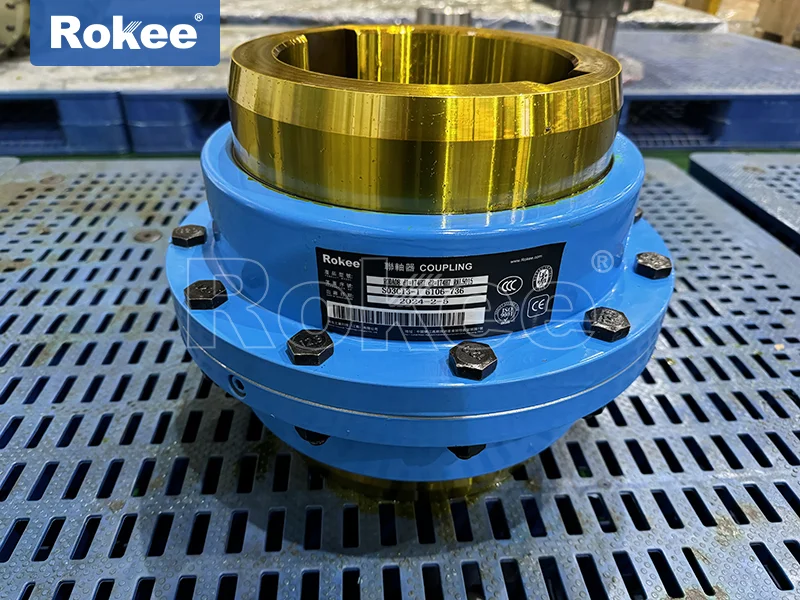
Gear couplings are rigid movable couplings that realize torque transmission through gear meshing. They are mainly composed of two hubs with external gear teeth and a sleeve with internal gear teeth. The hubs are installed on the connected shafts, and the sleeve meshes with the hubs to transmit torque. The gear teeth structure allows slight movements to compensate for axial, radial and angular misalignments between the shafts, which is an important advantage of gear couplings in industrial applications. Compared with other types of couplings, gear couplings have the characteristics of strong load-bearing capacity, high transmission accuracy, good structural stability and wide adaptability to working conditions. Their rated torque range can cover thousands of N·m to millions of N·m, which can meet the power transmission needs of different units in the sandwich panel production line. At the same time, after special heat treatment processes such as quenching and tempering, the gear teeth of the gear coupling have high hardness and wear resistance, which can adapt to the long-term continuous operation environment of the sandwich panel production line. However, gear couplings also have certain application limitations. For example, they require precise alignment during installation, and regular lubrication and maintenance are needed to avoid premature wear of gear teeth, otherwise it will affect the transmission performance and service life.
The adaptation application of gear couplings and sandwich panel production line needs to follow the core principles of matching performance, adapting to working conditions, ensuring reliability and optimizing efficiency. Performance matching is the key principle, which requires that the torque capacity, speed range and deviation compensation capacity of the gear coupling must be consistent with the working requirements of the corresponding unit of the production line. If the torque capacity of the selected gear coupling is too small, it will lead to overload operation, resulting in gear tooth wear, deformation or even fracture; if the torque capacity is too large, it will cause unnecessary cost waste and increase the overall weight of the equipment. The adaptation to working conditions requires that the structural design and material selection of the gear coupling should be adjusted according to the specific working environment of each unit of the production line. For example, the unwinding unit and stacking unit of the production line are often in a state of frequent start-stop and load fluctuation, so the gear coupling needs to have good impact resistance; the curing unit is in a high-temperature environment, so the gear coupling needs to be made of high-temperature resistant materials and equipped with effective heat dissipation measures. Ensuring reliability requires that the gear coupling has sufficient structural strength and stability, can operate stably for a long time under the working conditions of the production line, reduce the failure rate, and avoid affecting the normal operation of the production line due to coupling failure. Optimizing efficiency requires that the gear coupling should have high transmission efficiency, reduce energy loss in the power transmission process, and help improve the overall energy efficiency of the production line.
In the specific adaptation application process, the first step is to carry out the type selection and parameter determination of the gear coupling according to the working characteristics of each functional unit of the sandwich panel production line. For the unwinding unit, its main function is to uncoil the surface material (such as color steel plate, aluminum plate) stably and evenly, and the driving device needs to provide stable torque to avoid material deviation or damage. The unwinding unit often has the characteristics of variable load and frequent start-stop, so it is suitable to select a gear coupling with strong impact resistance and certain flexibility. The drum gear coupling is an ideal choice. Its external gear tooth surface adopts a drum-shaped design, which can not only compensate for the angular deviation between the shafts, but also make the gear meshing force more uniform, reduce the impact of load fluctuation on the coupling, and effectively extend the service life. In terms of parameter selection, the rated torque of the gear coupling should be 1.2-1.5 times the maximum working torque of the unwinding unit to ensure that it can withstand the impact torque generated during start-stop. The speed range should match the speed of the driving motor to avoid resonance caused by speed mismatch.
For the forming unit and compounding unit of the sandwich panel production line, these two units are the core links affecting the quality of sandwich panels, requiring extremely stable torque transmission and high transmission accuracy. The forming unit needs to press the surface material into the specified shape through the roller, and the compounding unit needs to bond the surface material and the core material (such as polyurethane, mineral wool, EPS) firmly under a certain temperature and pressure. Any fluctuation in torque will lead to uneven thickness of the panel, poor bonding or surface defects. Therefore, it is necessary to select a gear coupling with high transmission accuracy and good stability. The straight-tooth gear coupling can meet the requirements. Its structure is simple, the transmission error is small, and it can realize precise torque transmission. In the parameter determination, the transmission accuracy of the gear coupling should be controlled within a small range, and the radial and angular deviation compensation capacity should be matched with the installation accuracy of the forming and compounding units. At the same time, considering that these two units operate continuously for a long time, the gear coupling should be made of high-strength alloy materials to enhance its wear resistance and fatigue resistance.
The cutting unit of the sandwich panel production line requires the gear coupling to have quick response and accurate torque control. The cutting machine needs to cut the continuous sandwich panel into specified lengths according to the production requirements, and the cutting speed and torque need to be adjusted in real time according to the production speed of the line. Therefore, the gear coupling selected for the cutting unit should have small rotational inertia and high transmission efficiency, so as to ensure that the cutting machine can respond quickly to the control signal and realize precise cutting. In addition, the cutting unit will generate a certain amount of vibration during operation, so the gear coupling should have a certain vibration damping capacity to reduce the impact of vibration on the transmission system and the cutting quality. In the parameter selection, the rated speed of the gear coupling should be higher than the maximum operating speed of the cutting unit, and the torque control accuracy should meet the cutting requirements to avoid cutting deviation caused by torque fluctuation.
After completing the type selection and parameter determination of the gear coupling, the next step is to carry out the correct installation and debugging work, which is an important link to ensure the normal operation of the gear coupling and the production line. The installation of the gear coupling needs to pay attention to the alignment of the two connected shafts. The radial deviation, angular deviation and axial deviation between the driving shaft and the driven shaft must be controlled within the allowable range of the gear coupling. If the alignment is not accurate, it will lead to uneven stress on the gear teeth, increased wear, vibration and noise, and even damage the coupling and other components in severe cases. In the installation process, professional tools such as laser alignment instruments, dial indicators and feeler gauges can be used to detect and adjust the alignment deviation. The laser alignment instrument has high precision, which can control the radial deviation within 0.10mm and the angular deviation within 0.05mm/100mm, ensuring the alignment accuracy. At the same time, attention should be paid to the installation clearance of the gear coupling. The axial clearance should be reserved according to the thermal expansion coefficient of the equipment to avoid the damage of the coupling due to thermal expansion during operation.
Lubrication is another key factor affecting the service life and transmission performance of the gear coupling. The gear meshing surface of the gear coupling needs to be lubricated to reduce friction and wear, dissipate heat and prevent corrosion. In the adaptation application of the sandwich panel production line, the lubrication system of the gear coupling should be designed according to the working conditions of each unit. For the units operating in high-temperature environments such as the curing unit, high-temperature resistant lubricating grease should be selected to ensure that the lubricating performance is not affected by high temperature. For the units with frequent start-stop and large load fluctuations such as the unwinding unit, wear-resistant lubricating grease should be selected to enhance the lubrication effect and reduce the impact of load changes on the gear teeth. The lubrication cycle should be determined according to the operating time and working environment of the production line. Generally, the lubricating grease should be replaced every 800-1200 hours for continuous heavy-load operation units, and every 500-800 hours for intermittent impact operation units. During the lubrication process, attention should be paid to the filling amount of lubricating grease, which should be 50%-70% of the internal space of the coupling. Excessive filling will lead to abnormal temperature rise, while insufficient filling will cause poor lubrication.
In addition to correct installation and regular lubrication, daily inspection and maintenance of the gear coupling are also essential to ensure the long-term stable operation of the sandwich panel production line. A complete inspection and maintenance system should be established to conduct regular inspections on the gear coupling, including checking the wear of the gear teeth, the tightness of the connecting bolts, the integrity of the sealing device and the level of lubricating grease. During the inspection, if pitting, corrosion, tooth damage and other phenomena are found on the gear teeth, the worn parts should be replaced in time to avoid further damage. The connecting bolts should be checked regularly for looseness, and anti-loosening measures should be taken if necessary to ensure the connection stability of the coupling. The sealing device should be inspected to prevent lubricating grease leakage and external dust, water vapor and other impurities from entering the coupling, which will affect the transmission performance. At the same time, the operation data of the gear coupling should be recorded in detail, including the alignment deviation data, vibration value, temperature and lubrication situation during operation, so as to provide a basis for subsequent maintenance and optimization.
In the actual operation process of the sandwich panel production line, there may be some problems in the adaptation application of the gear coupling, which need to be analyzed and solved in a timely manner to ensure the normal operation of the production line. One of the common problems is the excessive vibration of the gear coupling, which is usually caused by inaccurate alignment, insufficient lubrication, wear of gear teeth or unbalanced load. When excessive vibration occurs, the first step is to check the alignment of the coupling, adjust the deviation to the allowable range, then check the lubrication situation, add or replace the lubricating grease if necessary, and finally check the gear teeth and load to eliminate the vibration source. Another common problem is the wear and damage of the gear teeth, which is mainly caused by overload operation, insufficient lubrication, impurity invasion or improper alignment. To solve this problem, it is necessary to first find out the cause of wear, take corresponding measures such as reducing load, strengthening lubrication and improving sealing, then replace the worn gear teeth or coupling, and optimize the operation parameters to avoid the recurrence of wear.
With the continuous development of industrial automation technology, the sandwich panel production line is developing towards intelligence and high efficiency, which also puts forward higher requirements for the adaptation application of gear couplings. In the future, the adaptation application scheme of gear couplings and sandwich panel production lines can be further optimized by introducing intelligent monitoring technology. For example, sensors can be installed on the gear coupling to monitor the vibration, temperature, torque and other parameters in real time, and the monitoring data can be transmitted to the control system. The control system can analyze the data to judge the operation status of the gear coupling, predict potential faults, and send out early warning signals in time, so as to realize predictive maintenance and reduce the failure rate of the coupling. At the same time, the structural design of the gear coupling can be optimized according to the development needs of the production line, such as adopting lightweight materials to reduce the overall weight of the equipment, improving the gear tooth design to enhance the transmission efficiency and wear resistance, and developing integrated gear couplings to simplify the installation and maintenance process.
In conclusion, the gear coupling, as a key power transmission component, plays an irreplaceable role in the operation of the sandwich panel production line. The rational adaptation and scientific application of the gear coupling can effectively improve the operational efficiency, stability and service life of the production line, and ensure the quality consistency of the sandwich panel products. The adaptation application scheme of gear couplings and sandwich panel production lines needs to be based on the full understanding of the structural characteristics and working conditions of both, follow the principles of performance matching, adaptation to working conditions, reliability assurance and efficiency optimization, and do a good job in type selection, parameter determination, installation, debugging, lubrication and maintenance. At the same time, it is necessary to timely solve the problems encountered in the application process, and continuously optimize the scheme with the development of the production line, so as to provide strong support for the high-quality and efficient development of the sandwich panel production industry. The adaptation between gear couplings and sandwich panel production lines is a systematic project that requires the combination of theoretical analysis and practical experience to achieve the optimal matching effect and promote the sustainable development of the industry.