Sandwich Panel Production Line Is Compatible With Gear Coupling For Stable And Efficient Transmission
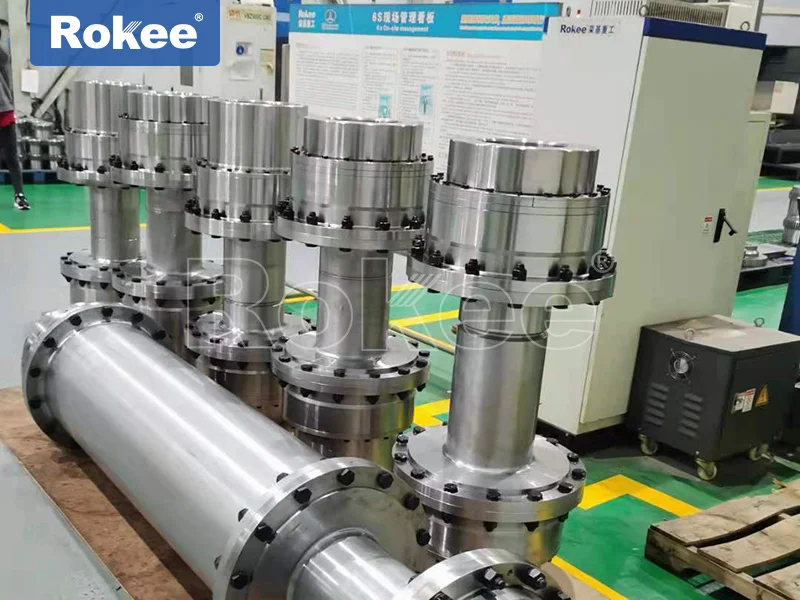
In the modern industrial production system, the sandwich panel, as a versatile and high-performance building material, has been widely used in various fields such as construction, logistics, and industrial workshops due to its excellent thermal insulation, sound insulation, light weight, and high strength. With the continuous expansion of market demand for sandwich panels, the requirements for the production efficiency, stability, and product quality of sandwich panel production lines are constantly increasing. The transmission system, as the "power core" of the production line, directly determines the overall operation effect of the equipment. Among numerous transmission components, the gear coupling has become an ideal matching component for sandwich panel production lines due to its outstanding performance advantages, effectively ensuring the stable and efficient operation of the entire production line.
The sandwich panel production line is a complex integrated equipment that involves multiple processes such as raw material unwinding, forming, foaming, laminating, cutting, and stacking. Each process is closely connected, and the coordinated operation of all links relies on the stable transmission of power. From the unwinding of surface materials such as color steel plates and aluminum plates to the precise forming of the rolling system, from the uniform mixing and pouring of foam core materials to the stable conveying of the laminating conveyor, and finally to the accurate cutting of finished products, every link requires the transmission system to provide continuous, stable, and precise power support. Once the transmission system fails or operates unstable, it will not only lead to reduced production efficiency, but also cause defects in product quality, such as uneven thickness of sandwich panels, poor bonding between surface materials and core materials, and irregular cutting sizes, thereby increasing production costs and affecting market competitiveness. Therefore, choosing a suitable transmission component is crucial to improving the overall performance of the sandwich panel production line.
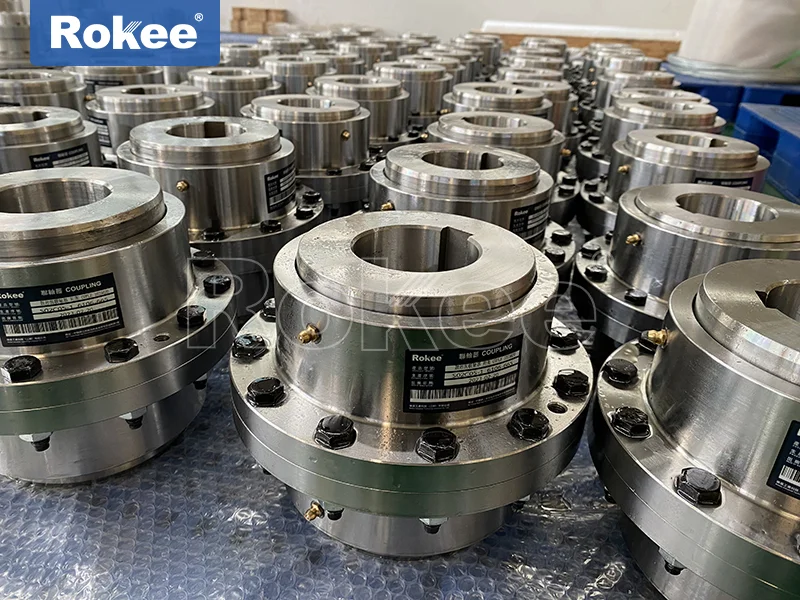
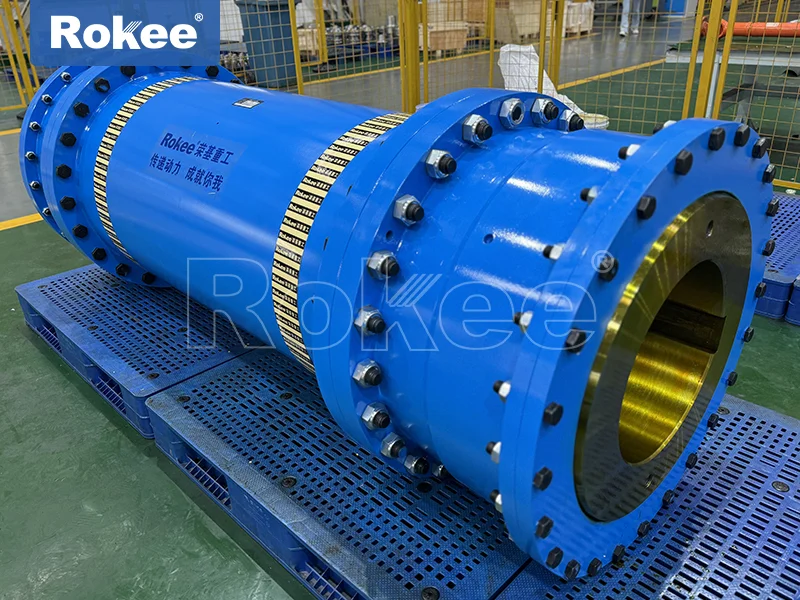
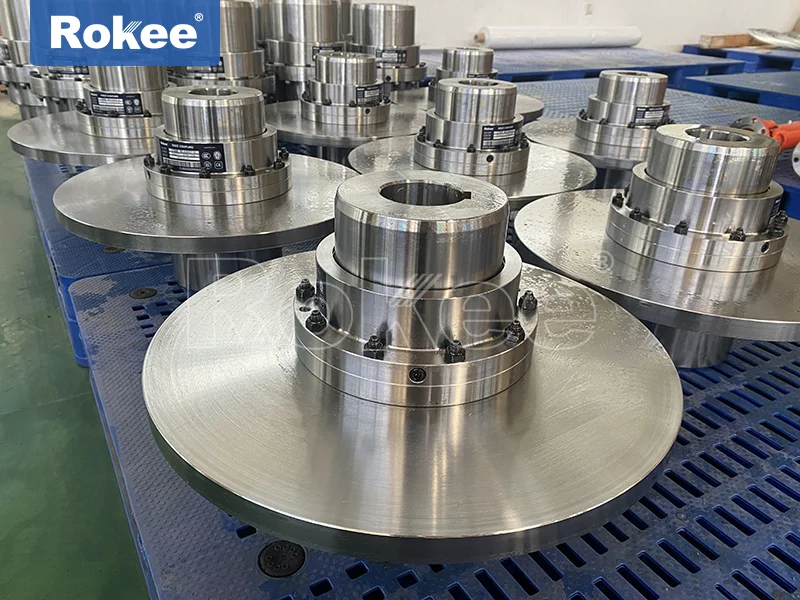
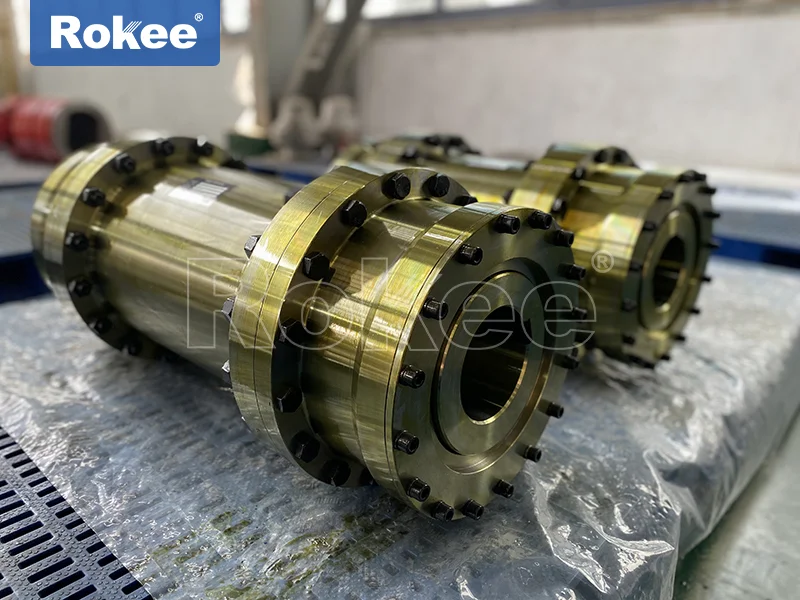
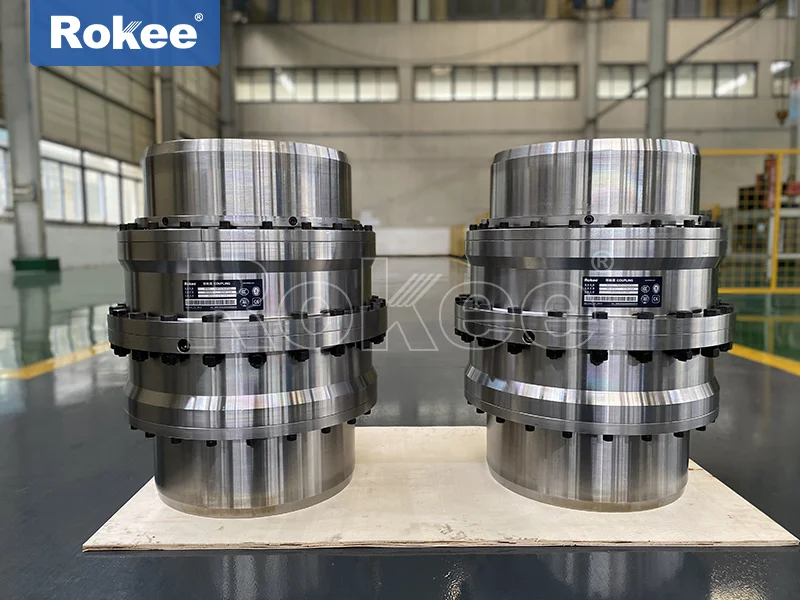
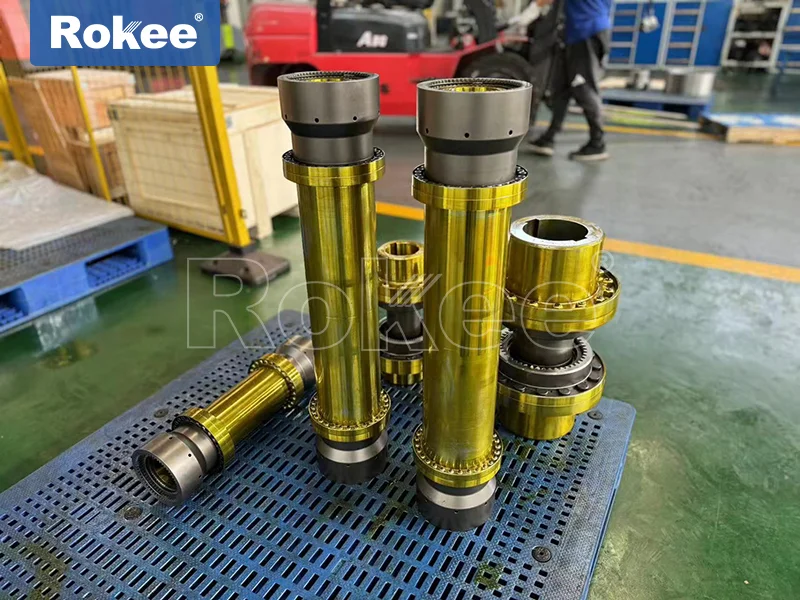
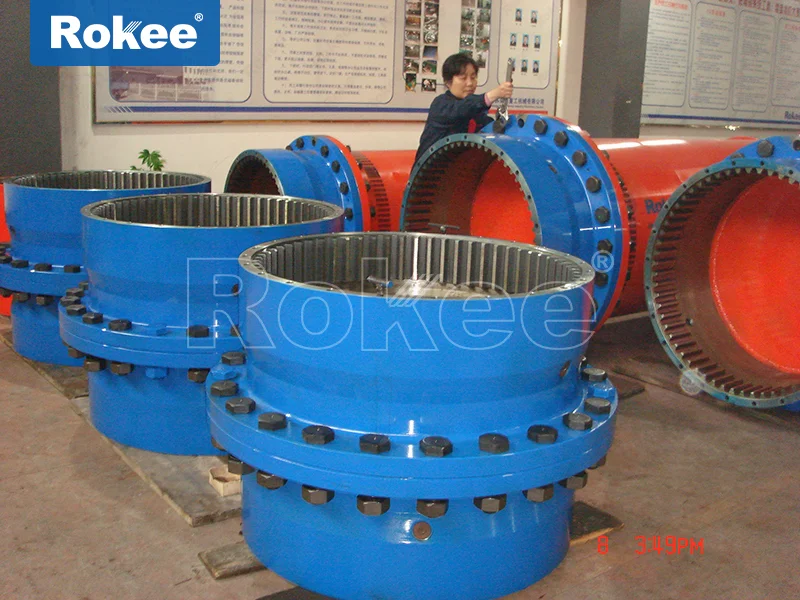
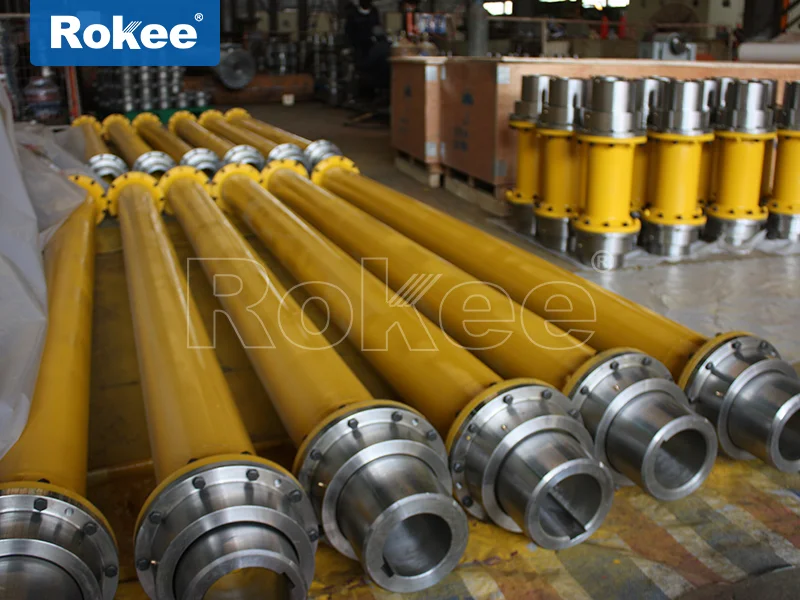
Gear coupling, as a key component in the industrial transmission system, is a rigid movable coupling that realizes torque transmission through gear meshing. Its unique structural design and performance advantages make it highly compatible with the working characteristics of sandwich panel production lines. Unlike other types of couplings, gear couplings focus more on stable torque transmission under heavy load conditions, and their core design logic revolves around "high strength, high precision, and high adaptability", which can maintain stable transmission performance even in complex and harsh working environments. The core structure of the gear coupling includes gear pairs, half couplings, sealing devices, lubrication systems, and connecting bolts. Each component performs its own functions and cooperates precisely to form an efficient and reliable transmission mechanism. The gear pair, composed of internal and external gears, is the core carrier of torque transmission. Usually, involute tooth profile design is adopted, and some heavy-duty models are optimized into drum-shaped tooth structures, which increase the meshing contact area and improve the load-bearing capacity and deviation compensation ability. The half coupling, as an intermediate component connecting the gear and the equipment shaft, is made of high-quality materials such as alloy structural steel, which is strengthened through heat treatment processes such as quenching and tempering to ensure that it does not deform or break under the action of large torque. The sealing device effectively prevents the leakage of lubricating oil and the intrusion of external dust and water vapor, while the lubrication system reduces the friction coefficient of the gear meshing surface, reduces wear, and extends the service life of the coupling.
The compatibility between the sandwich panel production line and the gear coupling is reflected in many aspects, the most prominent of which is the adaptation of the gear coupling to the load characteristics of the production line. The sandwich panel production line needs to bear different loads in different production links. For example, during the unwinding process of raw materials, the transmission system needs to provide stable torque to overcome the tension of the coil and ensure the smooth unwinding of the surface material without deviation; during the rolling forming process, the rolling mill needs a large torque to complete the forming of the surface material, and the torque needs to be adjusted in real time according to the thickness and hardness of the material; during the foaming and laminating process, the conveyor needs a stable and uniform speed to ensure the uniform thickness of the foam core and the firm bonding between the surface material and the core material. Gear couplings have extremely strong load-bearing capacity, and their rated torque range can cover thousands of N·m to millions of N·m, which can fully meet the torque requirements of different links of the sandwich panel production line. At the same time, the gear coupling can withstand short-term overload torque, which can effectively cope with the torque impact caused by sudden working conditions such as equipment start-up and load fluctuation, avoiding transmission failure caused by overload and ensuring the continuous operation of the production line.
Another important manifestation of compatibility is the excellent displacement compensation ability of the gear coupling, which can effectively solve the problem of shaft misalignment in the installation and operation of the sandwich panel production line. In the actual installation process of the production line, due to factors such as foundation settlement, processing errors, and assembly accuracy, it is difficult to ensure that the driving shaft and the driven shaft are completely collinear, and radial, axial, and angular deviations are likely to occur. If these deviations cannot be effectively compensated, it will lead to uneven force on the transmission system, increased vibration, accelerated wear of components, and even serious equipment failures. The gear coupling can realize good displacement compensation through the meshing gap of the gear pair and the design of the tooth profile. Generally, it can compensate for radial deviation of 0.2-5mm, axial deviation of 3-30mm, and angular deviation of 0.5°-2°. Especially the drum-shaped tooth gear coupling, whose external gear tooth surface adopts a drum-shaped design, can achieve a larger angular deviation compensation, and reduce the local force during gear meshing, further improving the transmission stability. This displacement compensation ability reduces the requirements for the installation accuracy of the sandwich panel production line, reduces the installation difficulty and cost, and at the same time reduces the wear of the transmission components, extending the service life of the entire production line.
The high transmission efficiency of the gear coupling also provides a strong guarantee for the efficient operation of the sandwich panel production line. In the production process of sandwich panels, the continuity and stability of the production rhythm directly affect the production efficiency. The gear coupling has high transmission precision after precision processing and meshing adjustment, and the transmission efficiency can reach more than 99.5%, with extremely small transmission error. This means that the power output by the motor can be accurately and efficiently transmitted to each working mechanism through the gear coupling, reducing energy loss and improving the utilization rate of energy. Compared with other types of couplings with lower transmission efficiency, the gear coupling can help the sandwich panel production line save energy consumption while improving production efficiency, reducing the operating cost of the enterprise. At the same time, the high transmission precision ensures that each process of the production line can operate according to the set parameters, avoiding product quality problems caused by transmission deviation. For example, in the cutting process, the stable transmission of the gear coupling ensures that the cutting speed is uniform and the cutting length is accurate, avoiding the problems of uneven cutting and burrs, and improving the qualification rate of finished products.
The structural stability and durability of the gear coupling also make it highly compatible with the long-term continuous operation needs of the sandwich panel production line. The sandwich panel production line usually needs to operate continuously for a long time to meet the market demand for products, which puts high requirements on the service life and reliability of the transmission components. The core components of the gear coupling are made of high-quality steel, which is processed through multiple heat treatment processes such as quenching, tempering, and carburizing, so it has extremely high rigidity, wear resistance, and fatigue resistance. It can operate stably for a long time in complex and harsh working environments such as high temperature, low temperature, humidity, and dust, and its service life can reach 5-10 years. With proper maintenance, the service life can be further extended. In addition, the structure of the gear coupling is simple and compact, without vulnerable elastic components, so the failure rate during operation is extremely low, which can reduce the number of shutdowns and maintenance of the production line, ensure the continuity of production, and improve the overall production efficiency. Compared with elastic couplings that need to frequently replace elastic components, the gear coupling has lower maintenance costs and simpler maintenance procedures, which can reduce the labor intensity of maintenance personnel and further reduce the operating cost of the enterprise.
In the actual application process, the compatibility between the sandwich panel production line and the gear coupling can also be optimized through reasonable selection and configuration. According to the specific working conditions of the production line, such as the torque required by each process, the speed of the equipment, the working environment, and the possible shaft deviation, selecting the appropriate type and specification of the gear coupling can maximize the performance of the coupling and the production line. For example, in the links with large torque and large possible angular deviation, the drum-shaped tooth gear coupling can be selected to ensure the stability of transmission; in the links with high requirements for transmission precision, the gear coupling with high precision processing can be selected to ensure the accuracy of power transmission. At the same time, the correct installation and regular maintenance of the gear coupling are also important links to ensure the compatibility and stable operation of the two. During installation, it is necessary to ensure the accurate alignment of the coupling and the equipment shaft, and strictly follow the installation procedures to avoid installation errors; during daily use, it is necessary to regularly check the lubrication status of the coupling, add lubricating oil in time, check the tightness of the sealing device and connecting bolts, and deal with potential faults in a timely manner, so as to ensure the long-term stable operation of the gear coupling and the entire production line.
With the continuous development of industrial technology, the sandwich panel production line is developing towards automation, intelligence, and high efficiency, which puts forward higher requirements for the transmission system. The gear coupling, with its excellent load-bearing capacity, displacement compensation ability, high transmission efficiency, and good durability, can fully adapt to the development trend of the sandwich panel production line, and has become an indispensable key component in the transmission system of the production line. Its compatibility with the sandwich panel production line is not only reflected in the matching of performance parameters, but also in the mutual promotion of functional advantages, which can effectively improve the stability and efficiency of the production line, reduce production costs, and help enterprises improve their market competitiveness. In the future, with the continuous optimization and upgrading of gear coupling technology, its compatibility with the sandwich panel production line will be further improved, and it will play a more important role in promoting the high-quality development of the sandwich panel industry.
In practical production, many enterprises have verified the excellent compatibility between the sandwich panel production line and the gear coupling through practice. After adopting the gear coupling, the operation stability of the production line has been significantly improved, the number of shutdowns caused by transmission failures has been reduced by more than 60%, the production efficiency has been increased by 15%-20%, and the qualification rate of finished products has also been improved by nearly 10%. These data fully show that the matching use of the gear coupling and the sandwich panel production line can bring obvious economic benefits and production efficiency improvement to enterprises. At the same time, the gear coupling also has good adaptability to different types of sandwich panel production lines, whether it is a production line for EPS sandwich panels, PU sandwich panels, or rock wool sandwich panels, the gear coupling can be reasonably matched according to the specific process requirements, providing stable and efficient power transmission support for the production line.
It is worth noting that the compatibility between the sandwich panel production line and the gear coupling is not a one-way adaptation, but a two-way coordination and optimization. While the gear coupling meets the transmission needs of the production line, the structural design of the production line can also be optimized according to the characteristics of the gear coupling to further improve the overall operation effect. For example, in the design of the production line, the installation space of the gear coupling can be reserved reasonably to facilitate the installation, disassembly, and maintenance of the coupling; the connection mode between the equipment and the coupling can be optimized to reduce the impact of equipment vibration on the coupling, and further improve the transmission stability. In addition, with the development of intelligent technology, the gear coupling can also be combined with intelligent monitoring equipment to realize real-time monitoring of the operation status of the coupling, such as temperature, vibration, and lubrication status, and timely alarm when abnormalities occur, which helps enterprises find and solve faults in advance, ensuring the long-term stable operation of the sandwich panel production line.
In conclusion, the sandwich panel production line and the gear coupling have excellent compatibility, and this compatibility is reflected in the aspects of load adaptation, displacement compensation, transmission efficiency, and durability. The gear coupling, as a key transmission component, can effectively ensure the stable and efficient operation of the sandwich panel production line, improve production efficiency and product quality, and reduce production costs. With the continuous progress of industrial technology, the matching between the two will be more close and perfect, which will inject new power into the sustainable development of the sandwich panel industry. Enterprises engaged in the production of sandwich panels should pay full attention to the important role of gear couplings, select and use gear couplings reasonably, and give full play to the synergy between the production line and the coupling, so as to achieve better economic and social benefits.