Gear Coupling Improves Transmission Efficiency And Stability Of PU Sandwich Panel Production Line
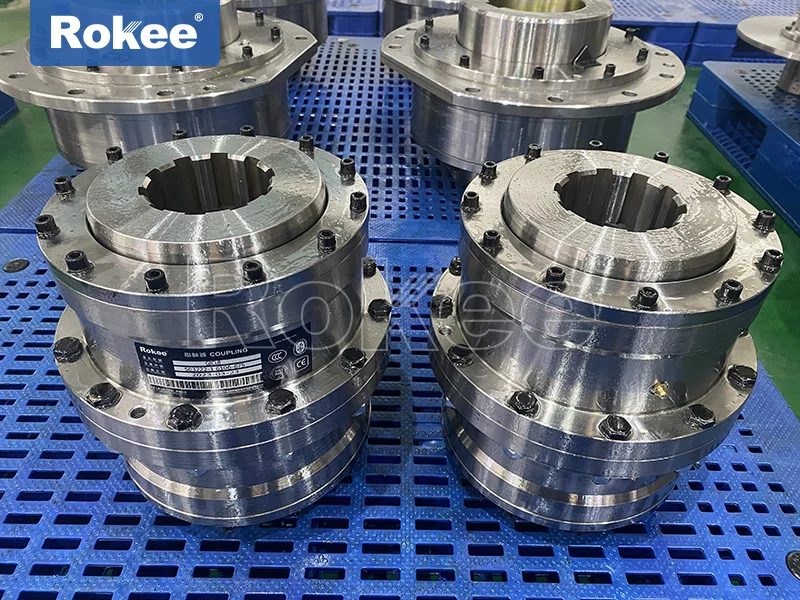
In the modern industrial production system, the PU sandwich panel production line is an important equipment for manufacturing high-performance insulation and structural materials, which is widely used in construction, refrigeration, transportation and other fields due to its excellent thermal insulation, sound insulation, light weight and high strength. The continuous and stable operation of the production line directly determines the production efficiency, product quality and enterprise benefits. As the core component of the transmission system in the PU sandwich panel production line, the coupling undertakes the key task of connecting the drive end (such as motor, reducer) and the execution end (such as uncoiler, roll forming machine, conveyor belt, cutting device), transmitting torque and compensating for installation and operation deviations. Among various types of couplings, the gear coupling has gradually become the preferred choice for PU sandwich panel production lines due to its unique structural advantages and excellent transmission performance, effectively solving the problems of low transmission efficiency, poor stability and high maintenance cost existing in the traditional transmission system, and providing a strong guarantee for the efficient and stable operation of the production line.
To understand how gear couplings improve the transmission efficiency and stability of PU sandwich panel production line, it is first necessary to clarify the working characteristics of the PU sandwich panel production line and the core requirements for the transmission system. The PU sandwich panel production line is a continuous automatic production equipment integrating mechanical, electrical control, hydraulic system and chemical reaction technology, which mainly includes uncoiler, roll forming system, preheating device, PU foaming system, double belt conveyor, cutting system, stacking system and other key components. The whole production process requires strict coordination between each component, and the transmission system needs to transmit power stably and accurately to each execution unit to ensure that the speed, torque and action rhythm of each part are consistent. For example, the uncoiler needs to release the color steel plate or galvanized sheet at a uniform speed according to the production rhythm; the roll forming system needs to maintain stable pressure and speed to ensure the forming accuracy of the panel surface; the double belt conveyor needs to transport the sandwich panel evenly during the foaming and solidification process to avoid uneven foaming caused by speed fluctuation; the cutting system needs to complete the fixed-length cutting without stopping the machine, which requires the transmission system to have high response speed and stability. Any problem in the transmission system, such as torque loss, speed fluctuation or component wear, will lead to production interruption, product quality defects (such as uneven panel thickness, inaccurate cutting length, poor foaming effect) and other problems, bringing economic losses to the enterprise.
The traditional transmission system of PU sandwich panel production lines often adopts ordinary rigid couplings or elastic couplings. Although rigid couplings have simple structure and low cost, they have almost no ability to compensate for shaft misalignment. In the actual installation and operation process, due to factors such as foundation settlement, processing errors, assembly accuracy and equipment vibration, the drive shaft and driven shaft are prone to radial, axial and angular misalignment. This misalignment will cause uneven stress on the transmission system, increase friction and wear between components, generate large vibration and noise, reduce transmission efficiency, and even lead to damage to the motor, reducer and other key equipment in serious cases. Elastic couplings have a certain compensation capacity and buffering effect, but their torque-bearing capacity is limited, and they are easy to age, deform and fail under long-term heavy load and high-speed operation, which requires frequent replacement and maintenance, increasing the production cost and reducing the production efficiency. In contrast, the gear coupling has the advantages of strong torque-bearing capacity, excellent misalignment compensation, high transmission accuracy, good structural stability and long service life, which can perfectly adapt to the working requirements of the PU sandwich panel production line and effectively solve the defects of the traditional transmission system.
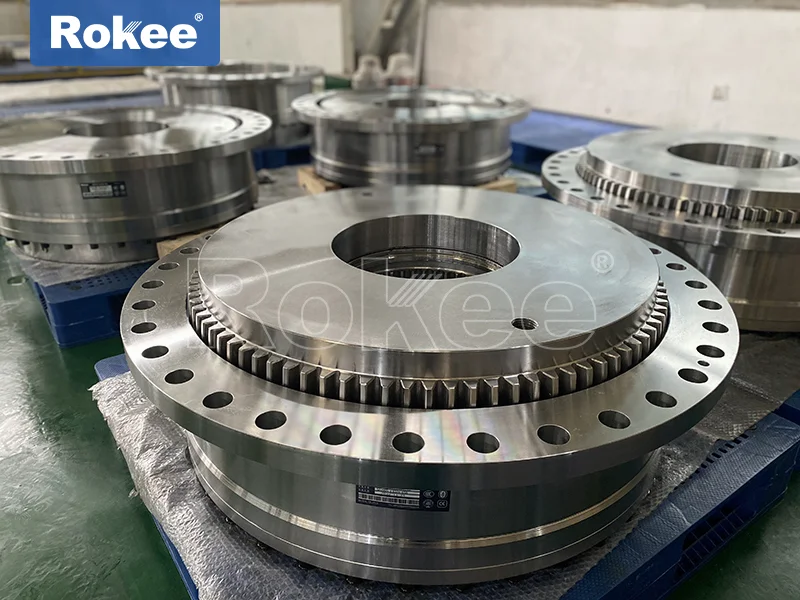
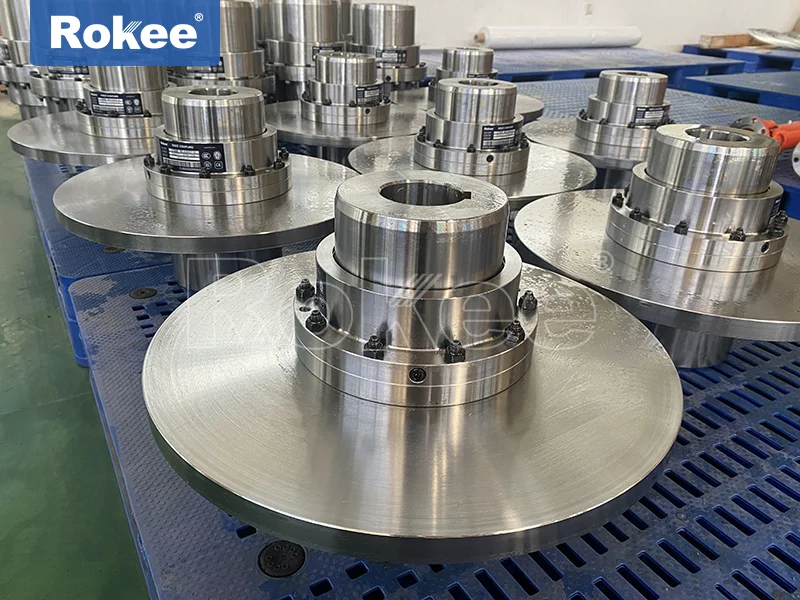
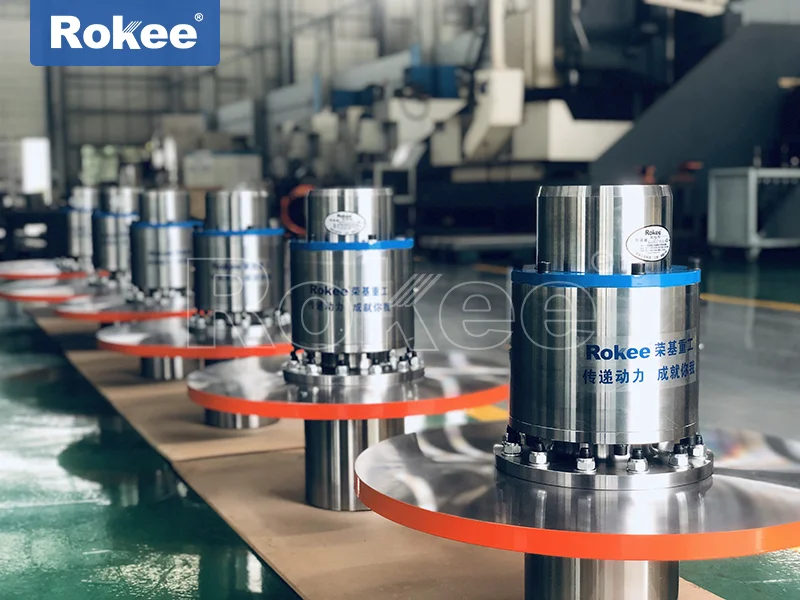
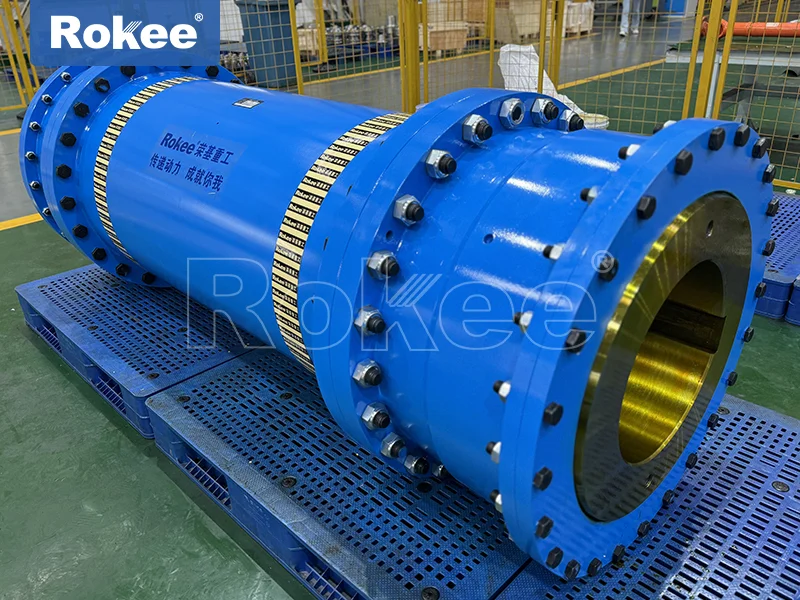
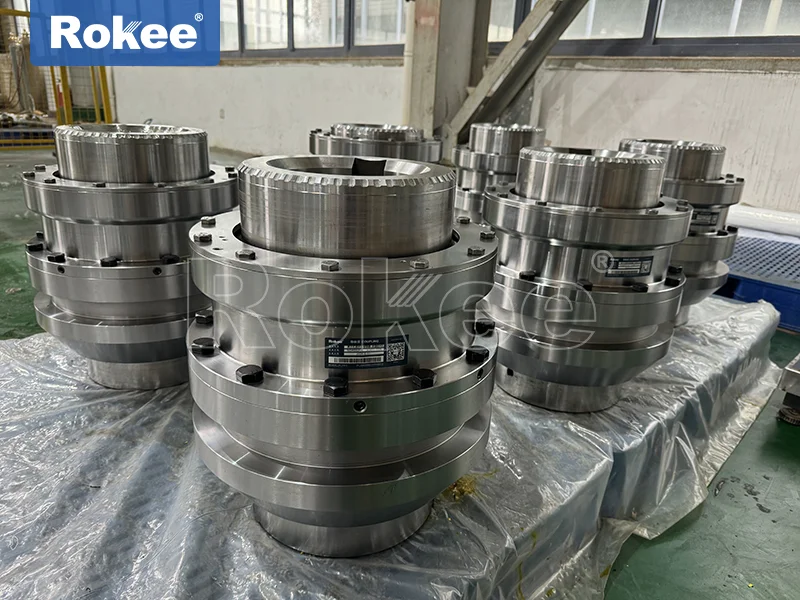
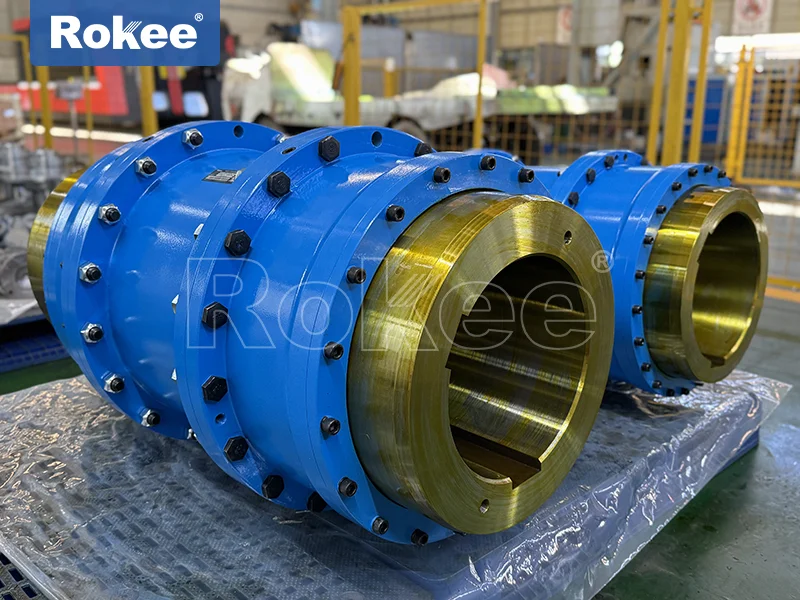
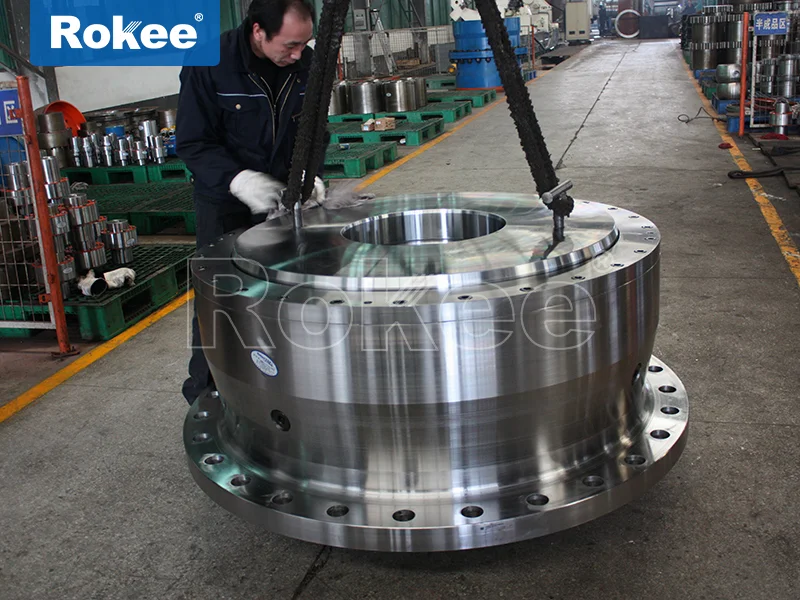
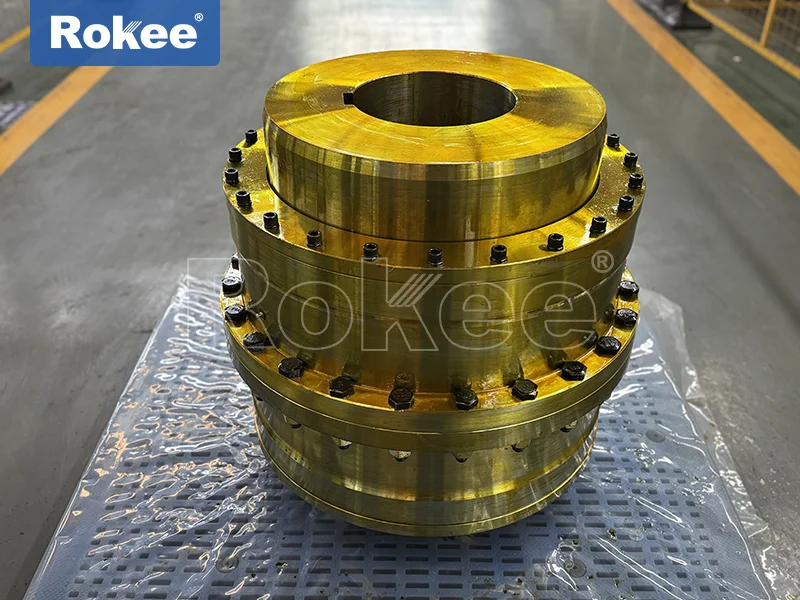
The gear coupling is a mechanical transmission component designed to connect two shafts at their ends to transmit power, which is mainly composed of two half-couplings with external gear teeth, a flexible sleeve with internal gear teeth, sealing devices and lubrication systems. The two half-couplings are respectively connected to the drive shaft and the driven shaft through keys or interference fit, and the internal gear teeth of the flexible sleeve mesh with the external gear teeth of the half-couplings to realize torque transmission. This structural design not only ensures the efficient transmission of power, but also gives the gear coupling excellent misalignment compensation capacity. During the operation of the PU sandwich panel production line, the gear coupling can effectively compensate for radial, axial and angular misalignment between the shafts through the meshing gap of the gear pair and the structural design of the gear teeth, which is usually able to compensate for radial deviation of 0.2-5mm, axial deviation of 3-30mm and angular deviation of 0.5°-2°. This compensation capacity is crucial for the PU sandwich panel production line, because the long-term operation of the production line will inevitably lead to slight displacement of each component, and the gear coupling can effectively resolve the impact of this displacement on the transmission system, avoid uneven stress and wear of components, and ensure the stable operation of the transmission system.
One of the key roles of the gear coupling in improving the transmission efficiency of the PU sandwich panel production line is its high transmission efficiency. The gear pair of the gear coupling adopts precision machining technology, and the gear teeth are usually designed with involute tooth profile, which has the characteristics of stable meshing, small friction coefficient and high transmission efficiency. After precision machining and meshing adjustment, the transmission efficiency of the gear coupling can reach more than 99.5%, which is significantly higher than that of ordinary elastic couplings. In the PU sandwich panel production line, the transmission efficiency directly affects the energy consumption and production efficiency of the whole line. The high transmission efficiency of the gear coupling means that the energy loss in the power transmission process is greatly reduced, the energy utilization rate is improved, and the production cost of the enterprise is reduced. At the same time, the high transmission efficiency ensures that the power output by the motor can be fully transmitted to each execution unit, avoiding the phenomenon of insufficient power caused by torque loss, ensuring that each component of the production line can operate at the set speed and torque, and improving the overall production efficiency of the line. For example, in the roll forming process, the stable power transmission of the gear coupling ensures that the roll forming machine can maintain a uniform speed and stable pressure, avoiding the problems of uneven panel thickness and poor forming effect caused by insufficient power or speed fluctuation, thus improving the production efficiency and product qualification rate.
In addition to improving transmission efficiency, the gear coupling also plays a crucial role in enhancing the stability of the PU sandwich panel production line. The stability of the transmission system is the core guarantee for the continuous operation of the production line, and the gear coupling achieves this goal through its excellent structural stability and vibration reduction performance. The core components of the gear coupling are made of high-strength materials such as alloy structural steel, which are processed by quenching, tempering, carburizing and other heat treatment processes, making them have high rigidity, wear resistance and fatigue resistance. This structural design ensures that the gear coupling can withstand large torque and impact load during long-term heavy load operation, and is not easy to deform, wear or fail, thus ensuring the stable operation of the transmission system. At the same time, the gear coupling is equipped with a professional lubrication system and sealing device. The lubrication system can inject lubricating grease into the gear meshing surface regularly to reduce the friction coefficient between the gear teeth, reduce wear, and play the roles of cooling, vibration reduction and noise reduction. The sealing device can effectively prevent lubricating grease leakage and external dust, water vapor and other impurities from entering the gear meshing surface, avoiding gear wear and corrosion caused by impurities, and further improving the structural stability and service life of the gear coupling.
The stable operation of the gear coupling can effectively reduce the vibration and noise of the PU sandwich panel production line, which is of great significance for improving the working environment and protecting the equipment. In the traditional transmission system, due to the lack of effective misalignment compensation and buffering capacity, the transmission components are prone to severe vibration during operation, which not only generates large noise, affects the working environment of the workshop, but also accelerates the wear and aging of the equipment, reducing the service life of the production line. The gear coupling can effectively absorb the vibration generated during the operation of the equipment through the flexible meshing of the gear pair and the lubrication effect, reduce the transmission of vibration between components, and thus reduce the overall vibration and noise of the production line. This not only improves the working environment of the operators, but also reduces the impact of vibration on the production line equipment, reduces the failure rate of the equipment, and ensures the continuous and stable operation of the production line. For example, in the PU foaming process, the stable operation of the double belt conveyor is crucial for the uniform foaming and solidification of the sandwich panel. The gear coupling ensures that the conveyor belt operates at a uniform speed, avoids the vibration of the conveyor belt caused by transmission instability, and thus ensures the uniform thickness and good foaming effect of the PU sandwich panel.
The application of gear coupling in the PU sandwich panel production line also greatly reduces the maintenance cost of the production line and improves the production continuity. Compared with elastic couplings that need to frequently replace elastic components, the gear coupling has a simple structure, no easily damaged elastic components, and a long service life, which can reach 5-10 years under proper maintenance. The daily maintenance of the gear coupling is relatively simple, mainly including regular inspection of the sealing device, supplement of lubricating grease, and inspection of the tightness of the connecting bolts. These maintenance work can be completed in a short time without stopping the machine for a long time, thus reducing the maintenance time and maintenance cost of the production line. At the same time, the low failure rate of the gear coupling reduces the number of production interruptions caused by transmission system failures, improves the production continuity of the PU sandwich panel production line, and further improves the production efficiency and enterprise benefits. In the actual production process, many enterprises have found that after replacing the traditional coupling with the gear coupling, the maintenance frequency of the transmission system is reduced by more than 50%, the production interruption time is greatly shortened, and the overall production efficiency is increased by 10%-15%.
It is worth noting that the full play of the performance of the gear coupling in the PU sandwich panel production line also requires reasonable selection, correct installation and standardized maintenance. In the selection process, it is necessary to comprehensively consider the working parameters of the production line, such as transmission power, speed, torque, and the type and magnitude of shaft misalignment, so as to select the gear coupling with appropriate specifications and models. For example, in the heavy-load parts such as the roll forming machine and the double belt conveyor, it is necessary to select the gear coupling with strong torque-bearing capacity and good misalignment compensation; in the high-speed parts such as the cutting system, it is necessary to select the gear coupling with high transmission accuracy and good dynamic balance. In the installation process, it is necessary to strictly follow the installation specifications, ensure the coaxiality of the drive shaft and the driven shaft as much as possible, adjust the meshing gap of the gear pair reasonably, and ensure the tightness of the connecting bolts and the good performance of the sealing device. In the daily maintenance process, it is necessary to regularly check the lubrication status of the gear coupling, replace the lubricating grease in time according to the working conditions, check the wear of the gear teeth and the sealing device, and deal with potential faults in a timely manner, so as to ensure that the gear coupling is always in a good working state.
With the continuous development of the PU sandwich panel industry, the requirements for the production line's efficiency, stability and product quality are getting higher and higher, which puts forward higher requirements for the transmission system. The gear coupling, with its unique structural advantages and excellent transmission performance, has become an important part of the high-efficiency and stable operation of the PU sandwich panel production line. It not only improves the transmission efficiency of the production line, reduces energy consumption, but also enhances the stability of the production line, reduces the failure rate and maintenance cost, and ensures the continuous and stable operation of the production line. In the future, with the continuous progress of mechanical processing technology and material science, the gear coupling will be further optimized and upgraded, such as the adoption of high-strength and lightweight materials, the integration of intelligent monitoring functions, and the improvement of transmission accuracy and misalignment compensation capacity, which will better adapt to the development needs of the PU sandwich panel production line, and provide stronger support for the high-quality development of the PU sandwich panel industry.
In practical application, the gear coupling has been widely used in various types of PU sandwich panel production lines, and has achieved remarkable application effects. For example, in a continuous PU sandwich panel production line, after replacing the original elastic coupling with a gear coupling, the transmission efficiency of the production line has been increased by 12%, the vibration amplitude of the equipment has been reduced by 30%, the maintenance frequency has been reduced by 60%, and the product qualification rate has been increased by 8%. This fully shows that the gear coupling can effectively improve the transmission efficiency and stability of the PU sandwich panel production line, bring significant economic benefits to the enterprise. At the same time, the application of the gear coupling also helps to promote the technological progress of the PU sandwich panel production equipment, promote the transformation and upgrading of the industry, and make the PU sandwich panel production more efficient, energy-saving and stable.
In conclusion, the gear coupling, as a key transmission component, plays an irreplaceable role in improving the transmission efficiency and stability of the PU sandwich panel production line. Its high transmission efficiency, excellent misalignment compensation capacity, good structural stability and low maintenance cost make it perfectly adapt to the working characteristics and requirements of the PU sandwich panel production line. By reasonably selecting, correctly installing and standardized maintaining the gear coupling, enterprises can effectively improve the production efficiency of the PU sandwich panel production line, reduce production costs, improve product quality, and enhance the core competitiveness of the enterprise. With the continuous development of the industry, the gear coupling will be more widely used in the PU sandwich panel production line, and will play a more important role in promoting the high-quality development of the industry.