In the realm of mechanical power transmission, flexible tyre couplings stand out as versatile and reliable components that bridge the gap between driving and driven shafts, addressing common operational challenges such as misalignment, vibration, and shock loads. Unlike rigid couplings that demand perfect shaft alignment and offer no tolerance for dynamic movement, these flexible variants combine the structural integrity of metal hardware with the elastic resilience of rubber-based composite materials, creating a transmission solution that balances strength, flexibility, and durability. Designed to transmit torque efficiently while accommodating various forms of shaft displacement, flexible tyre couplings have become indispensable across countless industrial sectors, adapting to diverse operating conditions and mechanical system requirements. This comprehensive exploration delves into their intrinsic structural design, core performance attributes, distinct classification criteria, and wide-ranging practical applications, highlighting the engineering logic and functional value that make them a staple in modern mechanical engineering.
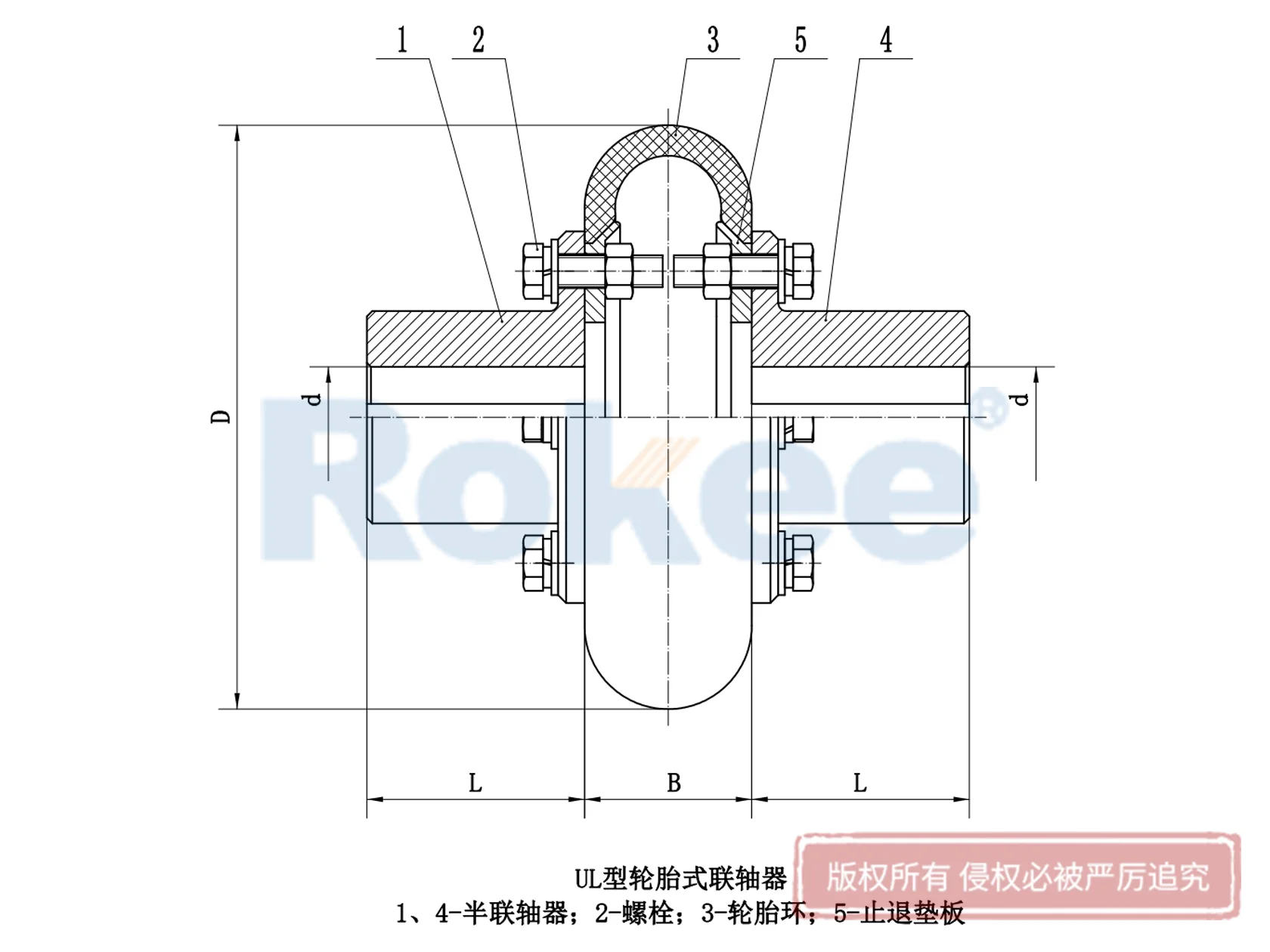
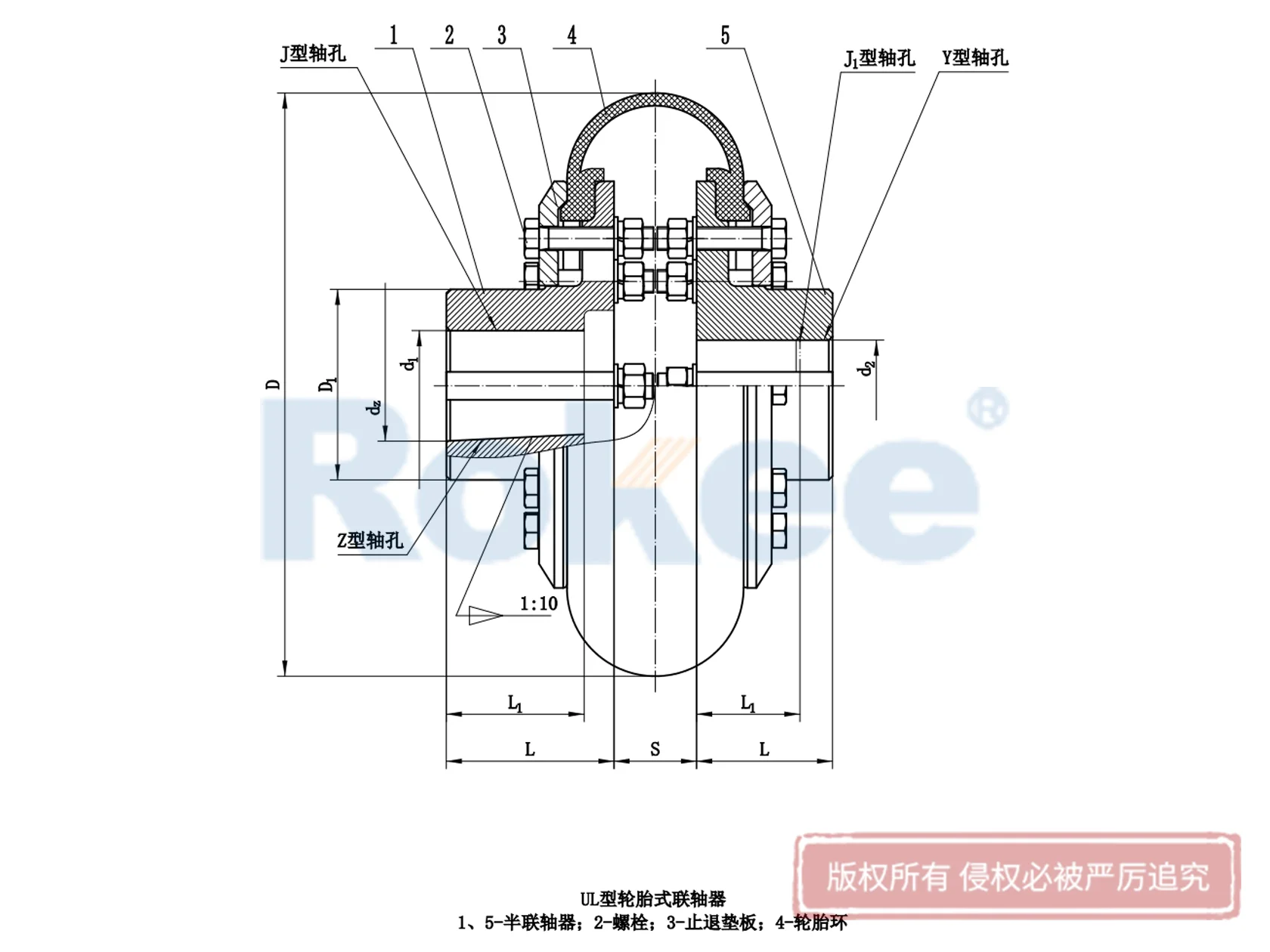
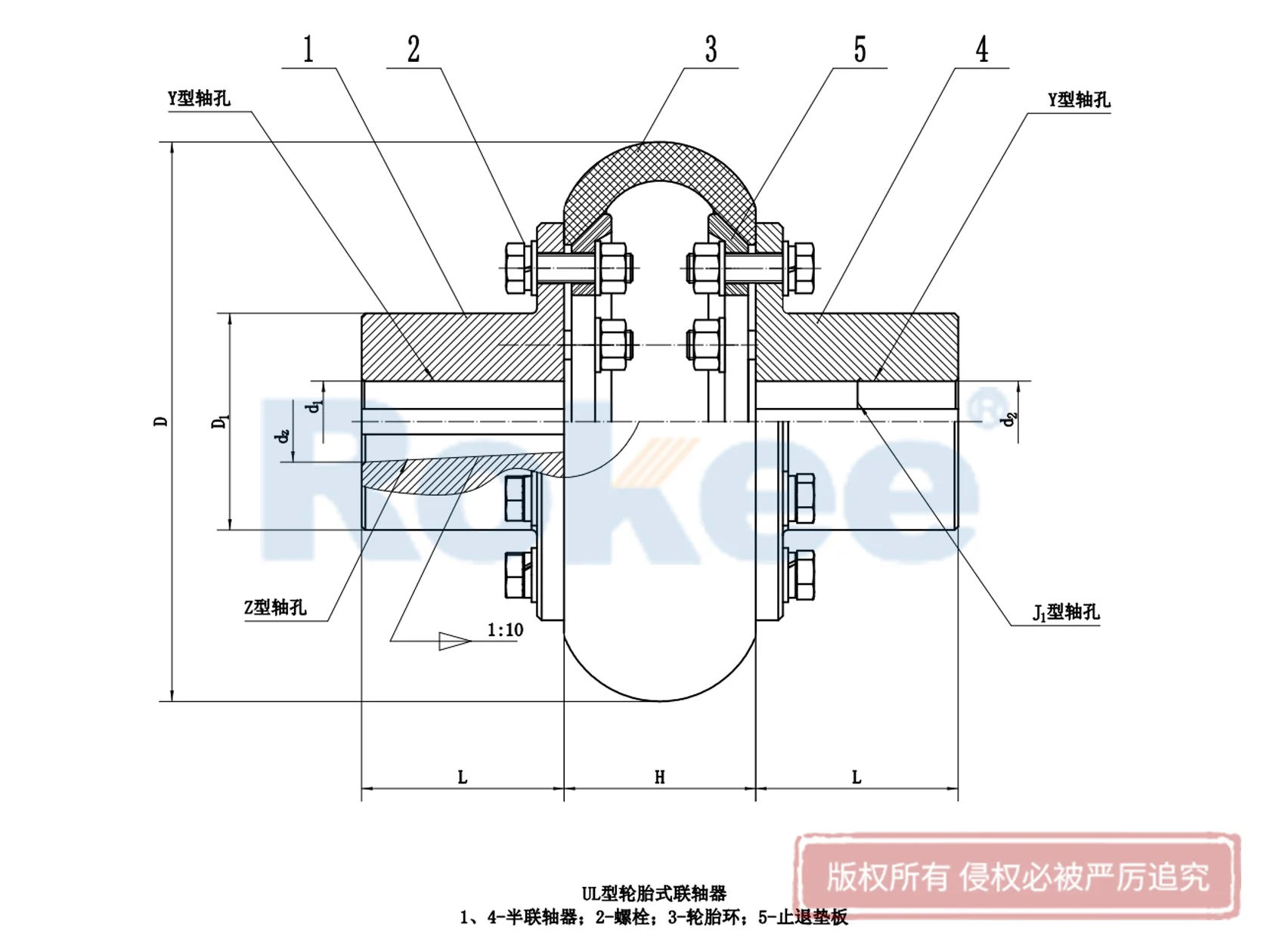
At its core, the structure of a rubber tyre coupling is elegantly engineered, consisting of a limited number of key components that work in seamless harmony to deliver reliable power transmission. The primary elements include two metallic hub halves, a flexible tyre-shaped elastic element, and a set of high-strength fastening hardware, typically bolts and washers. The hub halves are precision-machined from robust steel alloys, chosen for their exceptional mechanical strength, wear resistance, and ability to withstand repeated torsional stress; these hubs are mounted securely onto the driving and driven shafts, often via interference fits, keyways, or tapered bores to ensure a tight, slip-free connection that prevents power loss during operation. The central flexible tyre element is the heart of the coupling, manufactured from a reinforced rubber composite material—usually natural rubber or synthetic elastomers blended with high-tensile textile cords or nylon fabrics—to enhance load-bearing capacity and elastic longevity. This tyre-shaped component is engineered with a contoured, flexible profile that allows for multidirectional deformation, enabling it to absorb shocks and compensate for shaft misalignment without compromising torque transmission. The assembly process involves clamping the elastic tyre element between the two metallic hubs, with the fastening bolts securing the assembly firmly; some designs feature integrated pressure plates or flanges to distribute clamping force evenly across the tyre element, preventing localized stress concentrations that could lead to premature wear or failure. Notably, the structural design prioritizes simplicity and accessibility, with no complex internal mechanisms, which simplifies installation, maintenance, and replacement of worn components, reducing downtime for industrial machinery.
The performance characteristics of rubber tire couplings are tailored to meet the dynamic demands of real-world mechanical systems, setting them apart from other flexible coupling variants and solidifying their utility across diverse applications. One of the most prominent performance traits is their exceptional ability to compensate for multiple forms of shaft misalignment, a critical feature in industrial setups where perfect shaft alignment is often unattainable due to manufacturing tolerances, foundation settlement, thermal expansion, or mechanical wear. These couplings can effectively accommodate angular misalignment, radial displacement, and axial movement simultaneously, with the elastic tyre element flexing smoothly to absorb these deviations without transmitting excessive stress to the shafts or connected equipment. This misalignment compensation not only prevents premature bearing failure and shaft damage but also reduces the need for ultra-precise installation, lowering assembly costs and complexity for engineering teams. Equally important is their superior vibration damping and shock absorption capacity; the soft, elastic nature of the rubber tyre element acts as a natural shock absorber, dampening torsional vibrations generated by uneven torque output, sudden starts, stops, or load fluctuations in machinery. This damping effect minimizes noise levels during operation, reduces mechanical fatigue in connected components, and extends the service life of the entire drive system, making the couplings ideal for applications with frequent reversals or high-impact loads.
Additional performance advantages include low torsional stiffness, which allows for smooth torque transmission and reduces peak stress on drive components, and high mechanical efficiency, with minimal power loss during operation—typically exceeding 98% in well-maintained units. Flexible tyre couplings are also inherently maintenance-free in most cases, as they require no lubrication, unlike gear couplings or chain couplings that demand regular lubrication to prevent friction and wear. This lack of lubrication not only cuts down on ongoing maintenance costs but also eliminates the risk of fluid leakage, making them suitable for clean operating environments or applications where lubricant contamination must be avoided. The reinforced rubber tyre element exhibits good resistance to common environmental factors, including moderate temperatures, oil mist, dust, and moisture, though performance may vary based on the specific elastomer material used. However, it is important to note that extreme temperatures, direct exposure to harsh chemicals, or prolonged UV radiation can degrade the rubber compound over time, requiring careful material selection based on the operating environment. Despite these limitations, the overall performance profile of flexible tyre couplings remains robust, offering a reliable balance of flexibility, strength, and operational efficiency that caters to a broad spectrum of industrial power transmission needs.
Flexible tire couplings are categorized into distinct types based on structural design, assembly method, and load-bearing capabilities, each engineered to address specific operational requirements and application scenarios. The primary classification revolves around the way the elastic tyre element is integrated with the metallic hubs, with two dominant designs prevailing in industrial practice: the bonded tyre coupling and the clamped tyre coupling. Bonded tyre couplings feature a permanent bond between the elastic tyre element and the metallic hub flanges, achieved through vulcanization during the manufacturing process. This bonded construction creates a unified, rigid assembly that enhances torque transmission capacity and structural stability, making it suitable for medium to heavy-duty applications with consistent loads and moderate misalignment. The bonded design eliminates the risk of the tyre element slipping or shifting under high torque, ensuring reliable performance in demanding operating conditions, though it typically requires full coupling removal for tyre replacement, as the bonded element cannot be serviced independently.
Clamped tyre couplings, by contrast, utilize a non-bonded design where the elastic tyre element is securely clamped between the two hubs without permanent adhesion, held in place by pressure plates and fastening bolts. This modular construction offers unparalleled ease of maintenance, as the worn tyre element can be replaced quickly without removing the entire coupling from the shafts or disassembling the connected machinery, drastically reducing maintenance time and operational downtime. Clamped variants are highly versatile, adapting well to applications with frequent maintenance needs or limited access for full assembly removal, and they excel in handling higher levels of misalignment and shock loads due to the increased flexibility of the unbonded tyre element. Beyond these two core types, flexible tyre couplings are also classified by load capacity, ranging from lightweight, compact units for small-scale machinery and precision equipment to heavy-duty, oversized models for large industrial drives with high torque requirements. Some specialized variants feature modified tyre profiles or reinforced elastomer materials to suit extreme operating conditions, such as high-temperature environments, corrosive atmospheres, or underwater applications, further expanding their functional versatility. Each type retains the core benefits of flexible tyre couplings—misalignment compensation, vibration damping, and low maintenance—while fine-tuning performance metrics to align with specific load, speed, and environmental parameters.
The combination of robust structure, adaptable performance, and diverse design variations has led to the widespread adoption of flexible tyre couplings across nearly every major industrial sector, wherever reliable power transmission is essential. In the mining and mineral processing industry, these couplings are extensively used in heavy machinery such as crushers, ball mills, conveyors, and vibrating screens, where they absorb the intense shock loads and torsional vibrations generated by raw material processing. Their ability to withstand heavy, intermittent loads and compensate for shaft misalignment caused by rugged operating conditions makes them a preferred choice for this harsh industrial environment, ensuring uninterrupted operation in high-wear settings. In the cement and construction materials sector, flexible tyre couplings are integrated into rotary kilns, mixers, and material handling equipment, providing reliable torque transmission while accommodating thermal expansion and foundation movement common in large-scale production facilities.
The power generation industry relies heavily on these couplings for auxiliary equipment such as fans, pumps, compressors, and turbine drives, where vibration damping and misalignment compensation are critical to maintaining stable operation and preventing damage to precision components. Their maintenance-free design is particularly valuable in power plants, where equipment uptime is paramount and routine maintenance must be minimized. In the marine and offshore engineering sector, specialized flexible tyre couplings with corrosion-resistant metallic components and chemical-resistant elastomers are used in ship propulsion systems, pump drives, and deck machinery, enduring the harsh, humid, and saline marine environment while delivering consistent performance. The water and wastewater treatment industry utilizes these couplings in water pumps, aerators, and filtration systems, benefiting from their leak-free, lubrication-free design that avoids contamination of water sources and ensures reliable operation in continuous-duty cycles.
Additional applications span the textile, paper, and printing industries, where flexible tire couplings are employed in high-speed machinery such as spinning frames, paper machines, and printing presses, providing smooth, vibration-free torque transmission that preserves product quality and machinery precision. In the automotive and transportation equipment sector, they are used in test benches, conveyor systems, and auxiliary drive units, adapting to variable loads and frequent start-stop cycles. Even in general manufacturing and machinery, flexible tyre couplings find use in machine tools, assembly lines, and material handling equipment, offering a cost-effective, reliable solution for power transmission that balances performance and affordability. Across all these applications, the core value of flexible tyre couplings remains consistent: they solve the universal challenges of shaft misalignment and mechanical vibration, protecting expensive machinery, reducing maintenance costs, and enhancing the overall efficiency and longevity of industrial drive systems.
In summary, rubber tyre couplings represent a masterclass in mechanical engineering design, merging simple structural architecture with high-performance functional capabilities to address critical pain points in power transmission systems. Their well-engineered component layout, encompassing robust metallic hubs and elastic reinforced rubber tyres, delivers a unique blend of strength and flexibility, while their standout performance traits—multidirectional misalignment compensation, superior vibration damping, high efficiency, and low maintenance—make them adaptable to an unparalleled range of industrial scenarios. The diverse classification of bonded and clamped designs, alongside load-specific variants, ensures that there is a flexible tyre coupling suitable for every operational demand, from light-duty precision machinery to heavy-duty industrial processing equipment. As industrial technology continues to evolve and machinery operates under increasingly demanding conditions, the relevance of flexible tyre couplings persists, thanks to their timeless design principles and ability to deliver consistent, reliable performance. Whether in mining, power generation, marine, manufacturing, or countless other sectors, these couplings remain a foundational component in mechanical power transmission, embodying the perfect balance of simplicity, durability, and functional versatility that defines exceptional engineering solutions.